
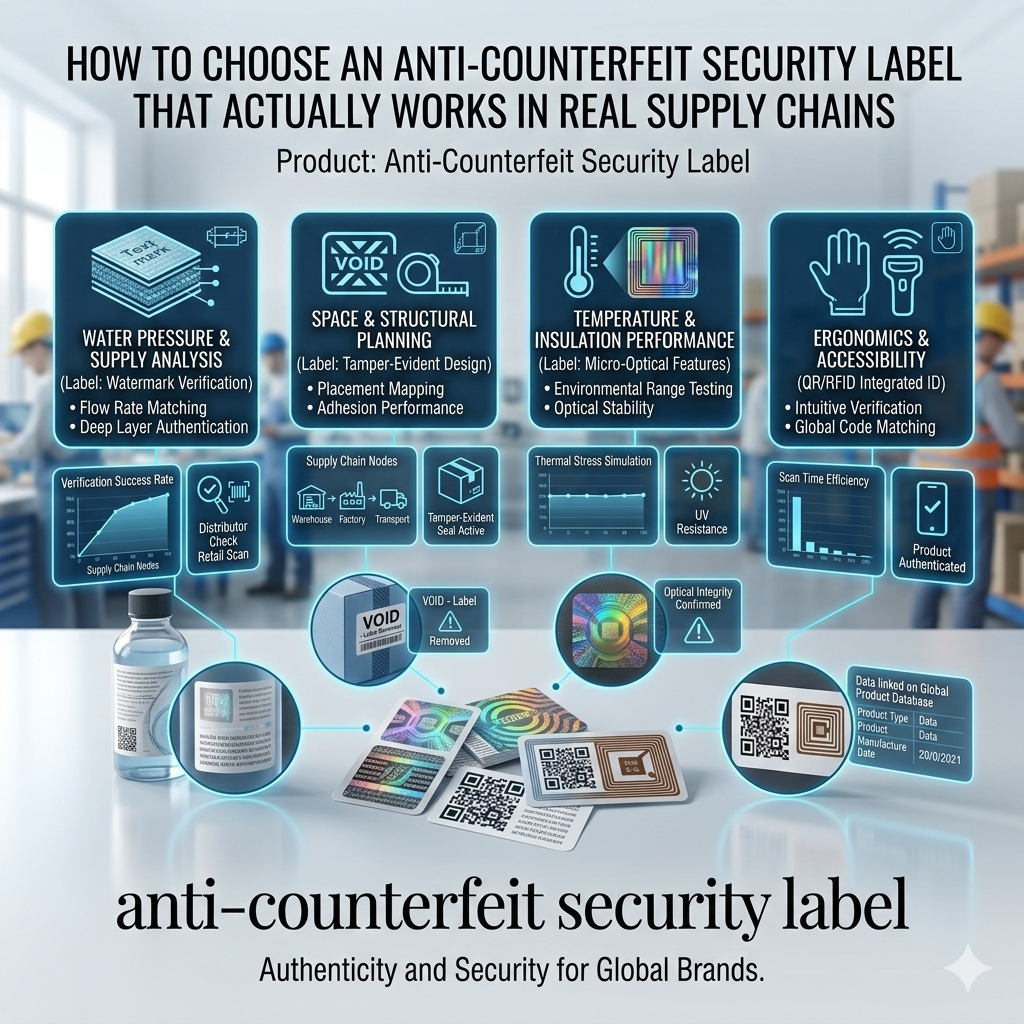
The Wrong Way to Choose: Features Without Context
Most buyers start with features.
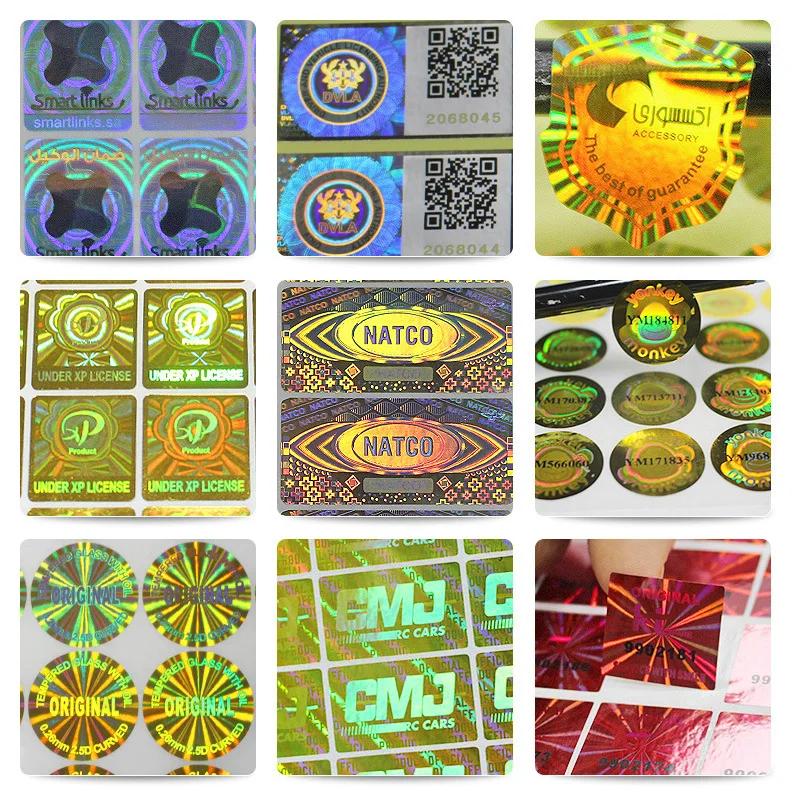
Hologram.
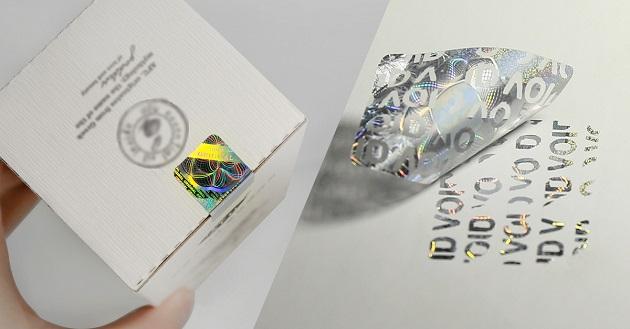
VOID.
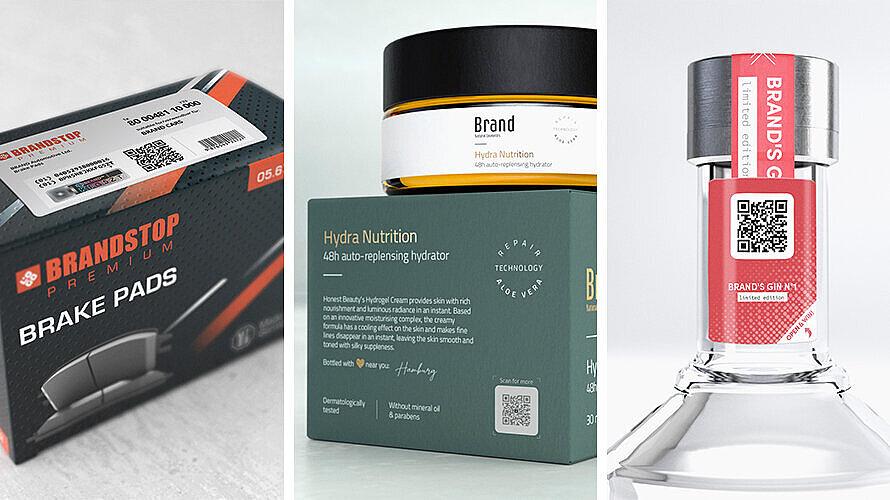
QR code.
Serialization.
It sounds technical. It feels secure.
But in real supply chains, labels do not fail because they lack features.
They fail because they behave incorrectly under actual use conditions.
A proper anti-counterfeit security label is not defined by what it contains.
It is defined by how it reacts when someone tries to misuse it.
Step 1: Define the Real Threat Model Before Choosing Any Label
Before selecting materials or technologies, the first question is not “what label?”
It is:
“What exactly are we trying to stop?”
Different risks require completely different label behavior:
-
Reuse → requires destructive removal
-
Refilling → requires seal-bridging structure
-
Diversion → requires identity tracking
-
Duplication → requires serialization
-
Tampering → requires visible evidence
Without this step, most labels become decorative—not functional.
Step 2: Choose Material Based on Surface and Environment, Not Price
Material selection is where many decisions go wrong.
A label that works on paper cartons may fail on glass.
A label stable at room temperature may fail under refrigeration.
Huaxin evaluates material compatibility based on:
-
Surface type (glass, plastic, metal, coated paper)
-
Environmental exposure (humidity, cold chain, heat)
-
Product lifecycle (days vs months)
Typical Material Logic
| Application Condition | Recommended Material Direction |
|---|---|
| High humidity / cold chain | Flexible film + stable adhesive |
| Rough handling | Reinforced composite layers |
| Short lifecycle products | Fast-bond adhesive systems |
| Long-term storage | Low-aging substrates |
Material is not aesthetic.
It is the foundation of label behavior.
Step 3: Understand Tamper Logic as a “Controlled Failure System”
A security label is designed to fail—but in a controlled way.
The question is not whether it breaks.
The question is how it breaks.
Huaxin structures tamper behavior into three main types:
-
Full transfer (VOID exposure)
Leaves clear message on surface -
Partial transfer
Splits between label and substrate -
Destructible structure
Fragments into non-reusable pieces
Each type serves different risk scenarios.
Choosing incorrectly leads to either over-design—or worse, ineffective protection.
Step 4: Align Structure with Packaging Interaction
Labels do not exist in isolation.
They interact with packaging behavior.
A flat label behaves differently from a seal.
A seal behaves differently from a wrap.
Huaxin designs structures such as:
-
Cap-to-body sealing labels
-
Edge-crossing tamper strips
-
Multi-layer composite labels
-
Hidden message layers
The goal is simple:
Make normal use easy—and misuse impossible to hide.
Step 5: Decide Whether Identity Tracking Is Required
Not every product needs digital tracking—but many assume they don’t when they actually do.
If your supply chain involves:
-
Multiple distributors
-
Cross-region sales
-
Grey market exposure
-
High-value goods
Then identity becomes critical.
At this stage, Huaxin integrates:
-
Unique serial numbers
-
Batch traceability
-
QR or data matrix options
But the key principle remains:
tracking supports security—it does not replace physical protection.
Step 6: Evaluate Manufacturing Capability, Not Just Sample Quality
Samples always look perfect.
What matters is mass production consistency.
A reliable anti-counterfeit security label manufacturer must control:
-
Adhesive consistency across batches
-
Print alignment at scale
-
Material stability over time
-
Secure production environment
Huaxin follows ISO 14298 secure printing standards, ensuring controlled production and traceability—not just visual quality.
Step 7: Test Labels Under Real Conditions Before Approval
Many labels pass lab tests—and fail in real life.
Huaxin validates labels through:
-
Peel and tamper simulation
-
Temperature cycling
-
Humidity exposure
-
Handling and transport stress
Because the real question is not:
“Does it work in theory?”
It is:
“Does it still work after shipping, storage, and handling?”
Common Selection Mistakes That Increase Risk
| Mistake | Result |
|---|---|
| Choosing based on appearance | False sense of security |
| Ignoring packaging interaction | Tamper not triggered |
| Over-relying on QR only | Low real-world usage |
| Selecting lowest cost option | Higher long-term loss |
| Skipping real-world testing | Failure after deployment |
How Huaxin Approaches Security Label Selection
Huaxin does not start with products.
It starts with risk + application scenario.
Practical Workflow
-
Risk identification (reuse, tamper, diversion)
-
Packaging and surface analysis
-
Material and adhesive selection
-
Tamper logic design
-
Optional identity system integration
-
Real-condition validation
-
Controlled production under ISO standards
This ensures the label is not just designed—but fit for use.
FAQ — What Buyers Need to Clarify Early
How do I know which tamper type is correct?
It depends on the misuse scenario. Reuse and refilling require different structures.
Are more security features always better?
No. Over-complex labels often reduce usability and inspection efficiency.
Can one label work across all products?
Rarely. Different packaging and environments require tailored solutions.
A Security Label Is a System Decision, Not a Print Choice
Choosing an anti-counterfeit security label is not about selecting features from a catalog.
It is about designing a controlled response to real-world misuse.
With Huaxin, security labels are built from the ground up—materials, structure, and behavior aligned with how products move, how they are handled, and how they are misused.
Explore tailored solutions on the
Huaxin homepage or discuss your application directly via
https://www.hxsecuritylabel.com/contact-us.