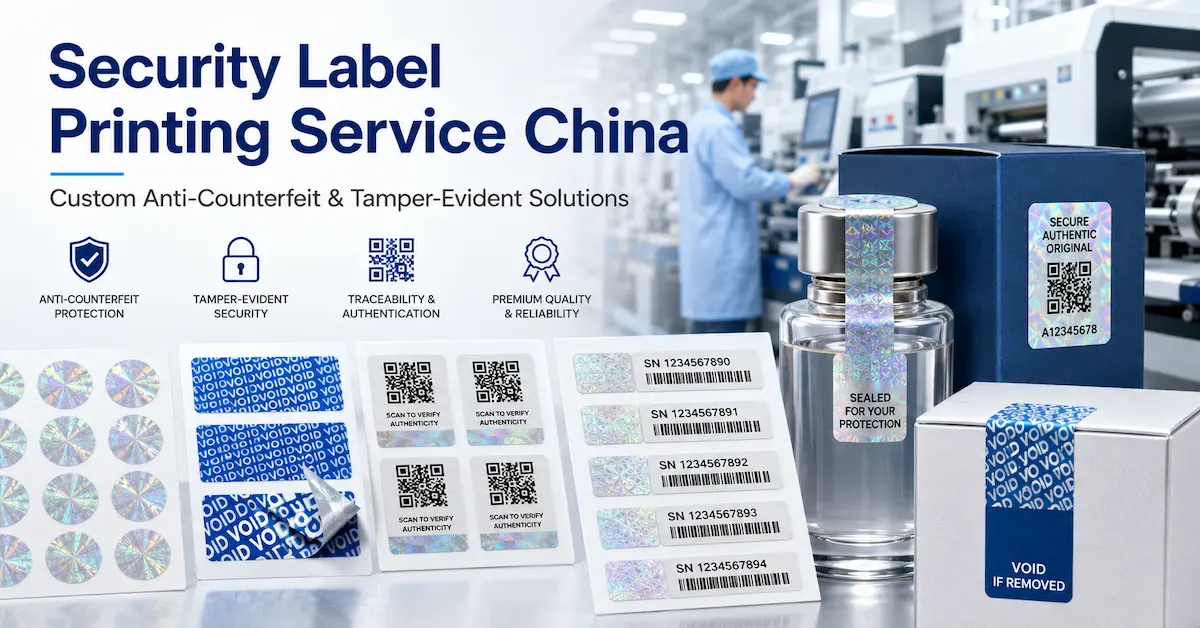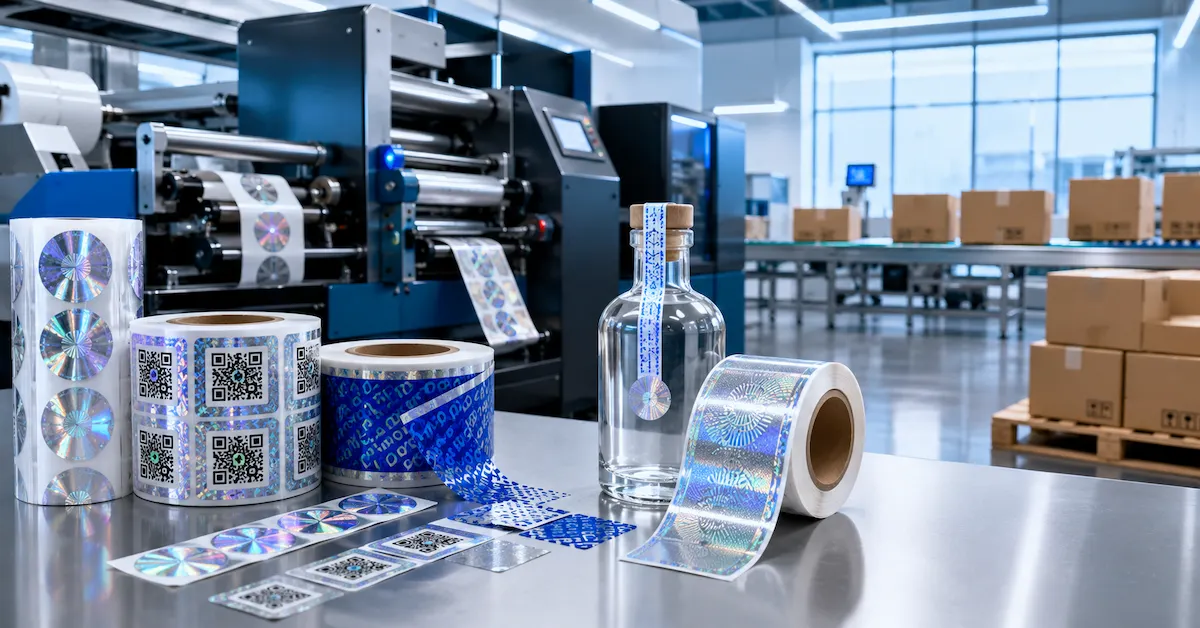

The minimum order for security labels is one of the first questions buyers ask when planning a custom anti-counterfeit packaging project.
However, MOQ is not the same for every security label. A simple QR code sticker, a holographic security label, a VOID tamper-evident seal, a wine bottle neck label, and a serialized anti-counterfeit label may all have different minimum order requirements.
For brands in liquor, electronics, pharmaceuticals, cosmetics, food, tea, agriculture, logistics, and premium packaging, the right order quantity should balance cost, testing needs, production efficiency, and long-term supply planning.
If you are still comparing label types, you can first review HX’s security label product categories, including holographic labels, VOID open labels, wine tax stamps, latent image labels, and other security label applications.
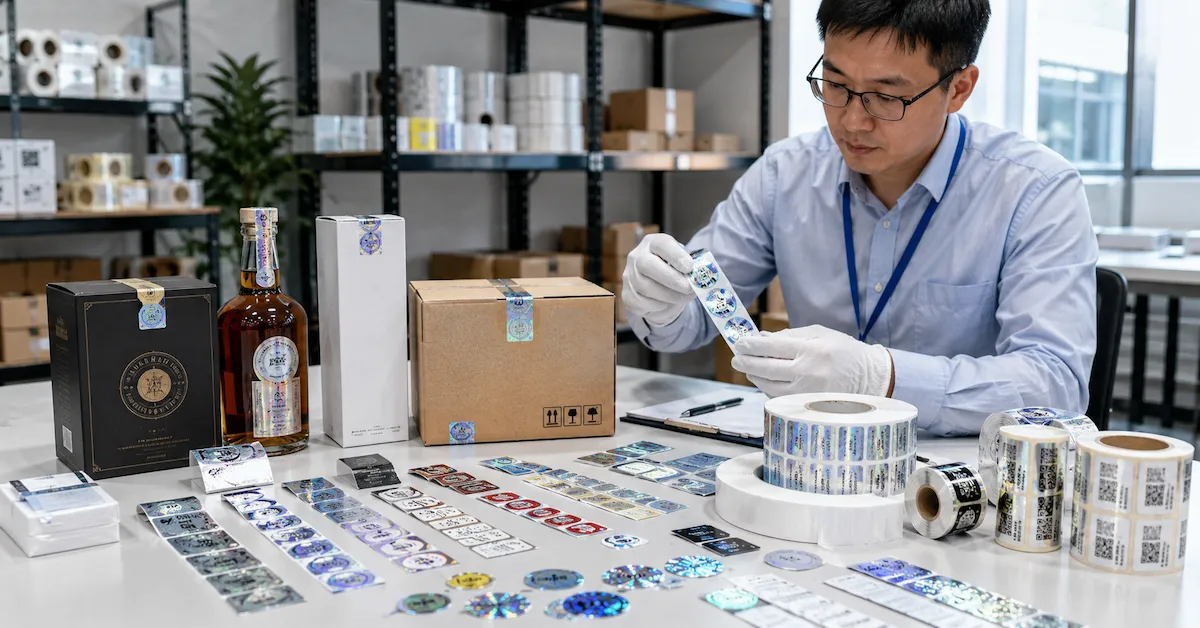
What Does Minimum Order for Security Labels Mean?
Minimum order quantity, or MOQ, means the smallest quantity a supplier can produce for a custom label project.
For security labels, MOQ is affected by setup cost, material preparation, printing process, die-cutting, security structure, variable data printing, and production efficiency.
A supplier may set MOQ because custom production requires:
- Material preparation
- Artwork checking
- Plate or mold setup
- Color adjustment
- Holographic film preparation
- VOID material selection
- QR code or serial number setup
- Die-cutting adjustment
- Quality inspection
- Packaging and shipment
This is why a custom security label project usually has a different MOQ from ordinary stock stickers.
Why MOQ Varies by Security Label Type
Not all security labels are produced in the same way. The more customized the label is, the more setup work may be required.
| Label Type | Typical MOQ Influence |
|---|---|
| Basic printed security label | Usually easier to produce in smaller batches |
| QR code label | Requires variable data and scanning accuracy checks |
| VOID label | Depends on tamper-evident material and adhesive structure |
| Holographic label | May require special film, pattern, or optical effect setup |
| Wine tax stamp | Often needs custom shape, bottle fit, and security design |
| Latent image label | Requires hidden verification design and special process |
| Serialized label | Needs unique number management and data checking |
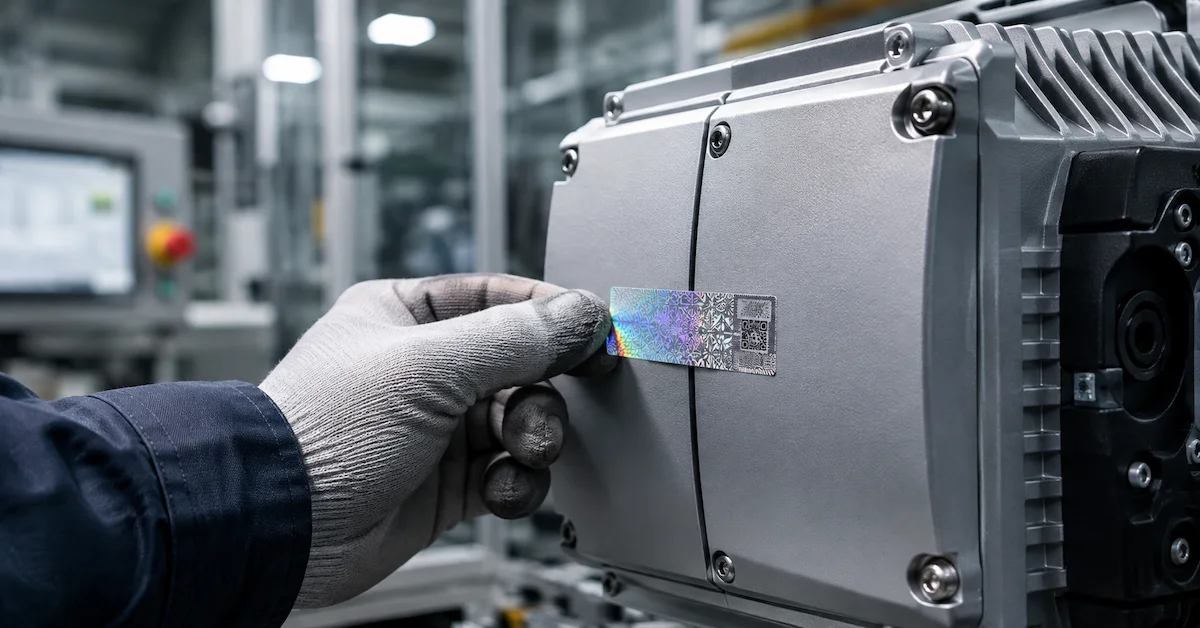
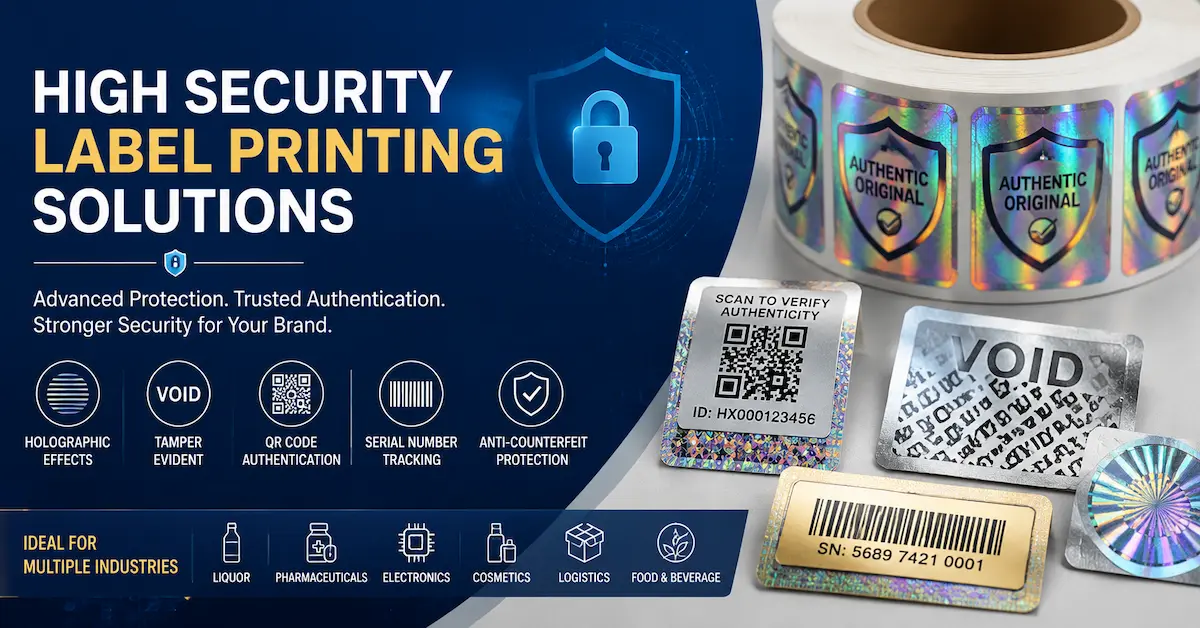
For example, holographic labels may need special optical materials and security pattern preparation, while VOID open labels require tamper-evident material that shows clear evidence after removal.
Main Factors That Affect Security Label MOQ
1. Label Material
Material is one of the biggest factors affecting MOQ. Different label materials have different production requirements.
Common materials include:
- PET film
- Holographic film
- VOID film
- Destructible paper
- Coated paper
- Synthetic paper
- Composite security materials
If the material is standard and available, MOQ may be easier to manage. If the project needs a custom holographic film, special VOID structure, or multi-layer material, MOQ may be higher.
2. Label Size and Shape
Standard rectangular or round labels are usually easier to produce. Custom shapes, bottle neck seals, long strip labels, and irregular die-cut designs may require more setup.
Examples include:
- Small warranty seals
- Bottle cap seals
- Carton security labels
- Round hologram stickers
- Box edge sealing labels
- Long tamper-evident strips
- Custom die-cut logo labels
If your label needs to wrap over a bottle cap, carton edge, or product box closure, the shape should be tested before bulk production.
3. Security Feature Complexity
The more security features a label includes, the more production planning may be required.
Common security features include:
- Holographic effect
- VOID residue
- Destructible structure
- QR code authentication
- Barcode tracking
- Serial number printing
- Latent image
- Fluorescent or hidden feature
- Scratch-off verification area
- Custom security pattern
For projects that require hidden inspection, latent image labels can add another layer of protection, but this type of feature may require more careful proofing and production setup.
4. QR Codes and Serial Numbers
If security labels include QR codes, barcodes, or serial numbers, MOQ may be affected by data preparation and inspection.
Buyers should confirm:
- Does each code need to be unique?
- Does the supplier need to print serial numbers in sequence?
- Does the code need to match a product database?
- Does the project require scan testing?
- Does the buyer need exported code data?
- Does the order include multiple batches or SKUs?
For large-volume projects, data accuracy is critical. Duplicate codes or unreadable QR codes can create verification problems.
5. Printing and Finishing Process
Custom security labels may need different finishing options, such as lamination, hot stamping, holographic finishing, matte coating, gloss coating, die-cutting, or special adhesive treatment.
Each extra process may affect the minimum order quantity.
6. Roll or Sheet Format
Security labels can be supplied in roll format or sheet format.
| Format | Best For |
| Roll labels | Automatic labeling machines and bulk packaging |
| Sheet labels | Manual application and sample testing |
| Individual pieces | Special inspection or controlled use |
| Custom rolls | Machine-specific packaging lines |
If the buyer uses automatic labeling machines, roll direction, core size, label gap, liner material, and winding direction must be confirmed before production.
Is It Possible to Start with a Small Order?
Yes, in many cases buyers can start with a sample order or trial production before placing a large order.
This is especially important when:
- The label is used on a new packaging surface
- The adhesive performance is uncertain
- The product needs a special VOID effect
- The label includes QR codes or serial numbers
- The design is still being adjusted
- The brand wants to test market response
- The buyer needs internal approval before bulk ordering
A practical process is:
- Confirm label purpose and application surface.
- Choose material and security features.
- Create design draft.
- Make samples or proofing.
- Test labels on real packaging.
- Adjust if needed.
- Move to bulk production.
This process helps reduce the risk of producing thousands of labels that do not fit the product or packaging line.
Minimum Order by Common Application
The right MOQ also depends on the industry and application.
Liquor and Spirits
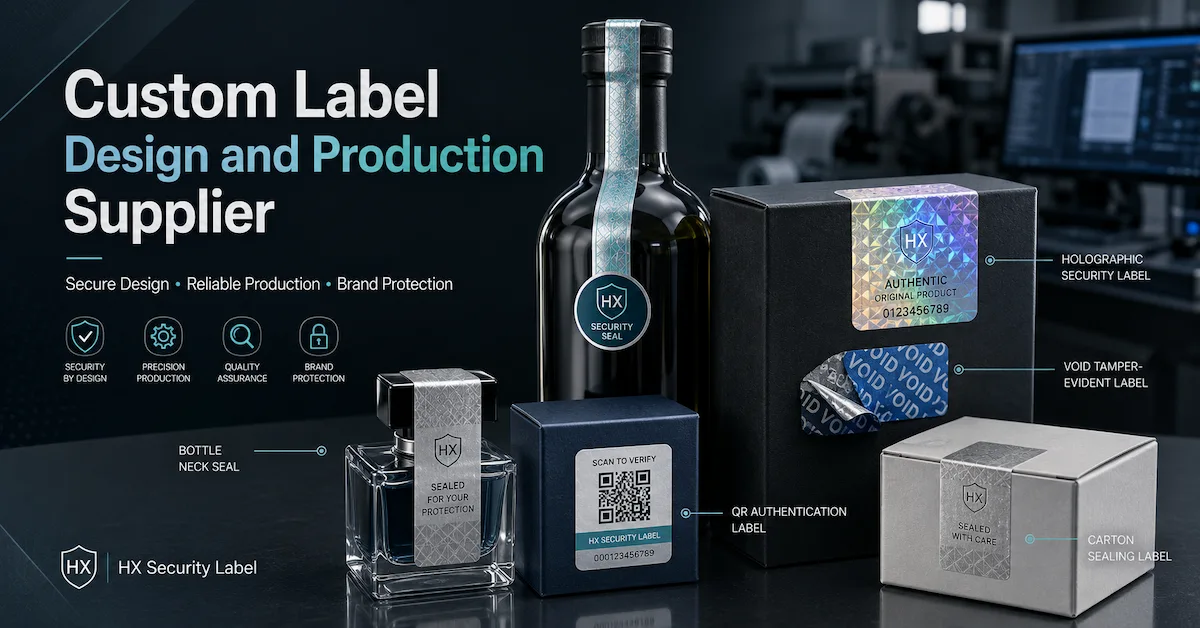
Liquor brands often use bottle neck seals, wine tax stamps, holographic labels, and QR code authentication labels. These labels may need custom shapes and strong anti-refill protection.
For alcohol packaging, wine tax stamp labels can be used for bottle sealing, product authentication, and brand protection.
Electronics
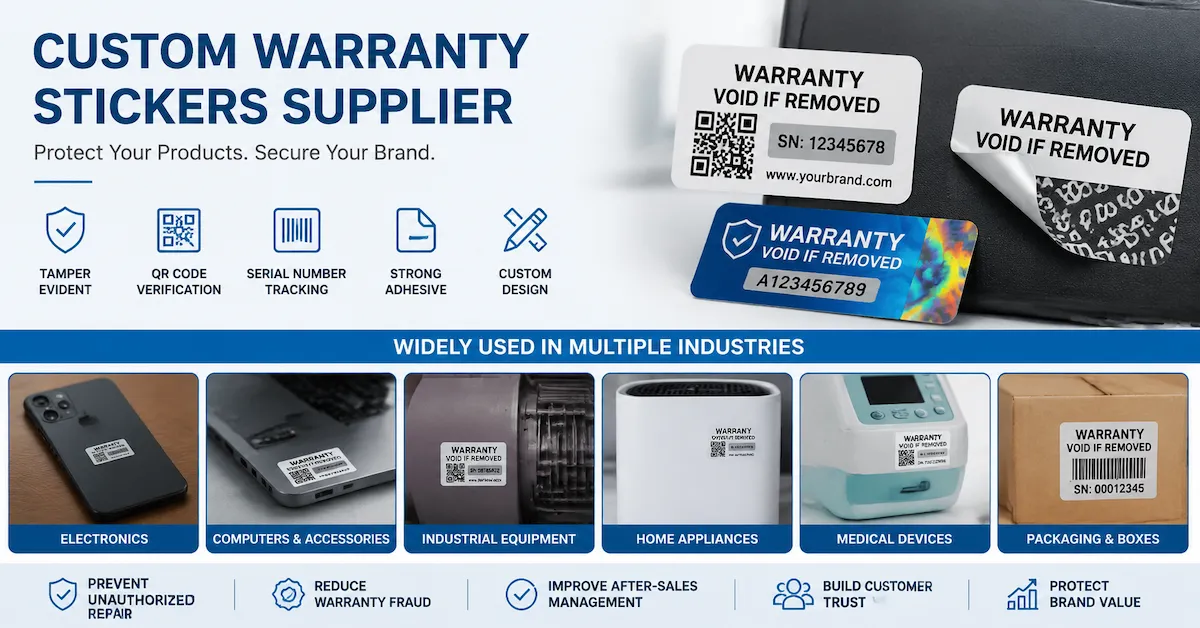
Electronics brands often need warranty VOID labels, serial number stickers, QR code labels, and destructible labels. Small labels may still require precise die-cutting and strong adhesive control.
Cosmetics and Premium Packaging
Cosmetics brands often need attractive holographic security stickers, QR labels, and tamper-evident box seals. MOQ may depend on color, finishing, and private label design.
Food, Tea, and Agricultural Products
These products often use QR code authentication labels, batch tracking labels, and holographic packaging labels. MOQ may be affected by the number of SKUs and code requirements.
Logistics and Carton Packaging
Carton security seals and VOID labels are often ordered in larger quantities because they are used on shipping boxes, warehouse packages, and export cartons.
For broader packaging applications, buyers can also check HX’s other uses label solutions.
How MOQ Affects Unit Price
In most custom label projects, a larger order quantity usually lowers the unit price. This is because setup costs are spread across more labels.
However, buyers should not only choose the largest order to reduce unit cost. If the design, adhesive, or tamper effect has not been tested, a large order can increase risk.
| Order Stage | Best Purpose |
| Sample order | Test design, material, adhesive, and tamper effect |
| Trial order | Check packaging process and market use |
| Bulk order | Reduce unit cost and support regular production |
| Repeat order | Maintain stable supply and consistent quality |
For new projects, sample testing is usually the safer first step.
What Information Should Buyers Provide Before Asking MOQ?
To get a realistic MOQ and quotation, prepare the following information:
| Item | Details to Provide |
| Product type | Liquor, electronics, cosmetics, medicine, food, logistics, etc. |
| Label purpose | Anti-counterfeit, tamper evidence, QR authentication, tracking |
| Application surface | Glass, carton, plastic, paper box, metal, film |
| Label size | Width, height, shape, roll or sheet format |
| Material preference | Holographic film, VOID film, PET, paper, destructible material |
| Security feature | Hologram, VOID, QR code, serial number, latent image |
| Design file | Logo, artwork, color, layout |
| Quantity plan | Sample quantity, first order, monthly or annual demand |
| Packaging method | Manual application or automatic labeling |
| Environment | Heat, cold, humidity, transport abrasion |
| Delivery plan | Urgent order, regular order, or long-term supply |
Clear information helps the supplier recommend a more accurate MOQ and avoid repeated communication.
Common Mistakes Buyers Should Avoid
Mistake 1: Asking MOQ Without Product Details
A supplier cannot give an accurate MOQ without knowing the label type, material, size, security feature, and application surface.
Mistake 2: Choosing the Lowest MOQ Only
A very low MOQ may look attractive, but it may come with limited customization or higher unit cost. Buyers should balance MOQ, price, and performance.
Mistake 3: Skipping Samples to Save Time
Skipping samples may lead to poor adhesion, unclear tamper evidence, unreadable QR codes, or packaging-line problems.
Mistake 4: Not Planning Repeat Orders
If you expect continuous production, tell the supplier your monthly or annual demand. This helps them plan material and production more efficiently.
Mistake 5: Ignoring Packaging Method
Labels for automatic labeling machines need roll direction, core size, label spacing, and liner compatibility. These details may affect MOQ and production setup.
How HX Supports Security Label MOQ Planning
HX Security Label supports custom security label projects for buyers who need sample proofing, small trial orders, bulk production, and long-term repeat supply.
HX can support different label types, including:
- Holographic security labels
- VOID open labels
- QR code authentication labels
- Barcode and serial number labels
- Wine tax stamp labels
- Latent image labels
- Custom security stickers
- Packaging security labels
- Bulk anti-counterfeit label production
HX helps buyers evaluate the right material, security feature, application surface, order quantity, and production format before starting mass production.
You can learn more about HX’s company background and anti-counterfeiting experience on the About Us page.
FAQ
1. What is the minimum order for security labels?
The minimum order for security labels depends on material, size, security features, printing method, order quantity, QR code requirements, and whether the project needs custom tooling or proofing.
2. Can I order samples before bulk production?
Yes. Sample proofing is recommended before bulk production to test appearance, adhesion, tamper evidence, QR readability, and packaging compatibility.
3. Do holographic labels have a higher MOQ?
Holographic labels may have a higher MOQ than basic printed labels because they involve special optical materials and security patterns.
4. Do VOID labels require a minimum order?
Yes. VOID labels usually have MOQ because they use tamper-evident materials and adhesive structures that require production setup.
5. Can MOQ be lower for standard label sizes?
In many cases, standard sizes and available materials may help reduce MOQ or simplify production.
6. Can QR code labels be produced in small batches?
It may be possible, but MOQ depends on variable data printing, code checking, and the supplier’s production process.
7. How can I reduce MOQ risk?
Start with samples or a trial order, confirm the design and material, test on real packaging, and then move to bulk production.
8. How do I ask for MOQ and quotation?
Prepare your product type, label size, application surface, material, security feature, design file, and estimated quantity. You can contact HX Security Label to discuss the minimum order for your custom security label project.
Conclusion
The minimum order for security labels depends on more than quantity. Material, label size, security structure, adhesive type, QR code data, production format, and customization level all affect MOQ.
For new projects, buyers should not focus only on the lowest MOQ. The better approach is to test samples, confirm performance, and then plan bulk or repeat production.
Whether you need holographic labels, VOID labels, QR code labels, wine tax stamps, latent image labels, or custom packaging security stickers, HX Security Label can help you evaluate the right MOQ and production plan for your brand.
If you are preparing a custom security label project, send your product details, label size, surface material, security requirements, design file, and estimated order quantity. HX can help you plan a practical sample and production solution.