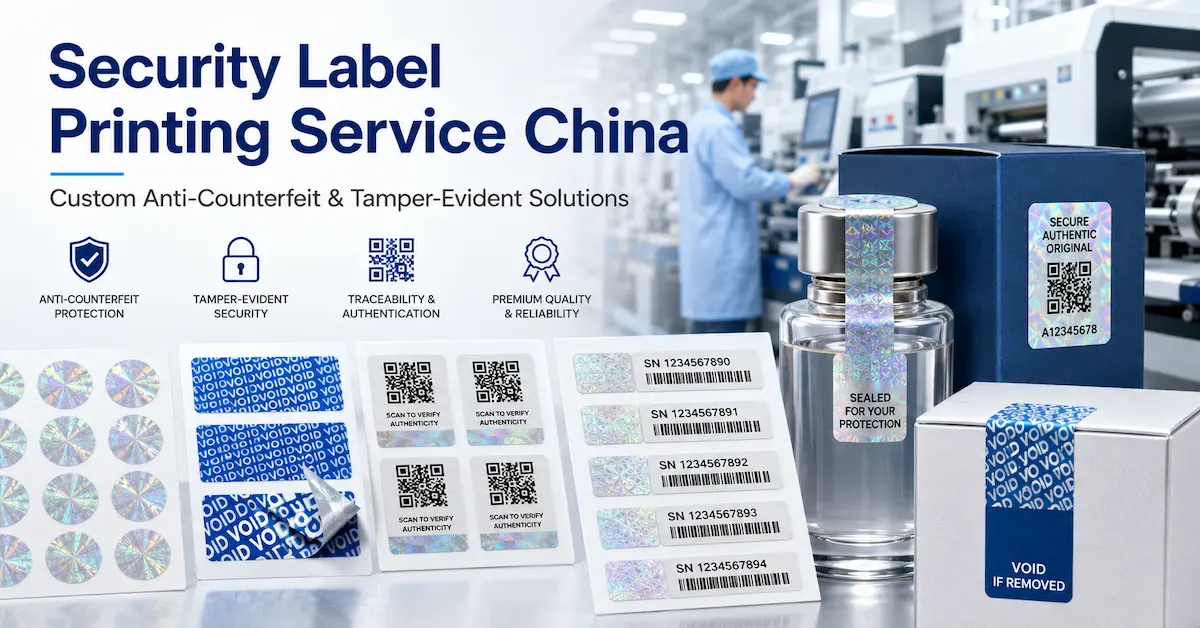

The lead time for custom labels manufacturer projects is one of the most important questions for buyers planning packaging, product launches, export shipments, or repeat production.
For security labels, anti-counterfeit labels, VOID labels, holographic stickers, QR code authentication labels, wine tax stamps, and packaging security seals, lead time is not only about printing speed. It also depends on design confirmation, material selection, sample proofing, security features, code data, production quantity, quality inspection, and delivery method.
A label that is delivered late can delay packaging lines, product shipments, retail launches, or distributor orders. A label that is rushed without testing can create bigger problems later, such as poor adhesion, unreadable QR codes, unclear tamper evidence, or packaging incompatibility.
This guide explains how custom label lead time works and what buyers can prepare to make production faster and smoother.
If you are still comparing label types, you can first review HX’s security label product categories, including holographic labels, VOID open labels, wine tax stamps, latent image labels, and other security label applications.
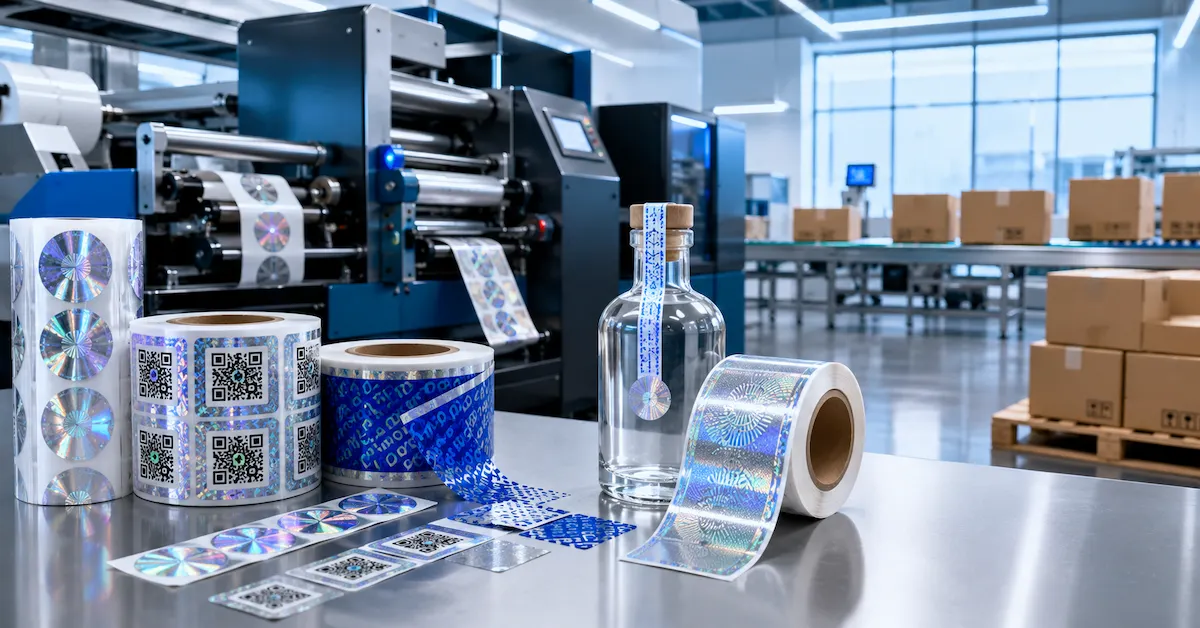
What Does Lead Time Mean for Custom Labels?
Lead time means the time required from order confirmation to finished label delivery. For custom labels, it usually includes several steps:
- Requirement confirmation
- Artwork review
- Material selection
- Security feature confirmation
- Sample proofing
- Sample testing and approval
- Bulk production
- Quality inspection
- Packaging
- Shipping arrangement
For simple labels, lead time may be shorter. For custom security labels with holographic effects, VOID materials, QR codes, serial numbers, bottle neck shapes, or special adhesive requirements, production may need more time.
A professional manufacturer should explain the process clearly before production starts.
Why Custom Security Label Lead Time Varies
Custom label projects are different because every buyer may need different materials, designs, quantities, and security features.
| Factor | How It Affects Lead Time |
|---|---|
| Artwork readiness | Final artwork speeds up design confirmation |
| Material choice | Standard materials are usually faster than special materials |
| Security feature | Hologram, VOID, QR code, and serial numbers may need extra setup |
| Sample proofing | Testing adds time but reduces production risk |
| Order quantity | Larger orders need more production and inspection time |
| Label format | Roll, sheet, or special die-cut format affects setup |
| Packaging surface | Glass, carton, plastic, metal, and film may need different testing |
| Shipping method | Express, air, sea, or courier delivery affects total timeline |
For buyers, the key is to prepare complete project information early. This helps the supplier avoid repeated clarification and production delays.
Typical Stages in Custom Label Production
1. Requirement Confirmation
This is the first stage. The supplier needs to understand what the label is used for and what protection the buyer needs.
Important details include:
- Product type
- Label size
- Application surface
- Security purpose
- Material preference
- Quantity
- Packaging method
- Use environment
- Delivery schedule
For example, a carton security seal and a bottle neck anti-counterfeit label require different materials and production planning.
2. Artwork and Layout Review
Custom labels usually need artwork confirmation before production. If the artwork is complete and clear, this stage can move faster.
Buyers should provide:
- Logo file
- Label dimensions
- Color requirements
- QR code position
- Serial number position
- Text content
- Die-cut shape
- Roll or sheet format
If artwork is incomplete or low resolution, the supplier may need extra time to adjust the design.
3. Material and Security Feature Selection
Security label materials may include PET film, holographic film, VOID film, destructible paper, synthetic paper, coated paper, or composite materials.
Security features may include:
- Holographic effect
- VOID residue
- Destructible structure
- QR code authentication
- Barcode tracking
- Serial number printing
- Latent image
- Fluorescent or hidden feature
- Scratch-off verification area
For visual anti-counterfeiting and premium packaging, holographic labels may require optical film and security pattern confirmation.
For tamper-evident packaging, VOID open labels need suitable adhesive and material testing to ensure the opening mark appears clearly.
4. Sample Proofing
Sample proofing is strongly recommended for custom security labels. It allows buyers to check appearance, adhesion, tamper effect, QR readability, label size, and packaging fit before bulk production.
Sample testing is especially important when:
- The product uses a new packaging material
- The label needs to fit a curved surface
- The label includes QR codes or serial numbers
- The label requires VOID or destructible effects
- The product will face heat, cold, humidity, or long-distance transport
- The order quantity is large
Sample proofing may add time, but it helps prevent larger production risks.
5. Bulk Production
After sample approval, the factory can begin bulk production.
Bulk production time depends on:
- Order quantity
- Material availability
- Printing process
- Security feature complexity
- Variable data printing
- Die-cutting requirements
- Roll or sheet packing
- Quality inspection needs
For repeat orders using the same artwork and material, lead time is usually easier to control because the supplier already has production records.
6. Quality Inspection and Packing
Before shipment, security labels should be checked carefully.
Inspection may include:
- Printing quality
- Color consistency
- Die-cutting accuracy
- Adhesive performance
- VOID effect
- Holographic clarity
- QR code readability
- Serial number accuracy
- Roll direction
- Packing protection
For labels used on automatic packaging lines, roll direction, core size, label gap, and liner condition should also be checked.
Lead Time by Common Custom Label Type
Different labels require different production planning.
| Label Type | Lead Time Consideration |
| Basic printed label | Usually faster if artwork and material are ready |
| QR code label | Needs variable data setup and scan checking |
| VOID label | Requires tamper-evident material and adhesive confirmation |
| Holographic label | May need optical film, pattern, and finishing setup |
| Wine tax stamp | Needs bottle fit, sealing structure, and custom design |
| Latent image label | Requires hidden verification design and special process |
| Serialized label | Needs data preparation and accuracy checking |
For alcohol and bottle sealing, wine tax stamp labels may need more detailed planning because they often involve bottle neck fit, security design, and anti-refill requirements.
For high-value products requiring covert inspection, latent image labels may need additional proofing and confirmation.
How Buyers Can Shorten Custom Label Lead Time
1. Prepare Complete Project Details
The fastest way to reduce lead time is to provide complete information from the beginning.
Prepare:
- Product type
- Label purpose
- Label size
- Application surface
- Quantity
- Material requirement
- Security feature
- Artwork file
- QR code or serial number data
- Packaging method
- Delivery deadline
Incomplete information often causes delays before production even starts.
2. Use Standard Materials When Possible
If the project can use available material, production may move faster. Special holographic film, custom VOID structure, or uncommon adhesive may need more preparation time.
3. Confirm Artwork Early
Artwork changes are one of the most common causes of delay. Confirm logo, text, size, color, shape, QR code position, and serial number layout as early as possible.
4. Test Samples Before Bulk Production
Sample testing may seem slower at first, but it prevents rework. If a large order is produced without testing and the label does not fit the package, the project may lose more time.
5. Plan Repeat Orders in Advance
If your brand needs labels every month or every season, share your repeat order plan with the supplier. This helps the factory prepare material and schedule production more efficiently.
What Information Should Buyers Provide Before Asking Lead Time?
To get an accurate lead time estimate, prepare the following information:
| Item | Details to Provide |
| Product type | Liquor, electronics, cosmetics, medicine, food, logistics, etc. |
| Label purpose | Anti-counterfeit, tamper evidence, QR authentication, tracking |
| Application surface | Glass, carton, plastic, paper box, metal, film |
| Label size | Width, height, shape, roll or sheet format |
| Material preference | Holographic film, VOID film, PET, destructible material, etc. |
| Security feature | Hologram, VOID, QR code, barcode, serial number, latent image |
| Design file | Logo, artwork, color, layout |
| Quantity | Sample order, bulk order, repeat order plan |
| Packaging method | Manual application or automatic labeling machine |
| Use environment | Heat, cold, humidity, transport abrasion |
| Delivery deadline | Required shipment date or launch date |
Clear project details allow the manufacturer to give a more realistic production schedule.
Common Causes of Custom Label Production Delays
1. Unfinished Artwork
If the buyer cannot provide final artwork, size, or logo files, production cannot move forward quickly.
2. Unclear Security Requirements
Some buyers only say they need “anti-counterfeit labels” but do not specify whether they need holographic effects, VOID residue, QR codes, serial numbers, or hidden verification.
3. Material Changes After Proofing
Changing material after sample approval may restart part of the production process.
4. Missing QR Code or Serial Number Data
If variable data is required, the supplier needs clear files and instructions. Missing data can delay production.
5. No Surface Testing
Labels should be tested on the actual packaging surface. If testing is skipped, problems may appear after bulk production.
6. Urgent Orders Without Planning
Urgent orders may be possible, but buyers should still provide complete information and confirm whether material is available.
Industry Lead Time Considerations
Liquor and Spirits
Bottle neck seals and wine tax stamps need careful shape and adhesive confirmation. Labels must fit caps, necks, glass surfaces, and gift boxes.
Electronics
Electronics labels often require VOID effects, serial numbers, QR codes, and warranty seal performance. Data accuracy is important.
Cosmetics and Premium Packaging
Cosmetics labels may need strong visual appearance, holographic effects, private label design, and clean application on coated boxes.
Food, Tea, and Agricultural Products
These labels often need QR code verification, batch tracking, and packaging compatibility.
Logistics and Export Packaging
Carton security seals need strong adhesive and transport durability. Lead time should match export shipment schedules.
For broader packaging applications, buyers can also check HX’s other uses label solutions.
How HX Supports Faster and Safer Custom Label Production
HX Security Label supports custom security label projects from requirement confirmation and design draft to material selection, sample proofing, mass production, inspection, packing, and shipment.
HX can provide:
- Holographic security labels
- VOID open labels
- QR code authentication labels
- Barcode and serial number labels
- Wine tax stamp labels
- Latent image labels
- Custom security stickers
- Packaging security labels
- Bulk custom label production
For buyers who need stable lead time, HX can help clarify technical requirements early, recommend suitable material, prepare samples, and support repeat production.
You can learn more about HX’s company background and anti-counterfeiting experience on the About Us page.
FAQ
1. What is the lead time for custom labels manufacturer projects?
The lead time for custom labels manufacturer projects depends on material, design, security features, sample proofing, order quantity, QR code data, production process, and shipping method.
2. Can custom labels be produced urgently?
Urgent production may be possible if the artwork is ready, material is available, and the label structure is not too complex. Buyers should confirm details with the supplier early.
3. Do holographic labels take longer to produce?
Holographic labels may need more time than basic printed labels because they involve optical materials, security patterns, and special finishing.
4. Do QR codes or serial numbers affect lead time?
Yes. QR codes, barcodes, and serial numbers require data preparation, printing accuracy, and readability checking, which may affect production time.
5. Should I approve samples before bulk production?
Yes. Sample approval helps confirm appearance, adhesion, tamper evidence, QR readability, and packaging compatibility before mass production.
6. Can repeat orders be faster?
Yes. Repeat orders are usually faster if the artwork, material, specifications, and production records remain unchanged.
7. What can I do to reduce lead time?
Prepare complete product details, final artwork, label size, quantity, security features, application surface, and delivery deadline before requesting a quotation.
8. How do I request a production schedule?
Prepare your product type, label size, application surface, quantity, security features, design file, and expected delivery date. You can contact HX Security Label to discuss a custom label production schedule.
Conclusion
The lead time for custom labels manufacturer projects depends on more than production speed. Material selection, artwork confirmation, security features, sample proofing, QR code data, bulk quantity, and inspection all affect the final delivery schedule.
For buyers who need anti-counterfeit labels, tamper-evident seals, holographic labels, QR code labels, wine tax stamps, or custom packaging security stickers, planning early is the best way to reduce delay.
A reliable supplier should help you clarify specifications, test samples, confirm materials, and schedule bulk production based on your product and packaging requirements.
If you are preparing a custom label project, send your product details, label size, application surface, artwork, security features, quantity, and expected delivery date. HX can help you plan a practical production timeline and secure packaging label solution.