
What Should a Tamper Proof Label Supplier Actually Help You Solve?
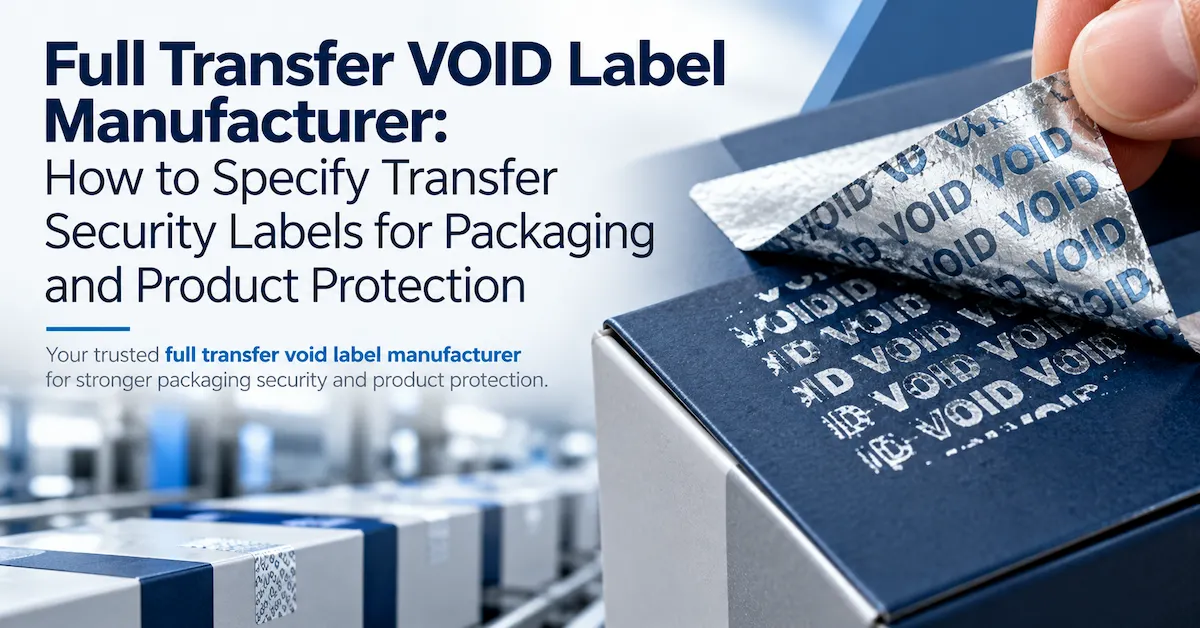
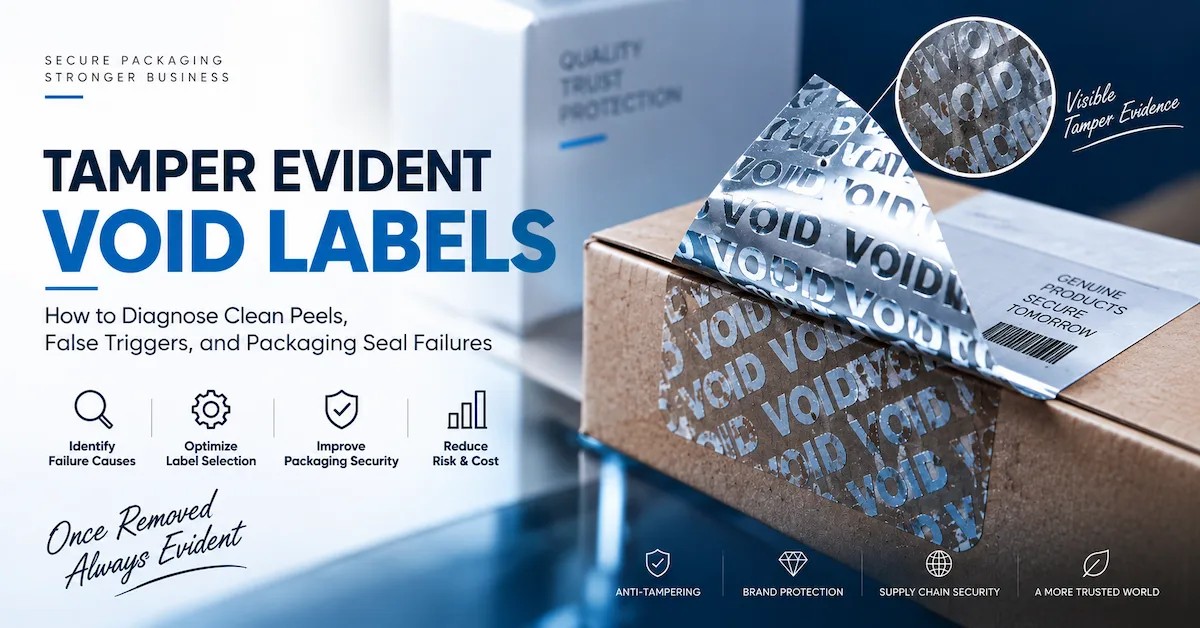
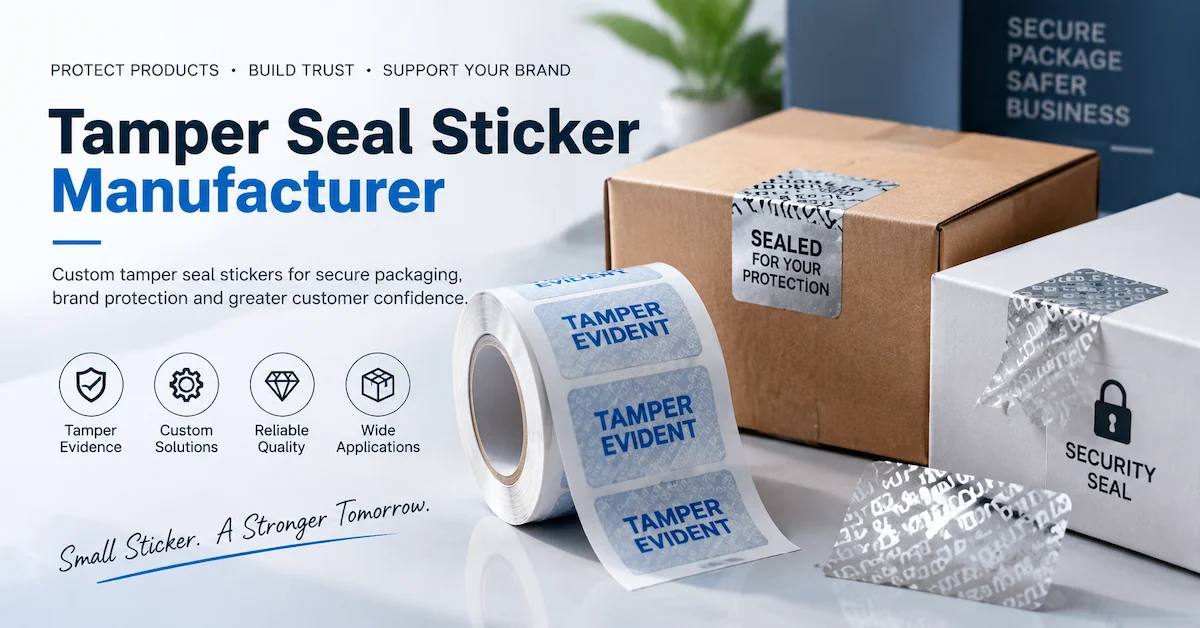
When buyers search for a tamper proof label supplier, they are usually not looking for an ordinary adhesive sticker. They need a packaging or product security solution that makes unauthorized opening, label removal, transfer, replacement, or reuse easier to detect. In practical procurement, “tamper proof” should not be interpreted as a promise that a label can never be removed or attacked. A more useful requirement is to define what visible or irreversible change should occur when someone attempts to interfere with the seal. Depending on the application, this can involve a VOID message, material fragmentation, destructive removal, pattern transfer, or a combination of physical tamper evidence with holographic or serialized identification. Buyers can review the different security label product categories first, but the final construction should be selected according to the package, threat, inspection method, and operating environment rather than appearance alone.
Start With the Security Risk Before Choosing the Label
The first question for a tamper proof label supplier should not be “Which label is strongest?” but “What exactly must the label reveal or prevent?” An electronics brand may need to identify whether a device housing has been opened before a warranty claim. A liquor company may want to make bottle-cap removal or seal reuse visible. A logistics company may need carton opening evidence during storage and transport, while a cosmetics brand may want a security seal that protects the box without disrupting premium packaging design. These are different security problems. If the primary concern is unauthorized opening, a tamper-evident or VOID structure may be more important than an elaborate holographic effect. If the concern is transferring an authentic label to another product, destructive removal can become more important. If counterfeit identification is also required, physical security may need to be combined with visual or digital authentication. HX’s guide to tamper evident seals provides a useful starting point for understanding how the application determines the security mechanism.
Which Buyers Need Custom Tamper Proof Labels?
Custom tamper proof labels are relevant when a visible change after interference has operational value. Electronics manufacturers and component suppliers may use them for housings, controllers, accessories, retail cartons, or warranty points. Wine and beverage companies may use security seals across closures, caps, or bottle-neck areas where unauthorized opening or reuse is a concern. Cosmetics and personal-care brands may need compact sealing structures that fit coated cartons or high-end packaging. Logistics and e-commerce businesses can apply security labels across shipping-carton openings to support receiving inspections and dispute handling. Industrial equipment companies may require labels for service panels or enclosures, while packaging converters often source custom labels on behalf of brand customers. Buyers whose only requirement is decorative branding, basic product information, or a removable promotional sticker generally do not need a tamper-security construction. Separating security projects from ordinary labeling prevents unnecessary cost and helps the supplier propose a structure that corresponds to a measurable requirement.
How VOID, Destructible, Holographic, and Serialized Labels Differ
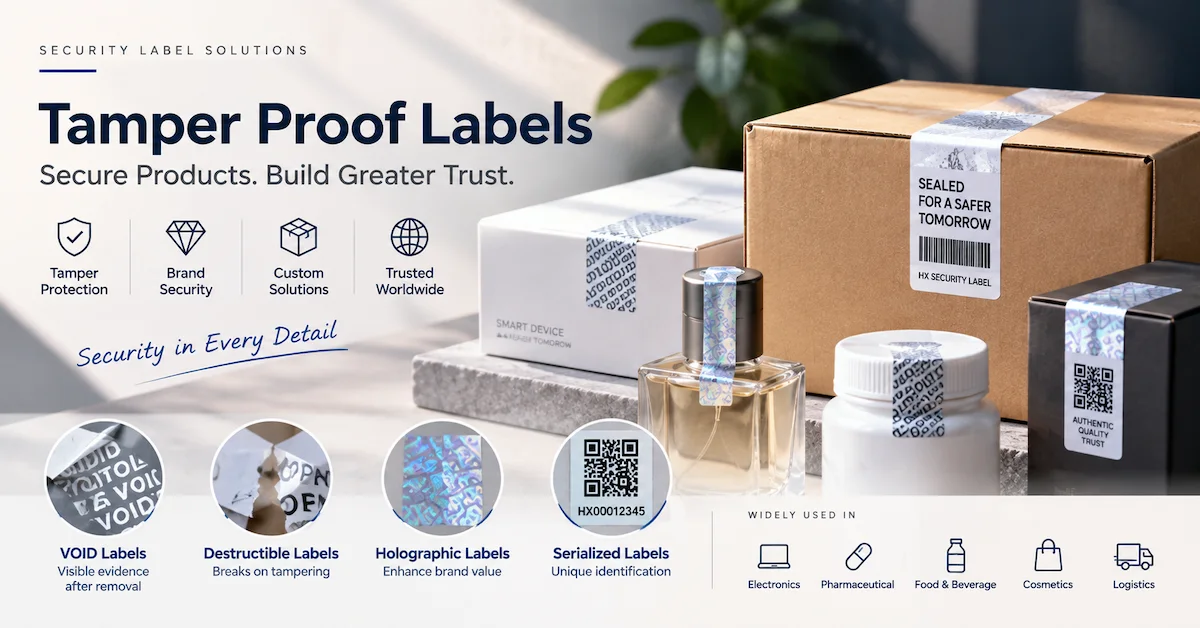
Different security technologies answer different buyer questions, so adding more features does not automatically create a better label. A VOID structure is mainly useful when the buyer wants visible evidence after peeling. A destructible construction focuses on making intact removal and reuse more difficult by breaking or fragmenting during removal. A holographic element can provide visual authentication but should not automatically be treated as evidence that a package has remained unopened. Serial numbers and QR codes create an identity layer, but a printed code alone does not prove that the physical package was never opened. A professional tamper proof label supplier should therefore help the buyer build a combination around the actual risk instead of offering every feature at once. HX discusses this layered approach in its security label selection guide.
| Security Configuration | Primary Purpose | Typical Application | Buyer Should Verify |
|---|---|---|---|
| VOID security label | Reveal removal or opening | Cartons, electronics, equipment | What appears after peeling and where the evidence remains |
| Destructible label | Make intact removal difficult | Warranty points, parts, product surfaces | Break pattern, adhesion, and normal handling stability |
| Holographic security seal | Visual authentication | Liquor, cosmetics, premium packaging | Optical recognition plus any separate tamper mechanism |
| Serialized security label | Individual identification | Electronics, logistics, warranty management | Number accuracy, readability, data ownership, and duplication control |
| QR + tamper-evident label | Physical evidence plus digital interaction | Branded packaging and product verification | Tamper response and digital function as separate acceptance items |
Surface Compatibility Can Determine Whether the Security Feature Works
A label may perform well on one surface and fail on another even when both packages look similar. Coated cartons, corrugated boxes, PET packaging, glass bottles, painted metal, textured plastic, flexible film, and other substrates interact differently with adhesives and security constructions. Buyers should therefore provide the tamper proof label supplier with the actual packaging material and, where possible, production samples. Surface coatings, varnishes, contamination, curvature, roughness, and the available bonding area can all affect adhesion and the removal response. The supplier should know whether the label will be applied manually or by machine, whether the surface is flat or curved, and what happens during storage and transport. HX’s industrial security label guide further explains why application conditions should be part of the specification rather than something investigated only after a problem occurs.
Build a Specification Before Requesting a Final Quote
A useful inquiry should contain enough information for different suppliers to quote the same requirement. Otherwise, one supplier may price a simple printed seal while another includes a specialized security material, variable data, custom die-cutting, and application testing, making the quotations impossible to compare directly. The following table is a buyer specification framework rather than a statement of fixed HX specifications.
| Item | Information to Define |
|---|---|
| Product and industry | Electronics, liquor, cosmetics, logistics, equipment, food packaging, etc. |
| Security objective | Opening evidence, anti-transfer, authentication, identification, or combined protection |
| Application surface | Carton, coated paper, glass, plastic, metal, film, or other substrate |
| Seal position | Box opening, bottle cap, enclosure seam, warranty point, shipping closure |
| Label dimensions | Width, height, shape, and available bonding area |
| Tamper response | VOID message, visible transfer, tearing, fragmentation, or other approved change |
| Branding | Logo, colors, text, custom pattern, holographic design |
| Variable data | QR code, barcode, serial number, batch information |
| Application method | Manual application or automatic labeling |
| Supply format | Roll or sheet, winding direction, core and spacing where applicable |
| Environment | Temperature, humidity, transport, abrasion, storage period |
| Quantity | Sample requirement, initial order, expected repeat order volume |
| Acceptance | Sample reference, inspection method, pass/fail criteria |
This level of information also helps the supplier identify which specifications still require testing instead of giving an unsupported performance claim.
Sample Approval Should Test Function, Not Only Artwork
A digital proof can confirm logo placement, wording, dimensions, and basic appearance, but it cannot demonstrate the physical behavior of a security label. Buyers should request representative samples and test them on the actual product or packaging before bulk production. First, apply unopened control samples and confirm that normal handling does not accidentally create a tamper indication. Second, intentionally open or peel separate samples and record the resulting VOID pattern, material breakage, transfer effect, or other intended evidence. Third, repeat the inspection after relevant storage or transport conditions when those conditions matter to the application. Record which packaging version was tested, the application conditions, the time between application and testing, and the observed result. This creates a repeatable approval reference instead of relying on a single photograph or subjective statement that the label “looks secure.”
Normal Handling and Deliberate Tampering Must Be Evaluated Separately
A useful tamper-proof design must distinguish between ordinary handling and deliberate interference. A label that breaks during packaging or shipment can generate false alarms, while a seal that survives everything but can be peeled away cleanly may provide little evidence of opening. During testing, buyers should therefore maintain one group of samples for normal-use observation and another group for deliberate removal. The acceptance criteria should explain what an untouched label should look like and what an opened label should look like. If the package can be opened through another path without disturbing the seal, moving or redesigning the seal may be more effective than adding another decorative security feature. This is why a tamper proof label supplier should understand package structure as well as label construction.
Environmental Conditions Should Be Written Into the Project Brief
Security labels used in long-distance logistics, cold storage, humid warehouses, industrial equipment, or high-friction packaging may face conditions that are very different from a clean office sample test. Buyers should identify relevant temperature changes, humidity, abrasion, storage duration, transport conditions, and exposure to oils or cleaning agents where applicable. These conditions should then be tested or supported for the specific proposed construction. Do not assume that a temperature range or durability statement from one material automatically applies to another. Application temperature, storage environment, and service conditions are also different concepts and should be discussed separately. For buyers comparing several solutions, testing each candidate under the same agreed conditions produces more useful information than comparing marketing descriptions.
Check Production Format Before Automatic Labeling
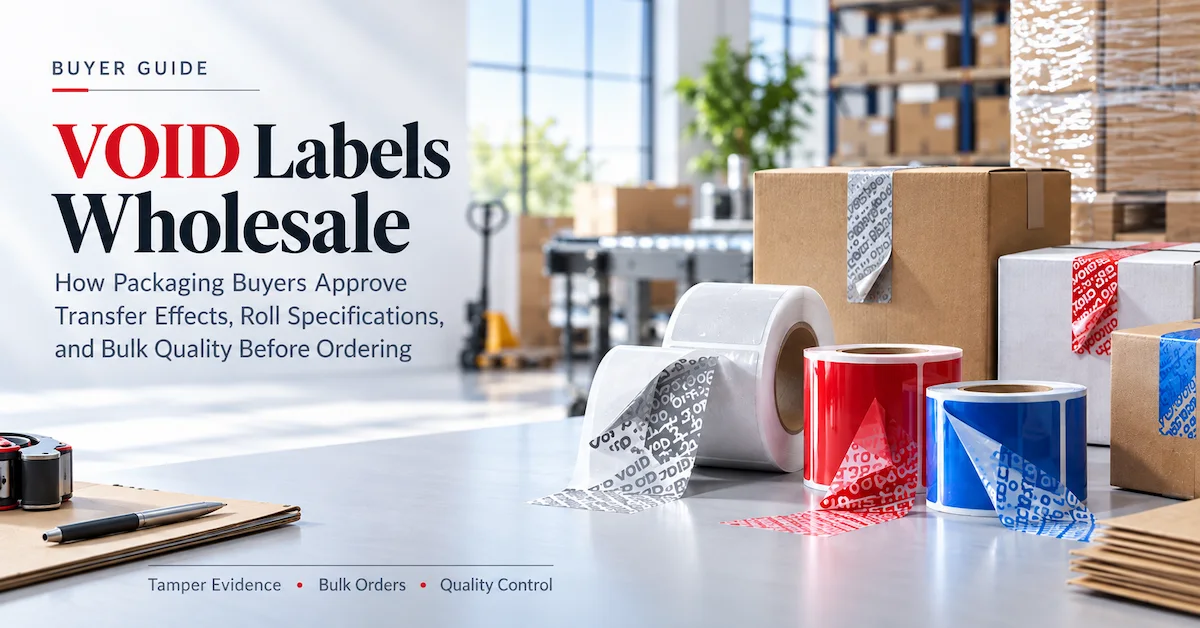
For high-volume packaging, label performance also depends on whether the finished rolls can run correctly on the customer’s equipment. Before production, confirm label dimensions, liner width, label spacing, winding direction, core dimensions, roll diameter limits, sensor requirements, and the location of any transparent or unusual features that could affect detection. If the design includes an irregular shape or complex security construction, a dispensing trial can reduce the risk of discovering production-line incompatibility after the bulk shipment arrives. Buyers sourcing larger volumes can also review the bulk security labels supplier guide for additional production considerations.
QR Codes and Serial Numbers Need Their Own Quality Controls
If the project includes variable QR codes, barcodes, or serial numbers, the tamper proof label supplier should treat data accuracy as a separate quality requirement. Buyers should define where the source data comes from, how ranges are allocated, what happens to rejected labels, whether duplicate numbers are permitted, how finished codes are checked, and what records are delivered with the shipment. A QR code printed on a tamper-evident label does not automatically mean that a full authentication or traceability system is included. Code printing, database management, verification pages, software integration, and ongoing data services should be specified as separate deliverables where required. Physical security and digital identification can complement each other, but each needs its own acceptance test.
What Quality Controls Matter Before Mass Production?
Sample approval only proves that an acceptable sample was produced; long-term procurement requires the approved result to be repeated. Before choosing a tamper proof label supplier, buyers should ask how incoming materials, printing, security effects, die-cutting, dimensions, variable data, roll presentation, and finished packaging are inspected. The approved artwork revision, material construction, tamper response, and supply format should be documented so that repeat orders can be compared against the same reference. Retained samples can also help when the buyer and supplier need to investigate a future difference. Where certifications are part of supplier qualification, confirm the certificate holder, issuing organization, validity, and scope rather than assuming that a certification logo automatically verifies every individual label specification. The security label printing factory guide provides additional questions buyers can use when reviewing production and quality processes.
How to Compare Cost Without Choosing the Wrong Label
The lowest label price is not necessarily the lowest project cost. Material construction, adhesive selection, custom holographic work, security effects, variable data, special die-cutting, sample development, roll requirements, inspection, order quantity, and delivery can all influence quotation structure. A cheaper label that does not perform correctly on the package can create rework, rejected inventory, packaging-line stoppages, shipment delays, or security disputes. When comparing suppliers, give each company the same specification and request a clear explanation of what is included in the price. Compare the cost of the approved construction rather than comparing unrelated label types. HX’s guide on custom security label cost factors can help buyers identify which project details should be clarified before requesting a final quotation.
MOQ and Lead Time Should Be Confirmed After the Specification Is Clear
MOQ and lead time depend on the label structure, artwork, material availability, customization, variable data, proofing requirements, quantity, and production schedule. Buyers should therefore avoid treating a generic MOQ or lead-time statement as a commitment before the project has been defined. Ask the supplier to separate sample development, sample approval, production, inspection, dispatch, and transportation in the timeline. For repeat programs, discuss how artwork revisions, material changes, new serial ranges, or forecast volumes will be managed. A reliable supply relationship is based on reproducible specifications and agreed milestones rather than one attractive delivery promise.
OEM Customization Should Be Defined as a Controlled Process
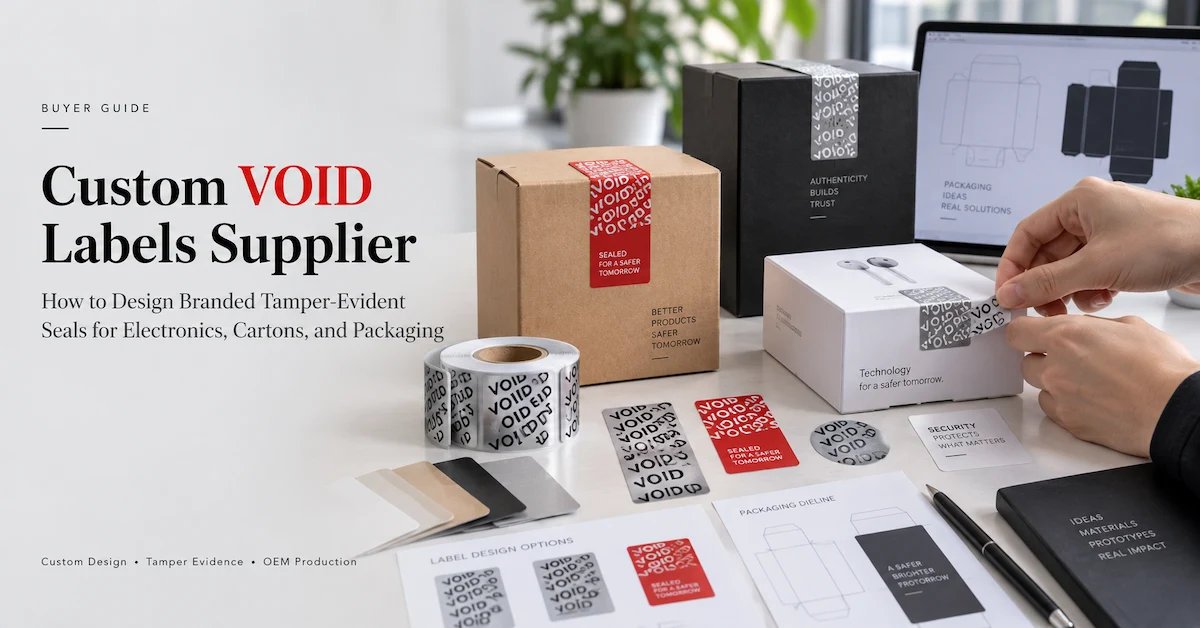
Custom tamper proof labels may involve size, shape, logo, color, VOID message, security pattern, holographic elements, serialization, QR codes, supply format, or combinations of these features. However, customization should start from functional requirements rather than from adding as many technologies as possible. Buyers should decide which elements are required for security, which are required for branding, and which are optional. Files, intellectual-property ownership, design revisions, variable-data responsibilities, sample approval, and repeat-order controls should be documented. Buyers interested in combining different functions can review HX’s custom security label products and then submit actual packaging information for a project-specific discussion.
Why Supplier Selection Should Include Repeat-Order Control
For brands that purchase labels continuously, the second and third orders matter as much as the first. Changes in material, adhesive, artwork version, security effect, die-cut position, or serialized data can create inconsistent performance even when the product name remains unchanged. Ask the tamper proof label supplier how approved specifications are stored, how changes are communicated, how obsolete artwork is prevented from returning to production, and how variable-data ranges are separated between orders. A repeatable specification also makes internal quality inspections easier because receiving teams have a known reference instead of evaluating every shipment from the beginning.
What Information Should You Send HX Before Requesting Samples?
A productive inquiry should include the product type, application surface, packaging photos, intended seal position, label dimensions, required tamper behavior, artwork if available, quantity, application method, environmental conditions, and any QR code or serial-number requirement. If the project involves several packaging versions, identify each surface separately rather than assuming one sample will represent all of them. Buyers can learn more about the company through the HX Security Label About Us page, review common project questions in the FAQ section, or use the contact page to discuss sampling and quotation requirements.
Frequently Asked Questions
1. What is a tamper proof label supplier?
A tamper proof label supplier develops or supplies security labels intended to make opening, removal, transfer, or interference visibly detectable. The exact result depends on the selected construction and application, so buyers should define a testable tamper response rather than expecting a universal “impossible to remove” label.
2. Are tamper proof labels and tamper evident labels the same?
The terms are often used together in purchasing searches, but “tamper evident” is usually the more precise functional description because the label is designed to provide evidence of interference. A buyer should specify what evidence is required instead of relying only on the terminology.
3. Which label is suitable for carton sealing?
The answer depends on the carton surface, coating, seal position, transport conditions, and required removal response. VOID labels, destructible labels, and other tamper-evident constructions can be considered, but they should be tested on the actual production carton before approval.
4. Can a VOID label be customized with a logo?
Custom graphics may be incorporated depending on the proposed construction and production method. Buyers should distinguish the branding printed on the face of the label from the security effect that appears after removal and confirm both during sample approval.
5. Can tamper proof labels include holographic features?
A security label can combine visual holographic features with a tamper-evident structure when the project requires both functions. Buyers should test visual authentication and removal behavior separately because holographic appearance alone does not prove that a label provides tamper evidence.
6. Can QR codes and serial numbers be added?
Variable QR codes, barcodes, or serial numbers can be considered for projects that require product identification or digital verification. The buyer should define data generation, printing, inspection, duplicate handling, database responsibility, and any software services as separate requirements.
7. What should be tested before bulk production?
Buyers should check appearance, dimensions, adhesion on the actual surface, normal handling stability, the intended tamper response, barcode or QR readability where applicable, environmental conditions relevant to the project, and compatibility with manual or automatic label application.
8. Can one tamper-proof label work on glass, plastic, and cartons?
Do not assume so. Different substrates and surface treatments can produce different adhesive and tamper responses. Each important packaging surface should be identified and qualified before the same construction is standardized across multiple products.
9. How do I compare quotations from different suppliers?
Provide the same application description, packaging surface, dimensions, security requirement, variable-data requirement, quantity, supply format, testing expectations, and delivery destination to every supplier. Then compare equivalent constructions and included services rather than unit price alone.
10. How can I request a custom tamper-proof label from HX?
Prepare photos or samples of the packaging, the required label size and position, the type of tamper evidence you expect, quantity, artwork, application method, and environmental requirements. Submit these details through the HX Security Label contact page so the project can be discussed around an actual application instead of a generic label specification.
Conclusion
Selecting a tamper proof label supplier is ultimately a process of converting a security concern into a testable specification. Define what kind of interference you need to detect, identify the actual packaging surface and opening path, compare the appropriate VOID, destructible, holographic, or serialized options, and approve physical samples under conditions relevant to the product before mass production. Quality control, data management, roll format, repeat-order consistency, MOQ, and delivery should then be evaluated against the same approved requirement. If you are developing a security seal for electronics, cartons, bottles, industrial products, logistics packaging, or branded retail products, review the HX security label range and contact HX Security Label with your packaging information and expected tamper response to discuss a suitable sampling and customization approach.