
What Is a Tamper Seal Sticker Manufacturer Responsible For?
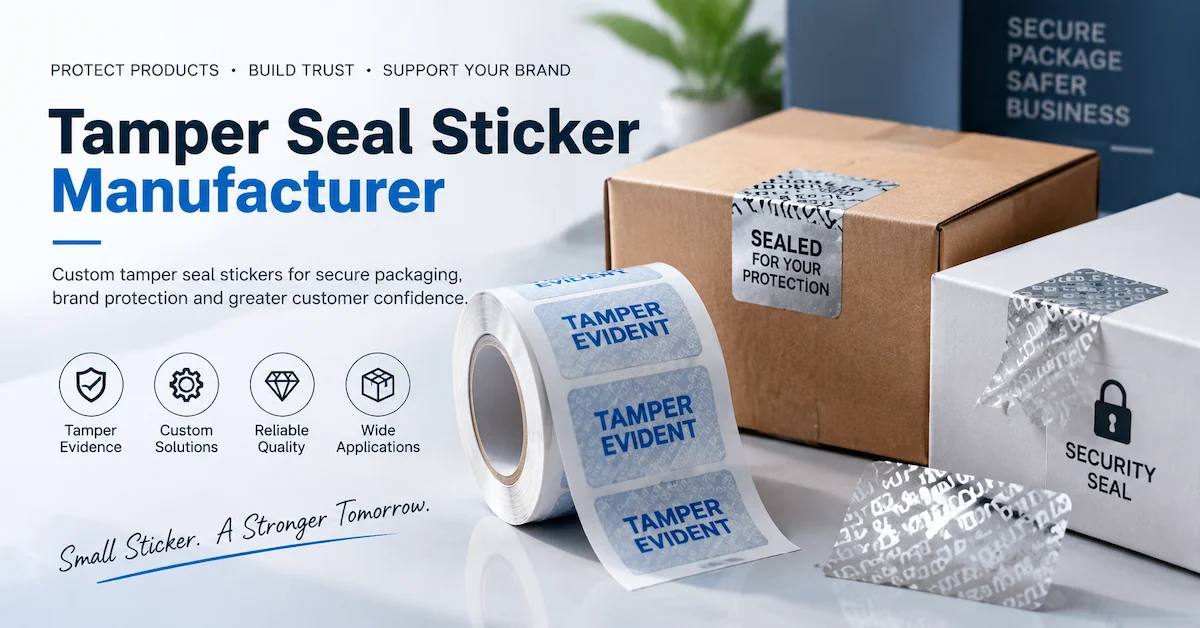
A professional tamper seal sticker manufacturer does more than produce adhesive stickers with warning messages. The main responsibility is to help customers create a visible and reliable indication when a product package, container, or protected area has been opened, removed, or interfered with.
For B2B buyers, a tamper seal sticker is part of a broader packaging security system. The label needs to work together with the product structure, packaging material, application process, and inspection method.
A reliable supplier should help customers answer several important questions:
- What type of tampering needs to be detected?
- Where will the seal be applied?
- What should happen when someone removes the sticker?
- Who will inspect the security result?
- How can the approved sample remain consistent during repeat production?
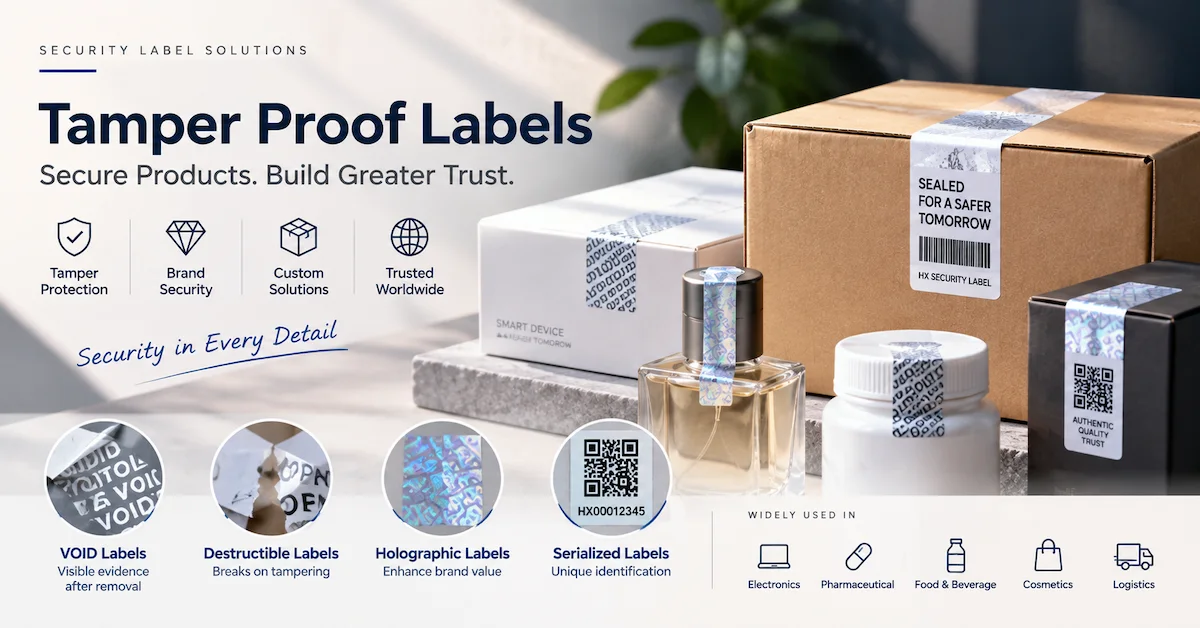
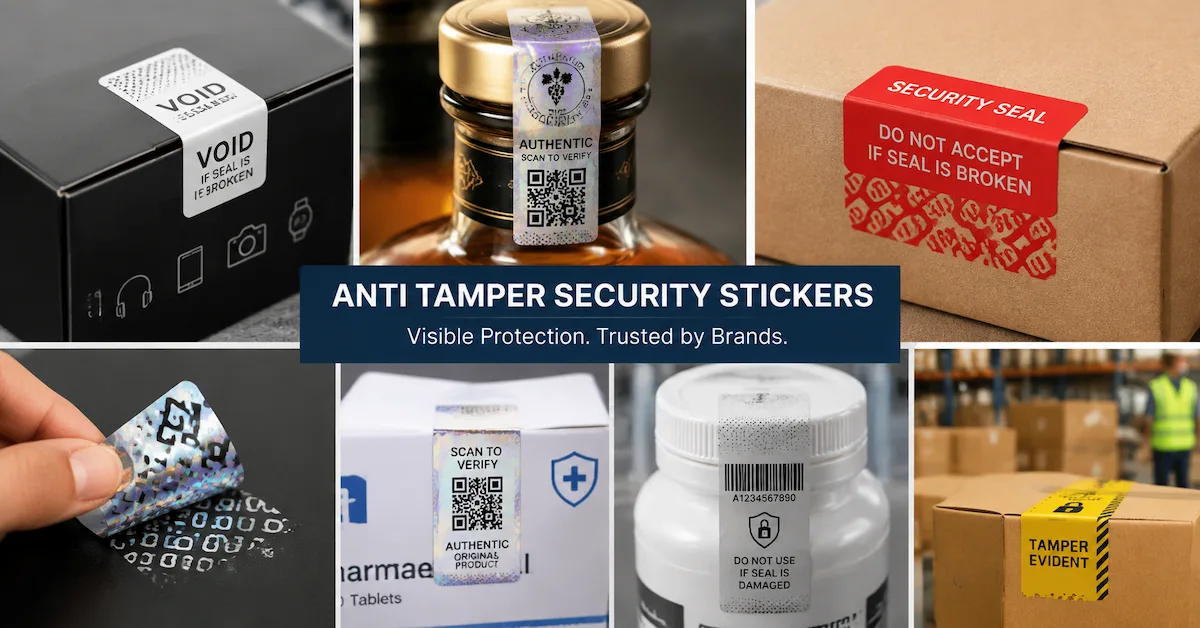
Tamper seal stickers can include different security mechanisms, such as VOID messages, destructive materials, holographic elements, serial numbers, or QR codes. The correct solution depends on the application requirement instead of simply selecting the most advanced-looking design.
HX Security Label provides customized security label solutions through its security label product range, helping buyers evaluate different security approaches according to their packaging needs.
Why Brands Use Tamper Seal Stickers for Product Protection
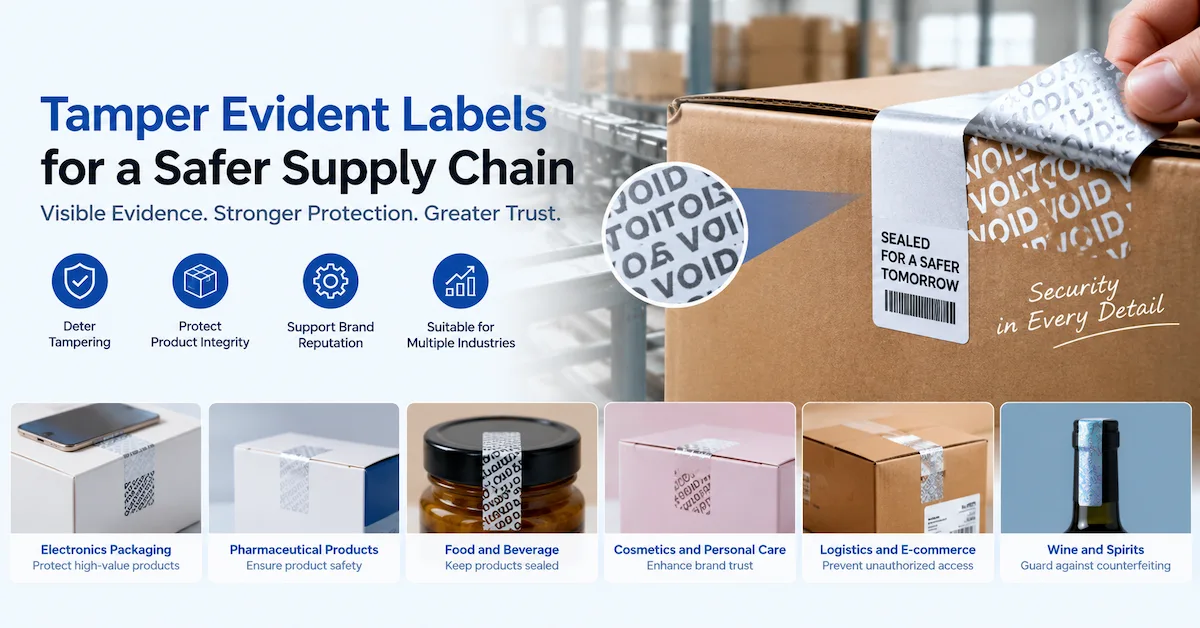
Brands and manufacturers use tamper seal stickers because they provide a simple visual method to identify unauthorized opening or package interference.
Common applications include:
- Electronics packaging and warranty protection
- Retail product cartons
- Cosmetic and personal-care packaging
- Wine and beverage closures
- Industrial equipment protection
- Logistics and shipping packages
For example, an electronics company may place a tamper seal sticker over a product opening point to show whether the enclosure has been accessed. A cosmetics brand may use a security seal on a retail box to improve customer confidence before purchase. A logistics company may use tamper labels to support receiving inspections during transportation.
However, buyers should understand that tamper evidence and anti-counterfeit protection are related but different concepts.
A tamper seal mainly answers:
“Has this package or product area been opened?”
An anti-counterfeit solution may answer:
“Is this product genuine?”
For higher-risk products, companies may combine tamper seals with holographic labels, hidden verification features, QR codes, or serial numbers.
How to Select a Tamper Seal Sticker Manufacturer?
Choosing the right tamper seal sticker manufacturer requires evaluating technical capability, customization ability, and production consistency.
Buyers should review the following areas before placing bulk orders:
| Evaluation Factor | Buyer Questions |
|---|---|
| Security function | What happens after removal or opening? |
| Application surface | Does the sticker work on the actual packaging material? |
| Adhesive performance | Can it remain stable during storage and transportation? |
| Tamper response | Is the evidence clear and easy to identify? |
| Customization | Can size, artwork, colors, and security features be adjusted? |
| Production control | Can future orders match approved samples? |
| Data management | Can QR codes or serial numbers be controlled? |
| Supply capability | Can the supplier support long-term purchasing? |
A supplier should not only provide a product sample but also explain why that construction matches the customer's packaging and security requirements.
Different Types of Tamper Seal Stickers Explained
VOID Tamper Seal Stickers
VOID stickers create visible evidence after removal. Depending on the structure, they may reveal hidden messages, transfer patterns, or show a changed appearance.
They are commonly used for:
- Electronics warranty seals
- Carton closures
- Equipment protection
- Product access points
Important questions before approval:
- What message appears after removal?
- Where does the evidence remain?
- Can inspectors easily identify the change?
HX provides VOID Open Label solutions for applications requiring visible tamper evidence.
Destructible Tamper Seal Stickers
Destructible seals use fragile materials that make clean removal more difficult.
They are suitable for applications where buyers want to reduce the possibility of transferring a genuine sticker from one product to another.
Before selecting this type, buyers should confirm:
- Whether normal handling damages the sticker
- Whether the broken pattern is easy to recognize
- Whether the application surface affects performance
Holographic Tamper Seal Stickers
Holographic features add visual authentication elements through optical effects.
They can help brands create recognizable security features, especially for premium packaging.
However, holographic appearance alone does not automatically provide tamper evidence. If opening detection is required, the holographic design should be combined with a suitable tamper structure.
Packaging Surface Determines Tamper Seal Performance
One of the most important considerations when working with a tamper seal sticker manufacturer is the application surface.
Different packaging materials can affect:
- Adhesion strength
- Removal behavior
- Security message visibility
- Long-term stability
Common surfaces include:
- Coated paper cartons
- Corrugated boxes
- Plastic housings
- Glass containers
- Painted metal
- Flexible packaging films
A sticker that works well on a smooth laboratory surface may behave differently on a real production package.
Before production, buyers should provide:
- Actual packaging samples
- Surface treatment information
- Application position
- Label dimensions
- Storage and transportation conditions
HX discusses application requirements and security label selection through its industrial security label guide.
What Information Should Buyers Provide Before Requesting Quotes?
A complete project brief helps suppliers provide more accurate recommendations.
Instead of asking:
“Please quote tamper stickers.”
Buyers should provide:
| Project Information | Details |
|---|---|
| Product type | Electronics, cosmetics, beverage, equipment, etc. |
| Security purpose | Opening detection, warranty protection, anti-transfer |
| Packaging material | Paper, plastic, glass, metal, coating |
| Label position | Box opening, cap, seam, product surface |
| Sticker size | Width, height, shape |
| Security effect | VOID, destruction, residue, hidden message |
| Artwork | Logo, colors, text, graphics |
| Quantity | Sample and production requirements |
| Application method | Manual or automatic |
| Environment | Storage, humidity, temperature, transportation |
This information allows buyers to compare suppliers based on the same requirements instead of comparing unrelated sticker types.
Why Sample Testing Is Essential Before Bulk Production
A professional tamper seal sticker manufacturer should recommend physical sample testing before mass production.
Sample evaluation should include:
Application Testing
Apply the sticker to the real packaging.
Check:
- Position accuracy
- Adhesion
- Edge lifting
- Appearance after application
Removal Testing
Remove samples under controlled conditions.
Check:
- Whether tamper evidence appears
- Whether the result matches expectations
- Whether the evidence is easy to understand
Environment Testing
Evaluate performance under actual usage conditions.
Consider:
- Storage time
- Transportation
- Humidity
- Temperature changes
- Surface exposure
A sample that works on a display board does not always guarantee successful performance on final packaging.
HX includes product proofing and sample confirmation within its company workflow.
Combining Tamper Seals With QR Codes and Serial Numbers
Many brands need both physical protection and product identification.
Tamper seal stickers can be combined with:
- QR codes
- Barcodes
- Serial numbers
- Batch information
- Authentication records
However, each function should be evaluated separately.
The tamper seal answers:
“Has this area been opened?”
The code answers:
“Which product or batch does this label belong to?”
A QR code does not automatically create a complete authentication system. Buyers should define:
- Who creates the data
- How codes are generated
- How duplicate numbers are controlled
- What information is connected to the code
Quality Control Requirements for Tamper Seal Production
Quality control should focus on the approved security requirement.
Important inspection areas may include:
| Quality Item | Purpose |
|---|---|
| Label size | Maintain packaging compatibility |
| Printing quality | Ensure brand consistency |
| Security effect | Confirm tamper response |
| Die cutting | Maintain correct shape |
| Data accuracy | Prevent QR or serial errors |
| Material consistency | Support repeat orders |
| Packaging format | Support customer application |
A good supplier should be able to explain how the approved sample becomes a repeatable production standard.
OEM Customization From a Tamper Seal Sticker Manufacturer
Many companies require customized tamper seal stickers instead of standard products.
Customization options may include:
- Brand logo
- Custom dimensions
- Special shapes
- Security messages
- Holographic effects
- QR codes
- Serial numbers
- Packaging formats
OEM buyers should confirm:
- Artwork ownership
- Approval process
- Revision control
- Data responsibility
- Repeat-order management
HX provides customized security label solutions for businesses requiring application-specific designs.
Cost Factors When Buying Tamper Seal Stickers
The cost of tamper seal stickers depends on several factors:
- Material selection
- Adhesive structure
- Sticker size
- Security technology
- Printing requirements
- Custom artwork
- Variable data
- Quantity
- Packaging format
The lowest unit price is not always the most economical choice.
A low-cost sticker may create additional expenses if:
- It fails on the packaging surface
- It does not show clear tamper evidence
- It cannot run on the production line
- Repeat orders have inconsistent results
Buyers should compare total project value instead of only comparing sticker prices.
HX provides additional information about security label pricing through this custom security label cost guide.
How to Build a Long-Term Relationship With a Tamper Seal Supplier
For brands purchasing security labels regularly, repeat-order consistency is extremely important.
A reliable supplier should maintain:
- Approved artwork versions
- Material records
- Security specifications
- Production references
- Data management rules
This helps prevent problems such as:
- Old artwork being reused
- Incorrect serial ranges
- Material changes without approval
- Different security effects between batches
A long-term supplier relationship depends on controlled production, communication, and documentation.
Frequently Asked Questions
What is a tamper seal sticker manufacturer?
A tamper seal sticker manufacturer produces security stickers designed to show evidence when a package or product area has been opened, removed, or disturbed.
Are tamper seal stickers the same as security labels?
Tamper seal stickers are one type of security label focused mainly on opening detection. Security labels may include additional features such as holograms, QR codes, and authentication elements.
Can tamper seal stickers be customized?
Yes. Customization may include size, shape, artwork, security effects, QR codes, and serial numbers depending on project requirements.
Do tamper seals work on every surface?
No. Performance depends on packaging material, surface treatment, adhesive selection, and environmental conditions.
Can tamper seal stickers prevent all counterfeiting?
No. Tamper seals mainly provide opening evidence. Complete anti-counterfeit strategies may require additional authentication technologies.
How should buyers test tamper seals?
Apply samples on actual packaging, test normal handling, perform removal tests, and compare results with approved samples.
What affects tamper sticker pricing?
Material, size, security structure, customization, quantity, printing, data requirements, and production format influence cost.
Can QR codes be added to tamper seals?
Yes. QR codes can be added when product identification or digital verification is required.
What information should I provide when requesting samples?
Provide packaging details, sticker size, application position, security requirement, quantity, artwork, and environmental conditions.
How can I contact HX for tamper seal sticker projects?
Prepare your product information and packaging requirements, then contact HX through the Contact Us page for project discussion and sampling.
Conclusion
Choosing the right tamper seal sticker manufacturer requires evaluating more than sticker appearance or price. The best solution comes from matching the tamper evidence method with the actual product, packaging surface, inspection process, and production requirements. Buyers should confirm security function through samples, define quality standards before bulk production, and select a supplier capable of maintaining consistency across future orders. For electronics, cosmetics, beverage packaging, logistics, industrial products, and other applications requiring package protection, review HX Security Label’s security label solutions and contact the team with your application details to discuss a suitable customized tamper seal approach.