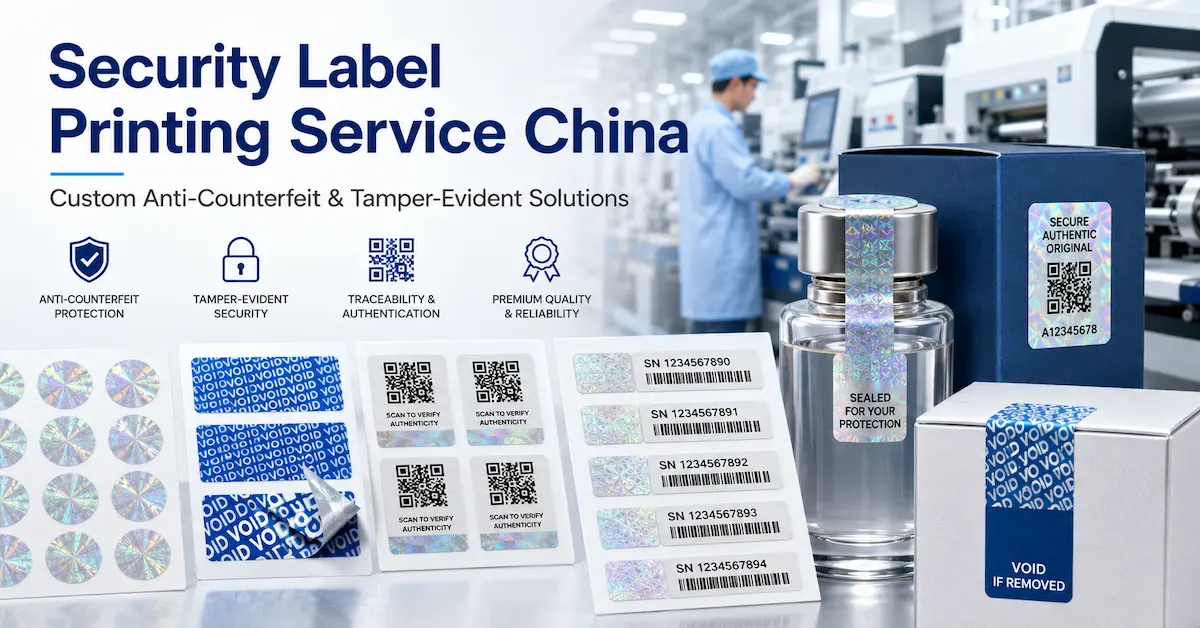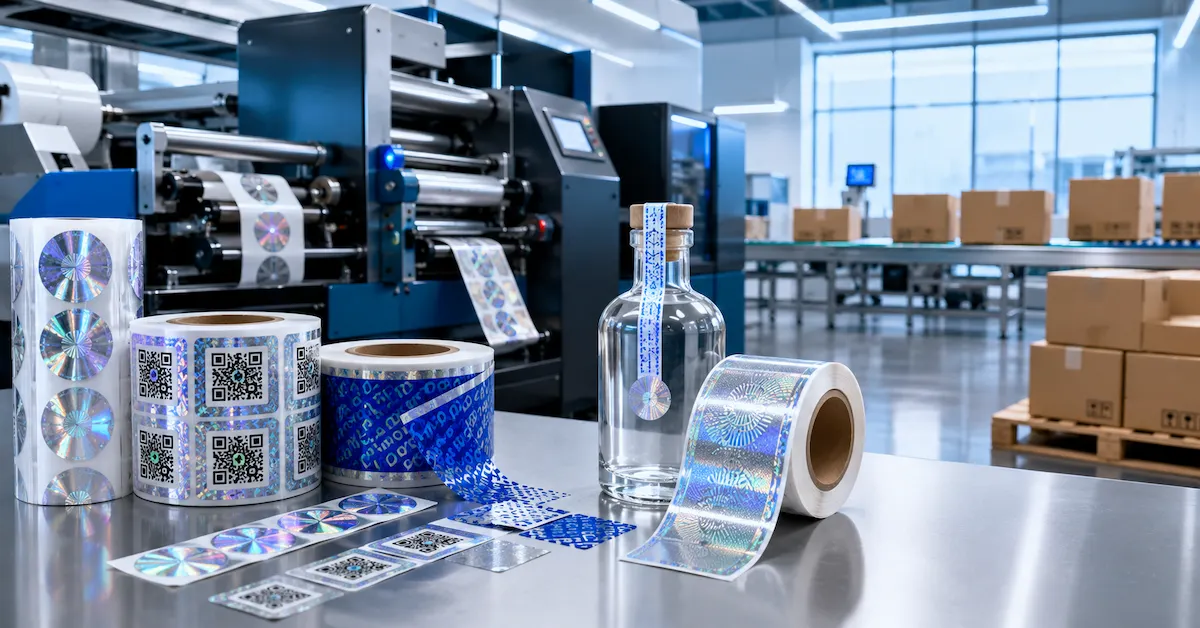

Choosing a custom anti counterfeit labels factory is a strategic decision for brands that need stronger product protection, not just better packaging decoration.
Counterfeit products, unauthorized refilling, package tampering, fake warranty claims, and supply chain replacement can damage brand reputation quickly. For products such as liquor, electronics, pharmaceuticals, cosmetics, food, tea, agricultural products, and logistics packaging, anti-counterfeit labels help customers, distributors, and internal teams identify whether a product is genuine and whether the package has been opened.
A reliable factory should not only print your logo on a sticker. It should help you design a complete label solution based on your product surface, packaging structure, security level, verification method, order quantity, and application process.
If you are comparing different security label options, you can first review HX’s security label product categories to understand common anti-counterfeit label structures and applications.
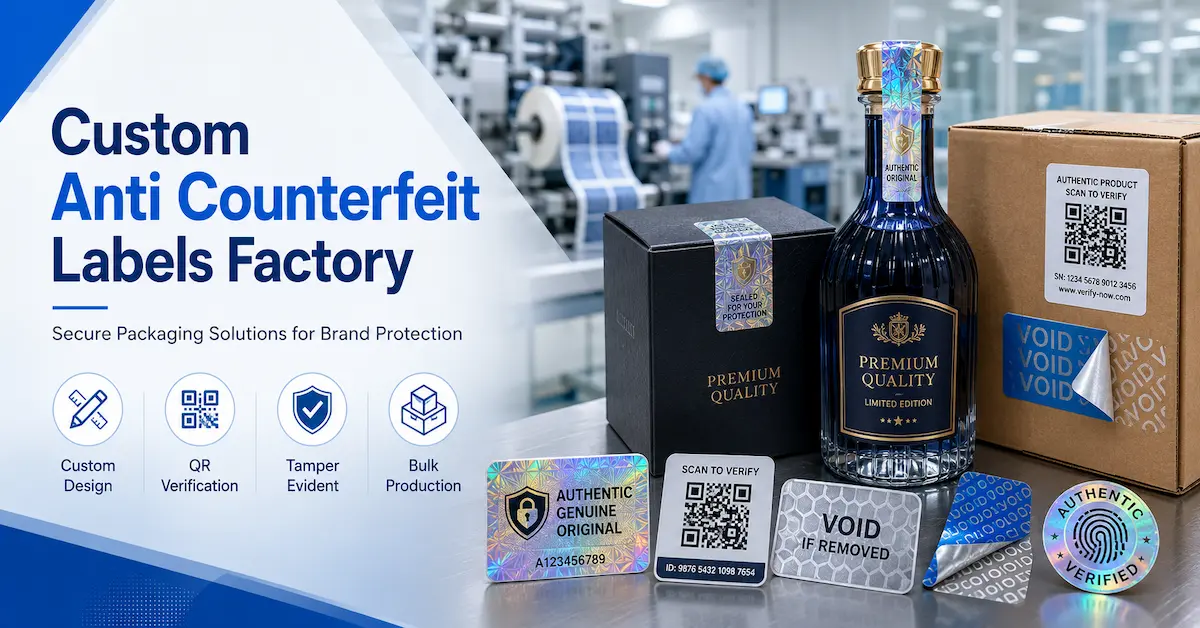
Why Custom Anti Counterfeit Labels Matter
Standard labels may show brand information, but custom anti-counterfeit labels are designed to solve security problems.
They can help brands:
- Make fake products harder to copy
- Show clear evidence of package opening
- Prevent sticker removal and reuse
- Support QR code product authentication
- Add serial numbers for batch management
- Improve consumer confidence
- Protect distributor and retail channels
- Reduce complaints caused by fake or replaced products
For B2B buyers, the real value is not only the label itself. The value is a safer packaging system that protects products from production to warehouse, transport, retail, and customer use.
What a Custom Anti Counterfeit Labels Factory Should Provide
A professional custom anti counterfeit labels factory should provide both production capability and technical guidance.
Common services include:
| Factory Service | Why It Matters |
|---|---|
| Custom design | Matches brand identity and packaging style |
| Material selection | Ensures label performance on glass, carton, plastic, metal, or film |
| Holographic effects | Adds visible anti-counterfeit protection |
| VOID structure | Shows clear evidence after removal |
| QR code printing | Supports product authentication and tracking |
| Serial number printing | Helps batch management and traceability |
| Sample proofing | Reduces risk before bulk production |
| Bulk production | Supports stable quality for large orders |
| Export packaging | Protects labels during international delivery |
If a supplier only asks for size and quantity, it may not be enough for a serious anti-counterfeit project. A good factory should ask about how the label will actually be used.
Key Security Features for Custom Labels
Different products need different protection methods. The best anti-counterfeit label usually combines visible security, tamper evidence, and digital verification.
1. Holographic Anti-Counterfeit Design
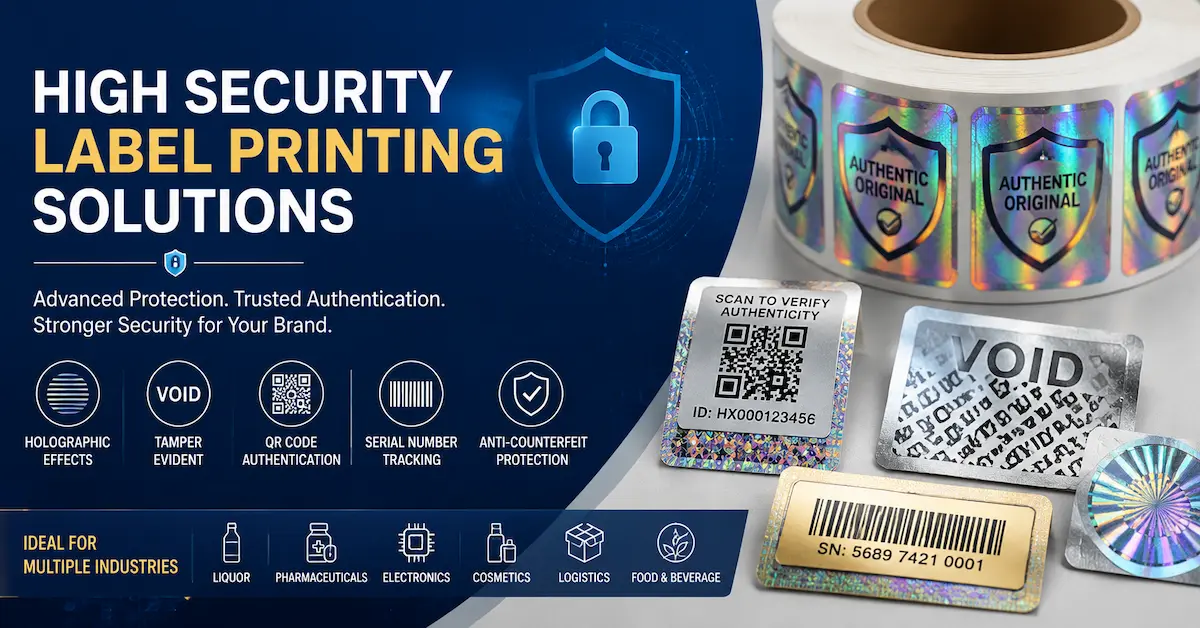
Holographic labels create a strong visual security effect through optical patterns, metallic shine, and light-changing images. They are suitable for premium products and packaging that need both security and shelf appeal.
Common applications include:
- Liquor and spirits
- Cosmetics
- Electronics
- Gift boxes
- Certificates
- Retail packaging
- Brand protection stickers
For brands that need strong visual authentication, holographic labels can help improve packaging appearance while adding anti-counterfeit value.
2. VOID Tamper-Evident Labels
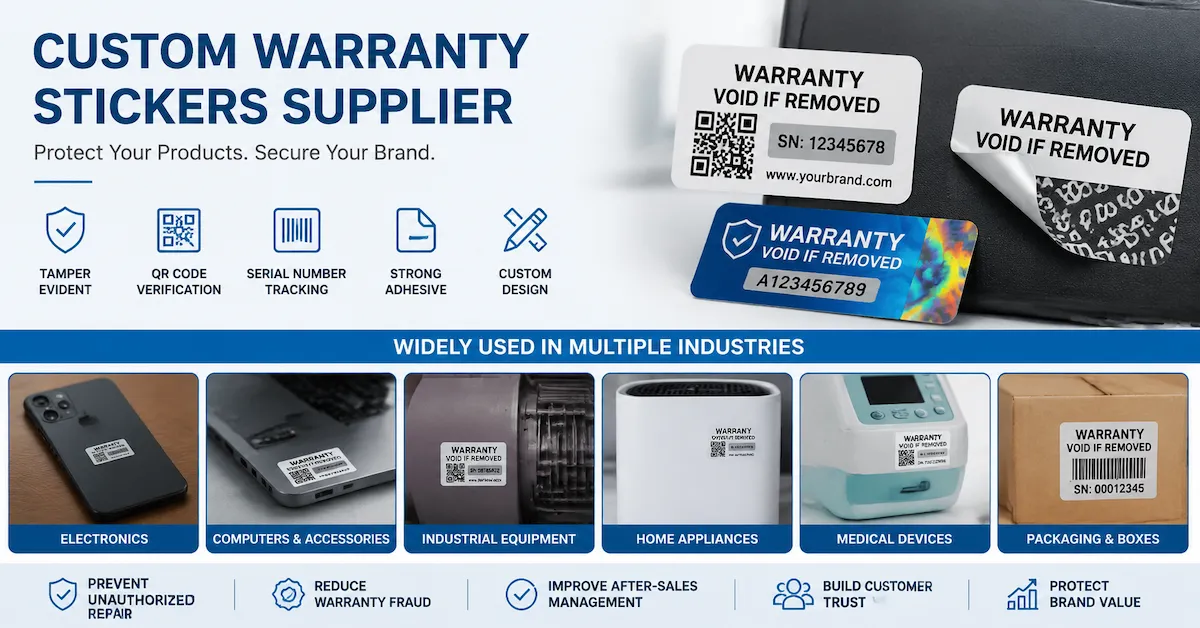
VOID labels are designed to leave visible signs after removal. When someone tries to peel the label, it may leave “VOID” residue or show a clear opening mark. This makes reuse and unauthorized opening easier to detect.
VOID labels are widely used for:
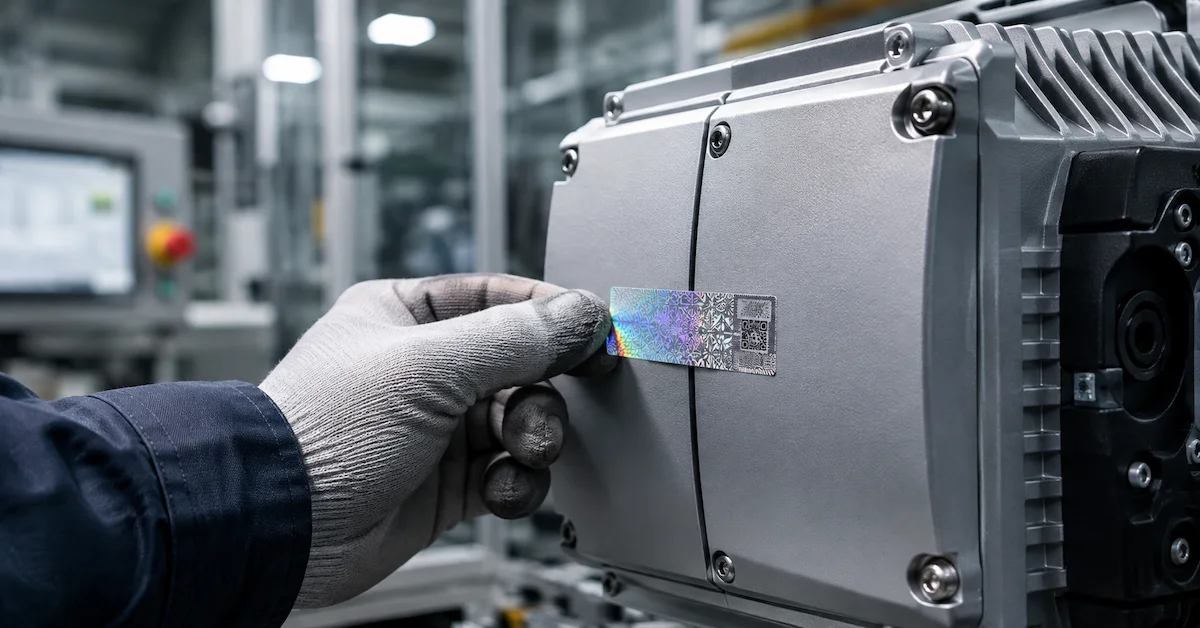
- Electronics warranty seals
- Shipping cartons
- Logistics packaging
- Asset protection
- Warehouse packaging
- Sealed product boxes
If your project needs obvious opening evidence, VOID open labels are suitable for packaging seals, cartons, electronics, and logistics applications.
3. QR Code Authentication Labels
QR code labels allow consumers, distributors, or inspectors to scan and verify product authenticity. They are useful for brands that need digital verification or traceability.
QR code anti-counterfeit labels can support:
- Product authentication
- Batch tracking
- Consumer verification
- Distributor checking
- Promotional campaigns
- After-sales management
For industries such as food, tea, cosmetics, medicine, and electronics, QR code security labels can make verification easier and more user-friendly.
4. Serial Number and Barcode Labels
Serial numbers and barcodes help brands manage batches, channels, and product identity. When combined with QR codes or anti-counterfeit platforms, they can support stronger product tracking.
Before production, buyers should confirm:
- Whether each code is unique
- Whether numbers are printed clearly
- Whether QR codes are readable after printing
- Whether data can be exported
- Whether duplicate codes can be avoided
- Whether code order matches production batches
This is especially important for large orders and repeat production.
5. Latent Image and Hidden Security Features
Some brands need hidden verification beyond visible effects. Latent image labels can provide covert security features that are not easily recognized by ordinary users but can be checked by trained staff or inspection tools.
For high-value products and controlled inspection scenarios, latent image labels can add another security layer.
Custom Anti-Counterfeit Label Applications by Industry
A good factory should not recommend one label for every product. Different industries have different risks.
Liquor and Spirits
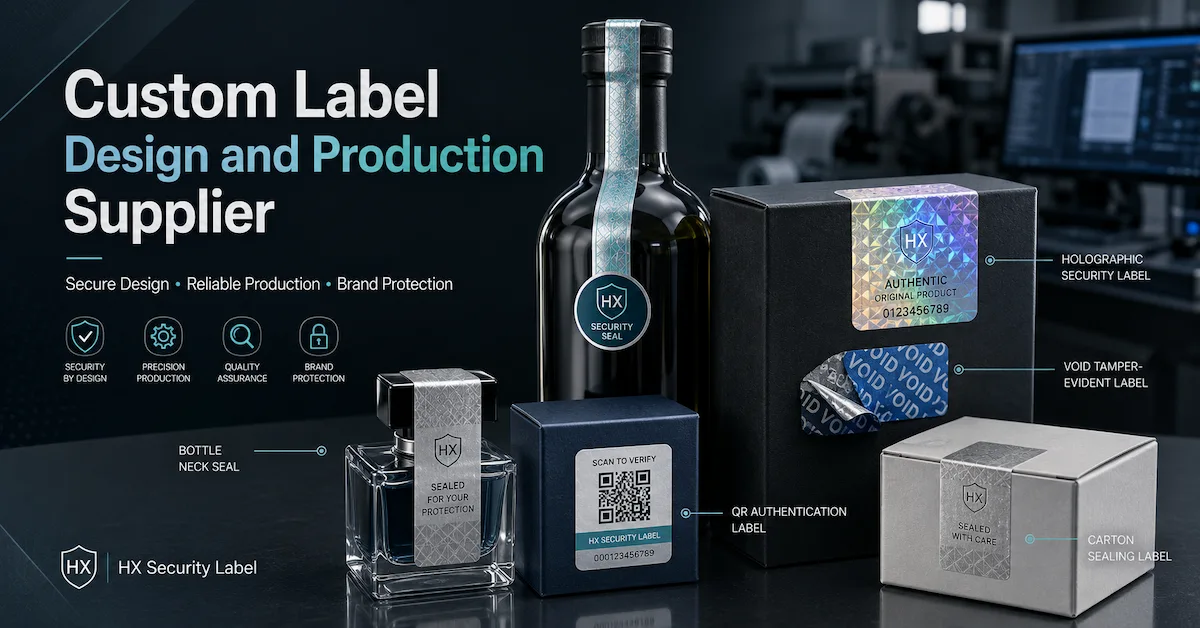
Liquor products face risks such as fake bottles, refilling, cap replacement, and reused packaging. Labels are often applied on bottle necks, caps, front labels, gift boxes, and cartons.
Recommended solutions:
- Holographic bottle seal
- Wine tax stamp
- Destructible neck seal
- QR code authentication label
- VOID tamper-evident label
For alcohol and spirits packaging, wine tax stamp labels can be used for bottle sealing, tax stamp appearance, and anti-counterfeit protection.
Electronics
Electronics brands often need warranty control and anti-opening protection. A security label can show whether a device has been opened or repaired without authorization.
Recommended solutions:
- VOID warranty label
- Serial number label
- QR code security label
- Destructible label
- Latent image label
Pharmaceuticals and Health Products
Pharmaceutical and health product packaging needs trust, traceability, and product verification. Labels should be clean, readable, and difficult to copy.
Recommended solutions:
- QR code authentication label
- Holographic security label
- Tamper-evident sealing label
- Barcode tracking label
Cosmetics and Personal Care
Cosmetics often face fake products in online and retail channels. Anti-counterfeit labels can also improve the premium feeling of the package.
Recommended solutions:
- Holographic brand protection label
- QR code verification sticker
- Tamper-evident box seal
- Private label security sticker
Food, Tea, and Agricultural Products
Food and tea brands often need origin verification, quality trust, and anti-counterfeit packaging.
Recommended solutions:
- QR code product verification label
- Batch tracking label
- Holographic packaging label
- Custom anti-counterfeit brand label
Logistics and Export Packaging
Logistics packaging needs clear tamper evidence during storage and transportation. Security labels can help identify whether a carton or parcel has been opened.
Recommended solutions:
- Carton security seal
- VOID label
- Barcode label
- Serialized shipping label
For broader packaging applications, you can also explore HX’s other uses label solutions.
What Buyers Should Check Before Choosing a Factory
Before placing a custom order, buyers should evaluate the factory from technical, production, and service perspectives.
1. Does the Factory Understand Your Product Surface?
Anti-counterfeit labels are applied to many surfaces, including glass, plastic, paper boxes, cartons, metal, film, and coated packaging. Adhesive performance can change depending on the surface.
| Surface | What to Check |
| Glass bottle | Curved surface fit, strong adhesion, anti-refill structure |
| Paper box | Clean appearance, stable bonding, smooth application |
| Carton | Tamper evidence, transport durability, strong adhesive |
| Plastic packaging | Adhesive compatibility, moisture resistance |
| Metal device | Warranty sealing and clear removal evidence |
| Film packaging | Flexible material and lightweight structure |
A professional factory should recommend materials based on real application conditions.
2. Can the Factory Provide Samples?
Sample proofing is one of the most important steps before mass production. Buyers should test the label on the actual product package.
Check:
- Color and appearance
- Holographic effect
- Adhesion strength
- VOID or tamper effect
- QR code readability
- Die-cutting accuracy
- Roll direction or sheet format
- Packaging line compatibility
Skipping sample testing can lead to expensive problems during bulk production.
3. Can the Factory Maintain Bulk Consistency?
A custom label sample may look good, but bulk production must remain consistent. For anti-counterfeit labels, quality variation can create problems in packaging, verification, and customer trust.
Buyers should confirm:
- Material consistency
- Printing accuracy
- Holographic clarity
- QR code scanning rate
- Serial number accuracy
- Adhesive stability
- Die-cutting precision
- Inspection process before shipment
For brands with repeat orders, the factory should also keep production records and label specifications.
4. Does the Factory Support Private Label and OEM Projects?
Many buyers need their own brand logo, package style, and security layout. A good factory should support OEM and private label customization.
This may include:
- Custom logo
- Custom shape
- Custom holographic background
- Private brand design
- QR code layout
- Serialized data
- Roll or sheet format
- Export packaging
You can learn more about HX’s company background and anti-counterfeiting experience on the About Us page.
Quote Checklist for Custom Anti-Counterfeit Labels
To get a fast and accurate quotation, prepare the following information before contacting a factory.
| Item | Details to Provide |
| Product type | Liquor, electronics, cosmetics, food, medicine, logistics, etc. |
| Label purpose | Anti-counterfeit, tamper evidence, authentication, tracking |
| Application surface | Glass, plastic, carton, paper box, metal, film |
| Label size | Width, height, shape, roll or sheet format |
| Security features | Hologram, VOID, QR code, barcode, serial number, latent image |
| Design file | Logo, artwork, color, layout |
| Quantity | Sample quantity and bulk order quantity |
| Packaging method | Manual application or automatic labeling |
| Environment | Heat, cold, moisture, transport abrasion |
| Delivery requirement | Urgent order, repeat order, export shipment |
The more complete your information is, the easier it is for the factory to recommend the right material, structure, and production method.
Common Mistakes to Avoid
Mistake 1: Treating Anti-Counterfeit Labels as Normal Stickers
Anti-counterfeit labels need performance testing. Good printing alone is not enough. Adhesion, tamper evidence, QR readability, and security design all matter.
Mistake 2: Choosing the Cheapest Option
Low-cost labels may fail during use. If a label peels off, does not show tamper evidence, or has unreadable QR codes, it can damage customer trust.
Mistake 3: Ignoring the Application Surface
A label that works on a paper box may not work on a glass bottle, plastic package, metal device, or coated carton.
Mistake 4: Adding Security Features Without a Clear Purpose
More features do not always mean better protection. Each feature should serve a purpose: visual authentication, tamper evidence, digital verification, traceability, or inspection.
Mistake 5: Not Planning Repeat Orders
If your brand needs long-term supply, confirm whether the factory can repeat the same material, color, holographic effect, and code format in future orders.
How HX Supports Custom Anti-Counterfeit Label Projects
HX Security Label supports custom anti-counterfeit label projects for brands that need security design, material selection, proofing, bulk production, and packaging protection.
HX can provide:
- Holographic security labels
- VOID tamper-evident labels
- QR code authentication labels
- Barcode security labels
- Wine tax stamp labels
- Latent image labels
- Custom security stickers
- Packaging security labels
- Bulk anti-counterfeit label production
From requirement confirmation to sample proofing and mass production, HX helps buyers develop labels that match product surfaces, brand identity, security needs, and packaging processes.
For buyers who want a practical solution instead of a generic sticker, HX can help combine visible anti-counterfeiting, tamper evidence, digital verification, and custom branding into one label system.
FAQ
1. What is a custom anti counterfeit labels factory?
A custom anti counterfeit labels factory produces customized labels that help brands prevent counterfeiting, show tamper evidence, support product authentication, and protect packaging.
2. Can anti-counterfeit labels be customized with our logo?
Yes. Labels can be customized with your logo, brand colors, size, shape, holographic effect, QR code, barcode, serial number, VOID effect, and other security features.
3. What products need anti-counterfeit labels?
They are commonly used for liquor, electronics, cosmetics, pharmaceuticals, food, tea, agricultural products, logistics packaging, certificates, and premium retail products.
4. What is the difference between holographic labels and VOID labels?
Holographic labels focus on visual anti-counterfeiting and premium appearance. VOID labels focus on tamper evidence and show visible marks after removal.
5. Can QR codes and serial numbers be added?
Yes. QR codes, barcodes, serial numbers, and digital anti-counterfeit codes can be added for product verification, tracking, and batch management.
6. Can I order samples before bulk production?
Yes. Sample proofing is recommended before bulk production to test appearance, adhesion, tamper effect, QR readability, and packaging compatibility.
7. Are custom anti-counterfeit labels suitable for automatic labeling machines?
Yes, but buyers should confirm roll direction, core size, label spacing, liner material, and packaging line requirements before production.
8. How do I get a quotation?
Prepare your product type, label size, application surface, quantity, design file, security features, and packaging method. You can contact HX Security Label to discuss a custom anti-counterfeit label solution.
Conclusion
Choosing a custom anti counterfeit labels factory is a key step in building a safer brand packaging system.
The right factory should understand anti-counterfeiting technology, tamper-evident materials, QR code authentication, serial number management, adhesive performance, packaging surfaces, and bulk production control.
Whether you need labels for liquor, electronics, cosmetics, medicine, food, tea, agriculture, logistics, or premium packaging, HX Security Label can support custom anti-counterfeit label solutions from design and proofing to mass production and shipment.
If you are planning a new anti-counterfeit label project, prepare your product details, application surface, label size, security requirements, design file, and order quantity. Then contact HX to build a practical label solution for brand protection, product authentication, and packaging security.