
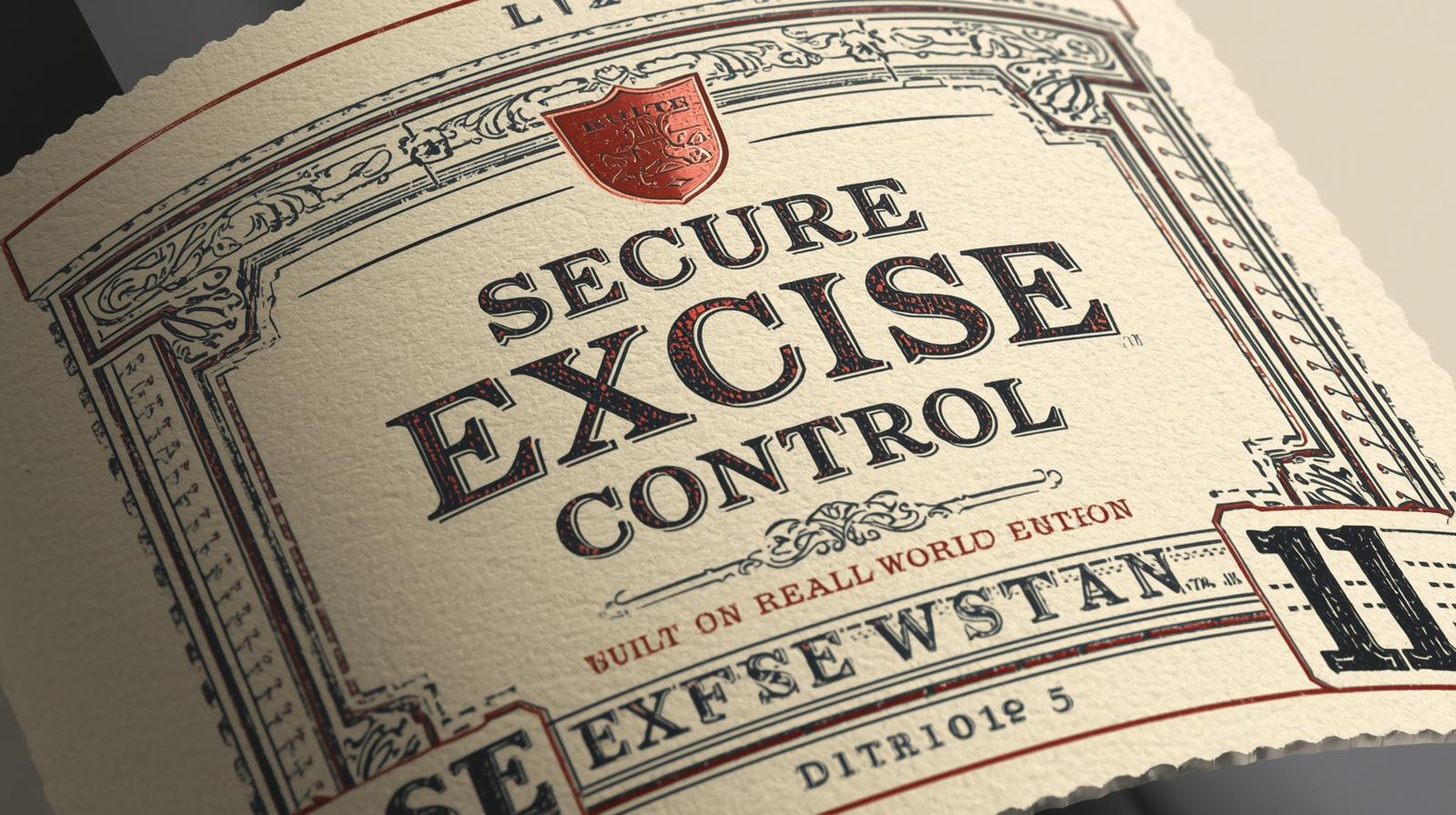
Wine Tax Stamp Label Manufacturer: Secure Excise Control Built for Real-World Distribution
Wine Tax Stamps Are Designed for Inspectors—Not Consumers
For wineries and alcohol distributors, the tax stamp is often treated as “just another label.”
Until it fails.
In reality, a wine tax stamp is not created for customers at all.
It is created for customs officers, tax inspectors, auditors, and enforcement systems.
If a stamp can be peeled cleanly, reused on another bottle, or duplicated in batches, the risk is immediate:
-
Fines
-
Shipment holds
-
License suspension
-
Revenue loss
This is why choosing a professional wine tax stamp label manufacturer is not a packaging decision—it’s a compliance strategy.
What Wine Producers and Importers Actually Need
Most buyers are not asking for “advanced security.”
They are asking for something far more practical:
-
“Will this pass inspection?”
-
“Can it survive cold storage and transport?”
-
“Can it stop refilling or label reuse?”
-
“Can we track which batch this bottle belongs to?”
Huaxin designs wine tax stamp labels starting from these real questions, not from abstract security features.
Core Product Requirements for a Reliable Wine Tax Stamp
A compliant wine tax stamp must perform consistently across thousands—or millions—of bottles.
From Huaxin’s project experience, four technical requirements matter most.
1. Irreversible Adhesion on Glass and Caps
Wine bottles are challenging surfaces:
-
Smooth glass
-
Curved necks
-
Metal or composite caps
Huaxin calibrates tamper-evident adhesives to ensure that once applied:
-
The stamp cannot be removed intact
-
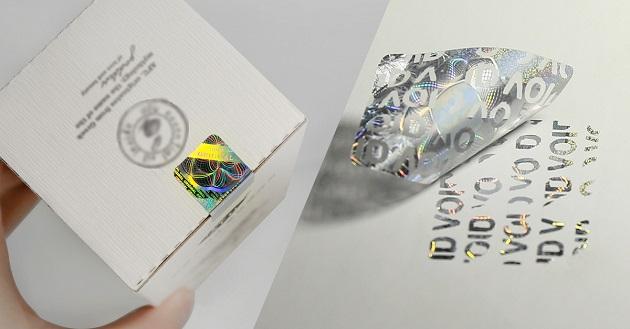
Any peel attempt leaves visible damage (VOID residue, fiber break, or film fracture)
-
Adhesion remains stable under refrigeration and humidity
This directly addresses one of the biggest enforcement concerns: label reuse.
2. Clear, Verifiable Identification (Not Just Decoration)
Tax authorities care about identification, not branding.
That’s why Huaxin integrates:
-
Unique serial numbers
-
Batch or year codes
-
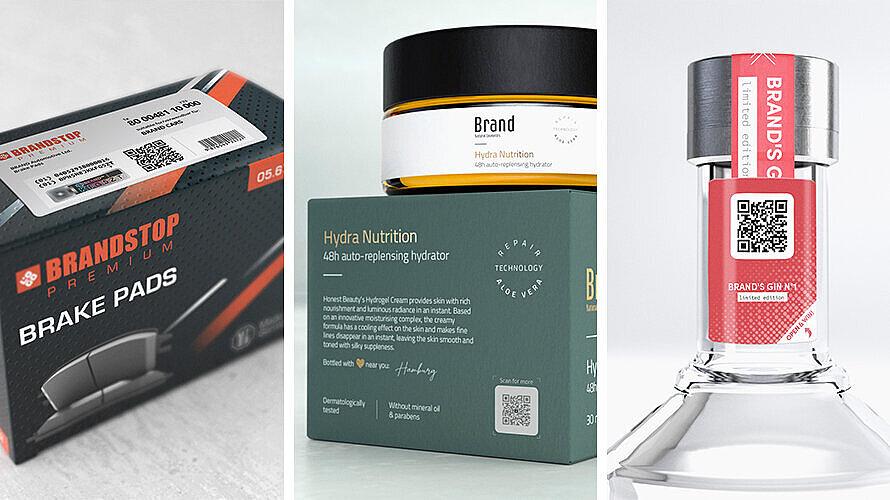
Optional QR or data matrix codes
These elements allow inspectors to:
-
Identify production batches
-
Trace distribution channels
-
Detect duplicated or out-of-sequence stamps
For wineries, this also creates an internal benefit: inventory and audit clarity.
3. Anti-Counterfeit Features That Match Risk Level
Not every wine needs banknote-level security.
But regulated markets require proportionate protection.
Huaxin supports layered options such as:
-
Microtext (visible only under magnification)
-
UV-reactive inks for spot inspection
-
Guilloche or line patterns difficult to replicate
-
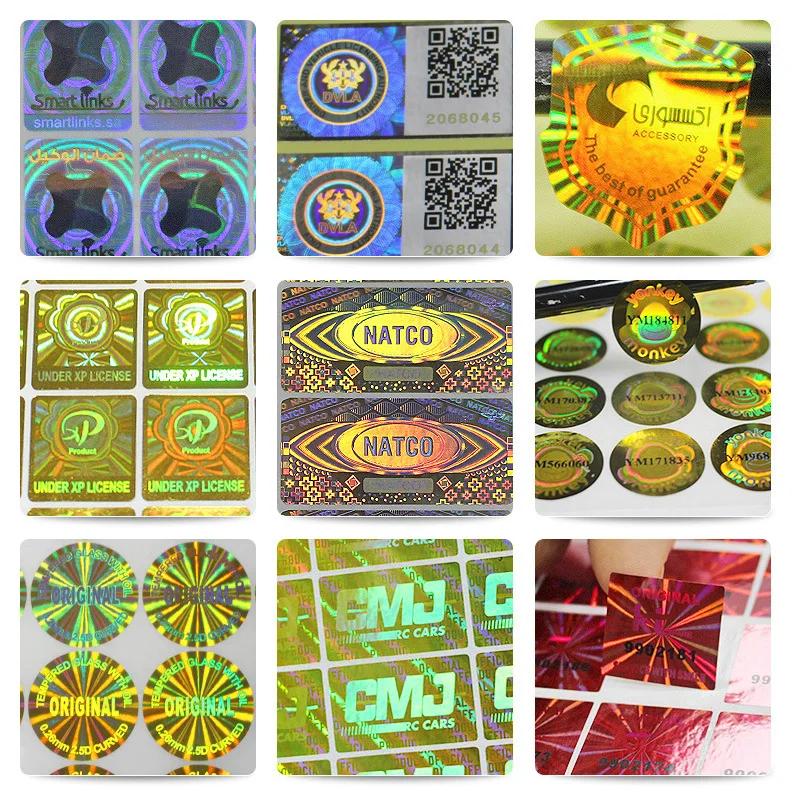
Optional holographic elements for higher-risk markets
The key is balance: enough security to deter fraud, without overengineering cost.
4. Consistency Across Large Production Runs
One common failure point in tax stamps is inconsistency:
-
Serial misalignment
-
Color variation
-
Adhesive behavior drifting across batches
Huaxin treats wine tax stamps as security documents, produced under controlled conditions aligned with ISO 14298 secure printing management systems.
This ensures that what passes inspection today will still pass inspection six months later.
Why Generic Labels Fail in Alcohol Tax Control
Many producers initially try standard labels or local printers.
Problems usually appear later—during audits or cross-border shipments.
| Risk Area | Generic Label | Huaxin Tax Stamp |
|---|---|---|
| Reuse prevention | Weak | Designed to self-destruct |
| Batch traceability | None | Serialized & auditable |
| Adhesion on glass | Inconsistent | Surface-calibrated |
| Regulatory confidence | Low | Built for inspection |
| Long-term consistency | Uncontrolled | Process-managed |
In excise-controlled products, failure is not gradual—it is immediate.
Real Application Scenarios
Huaxin’s wine tax stamp labels are used in situations such as:
-
Domestic excise compliance for local bottling
-
Import wine labeling before customs clearance
-
Anti-refill protection for premium and collectible wines
-
Regional circulation control between distributors
-
Audit support during tax or license inspections
In each case, the stamp acts as a physical proof of legitimacy, not just a printed mark.
Why Buyers Choose Huaxin
Clients work with Huaxin not because of marketing claims, but because of operational reliability.
Key strengths include:
-
Secure printing environment aligned with ISO 14298
-
Adhesive systems engineered specifically for glass and caps
-
Flexible security feature selection based on market risk
-
Stable variable data printing at scale
-
OEM manufacturing discipline and export experience
Industry research, including McKinsey’s 2024 Global Illicit Trade Report, continues to show that excise fraud in alcohol remains one of the most persistent compliance challenges—driving demand for better stamps, not just more labels.
Practical Buyer Questions (Answered Honestly)
Can one stamp design work across multiple countries?
Sometimes, but often adjustments are required. Huaxin supports country-specific adaptations.
Will the stamp affect bottle appearance?
Design can be minimal and discreet, as long as regulatory visibility is maintained.
Can stamps be applied automatically?
Yes. Huaxin supplies rolls compatible with automated labeling lines.
Is digital verification mandatory?
Not always. Serialization can be physical-only or combined with digital systems.
A Tax Stamp Is a Business Safeguard
For wine producers, distributors, and importers, a tax stamp is not a formality.
It is protection against regulatory risk, market abuse, and costly interruptions.
Working with an experienced wine tax stamp label manufacturer like Huaxin means the stamp is designed for how wine actually moves through the world—not how it looks on paper.
To discuss compliant wine tax stamp solutions or request technical specifications, visit the Huaxin homepage or contact us here