
Why Choosing the Right Custom Barcode Labels Manufacturer Matters
Barcode labels may look simple, but they play an important role in modern manufacturing, logistics, inventory control, and product traceability systems.
A professional custom barcode labels manufacturer does more than print black-and-white codes. The supplier needs to understand the relationship between barcode readability, material selection, adhesive performance, printing accuracy, application environment, and data management.
For industrial and commercial buyers, barcode labels are often connected with:
- Product identification
- Inventory management
- Warehouse operations
- Production tracking
- Quality control
- Batch management
- After-sales service
- Supply chain traceability
- Anti-counterfeiting systems
A barcode failure can create operational problems such as:
- Scanner recognition errors
- Incorrect inventory records
- Production delays
- Product tracking failures
- Customer service issues
Therefore, selecting a suitable barcode label supplier requires evaluating not only printing capability but also technical understanding and production reliability.
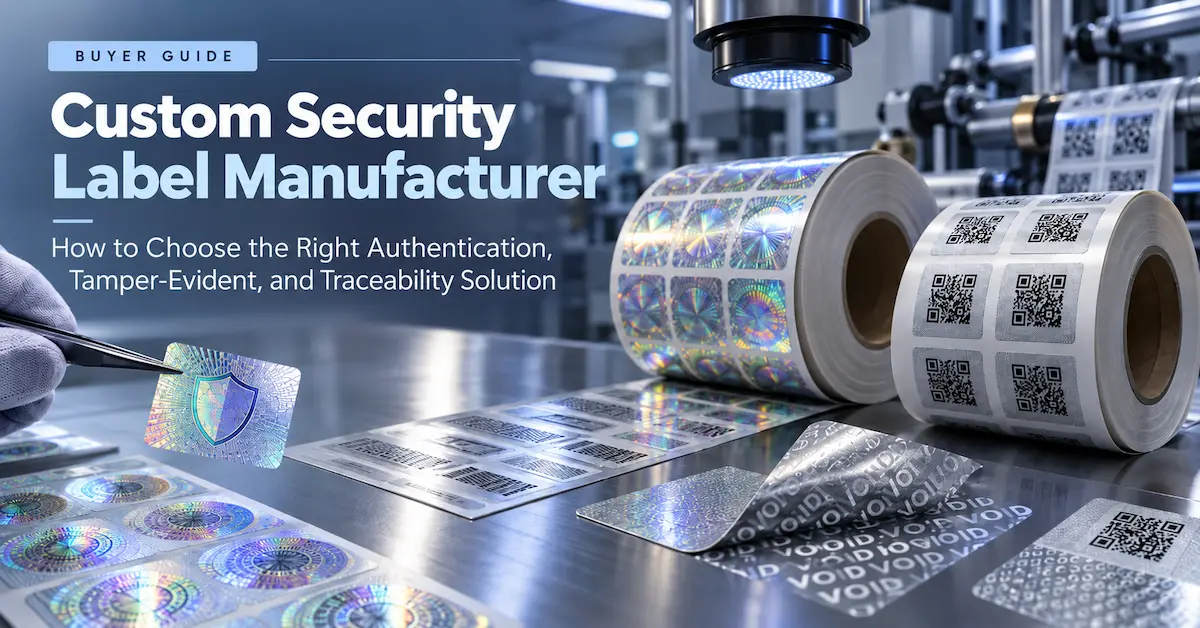
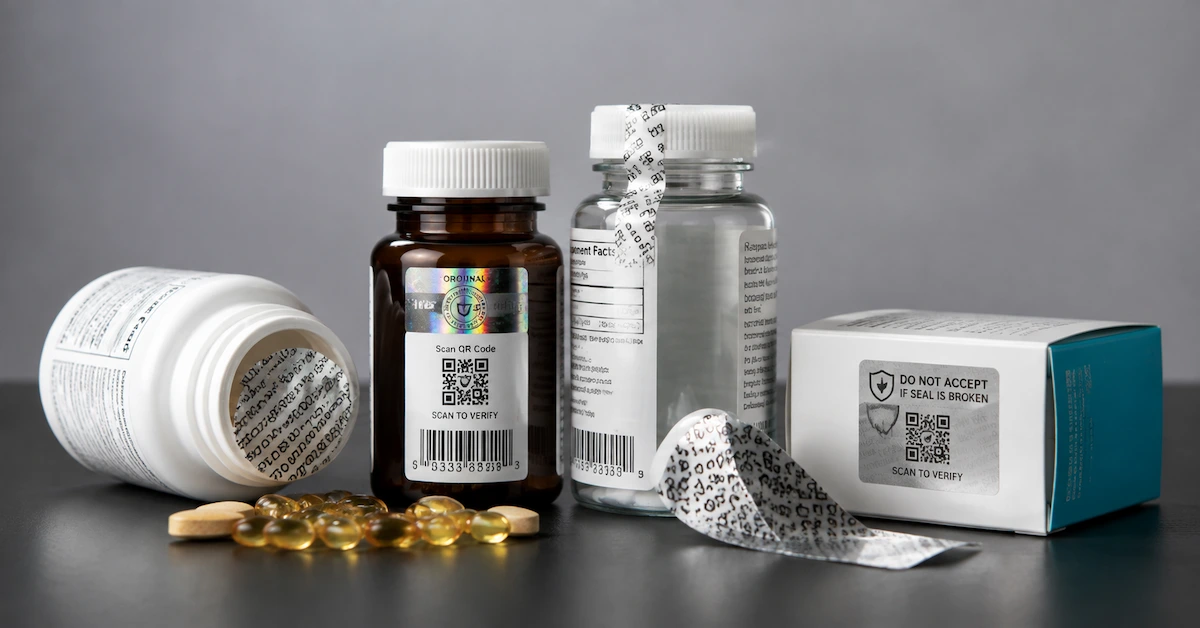
For high-value products, barcode labels can also be combined with security technologies such as holographic features, tamper-evident structures, QR verification, and serial numbers to create a complete product identification solution.
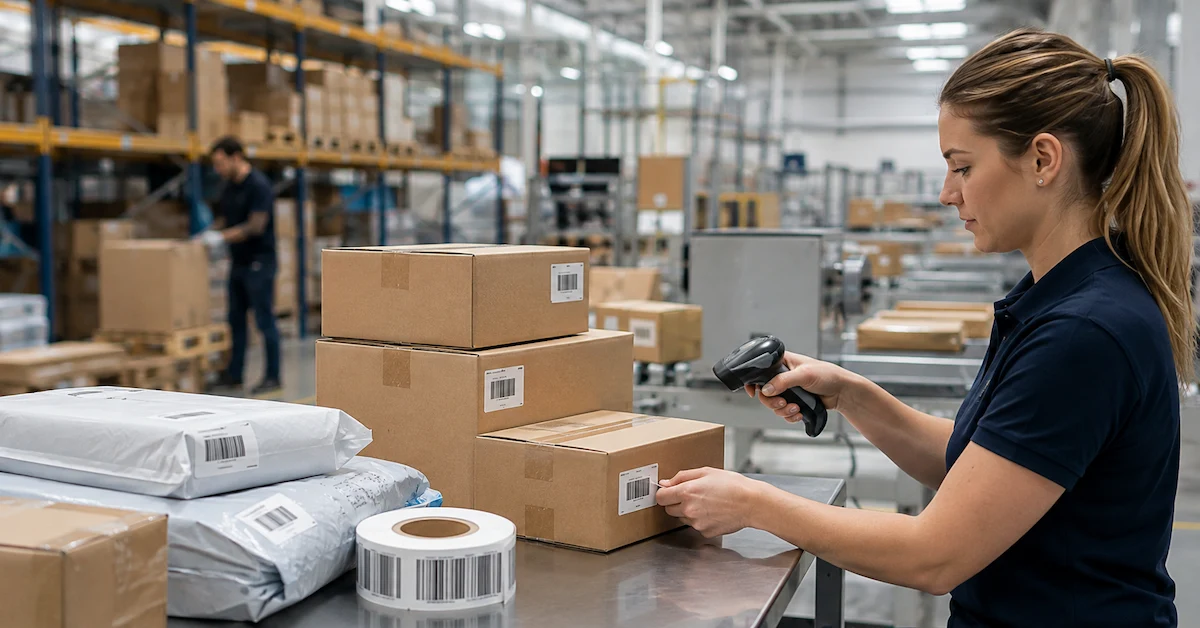
What Types of Buyers Need Custom Barcode Labels?
Custom barcode labels are widely used by companies that need accurate product identification or automated data collection.
Typical buyers include:
| Buyer Type | Main Requirement | Suitable Barcode Solution |
|---|---|---|
| Manufacturing companies | Production tracking | Industrial barcode labels |
| Electronics manufacturers | Component identification | Durable barcode labels + serial numbers |
| Automotive suppliers | Part traceability | Serialized barcode labels |
| Medical device companies | Product identification | High-accuracy barcode labels |
| Warehouse operators | Inventory control | Thermal or adhesive barcode labels |
| Logistics companies | Package tracking | Shipping barcode labels |
| Retail brands | Product management | Custom product barcode labels |
| OEM factories | Customer-specific identification | Variable data labels |
| Equipment manufacturers | Asset management | Durable barcode identification |
| Brand owners | Authentication and tracking | Barcode + security features |
A reliable manufacturer should understand the buyer’s workflow, not only produce labels according to artwork files.
What Is the Difference Between Standard Barcode Labels and Custom Barcode Labels?
Standard barcode labels usually follow common sizes, materials, and printing formats.
Custom barcode labels are designed according to specific product, industry, and operational requirements.
Customization may include:
- Custom size
- Custom shape
- Brand logo
- Product information
- Serial numbers
- Batch codes
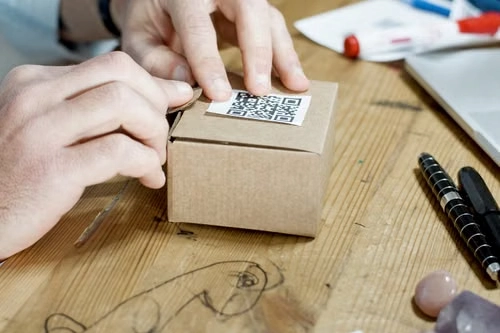
- QR codes
- Variable data
- Security features
- Special adhesives
- Different roll formats
For example, a warehouse label and an automotive component identification label may both contain barcodes, but they require completely different material durability and environmental performance.
A warehouse label may prioritize cost efficiency.
An industrial component label may require:
- Chemical resistance
- Heat resistance
- Strong adhesion
- Long-term readability
- Resistance to abrasion
The correct barcode label design depends on where and how the label will be used.
How Do Custom Barcode Labels Support Product Traceability?
Modern supply chains require more than simple identification.
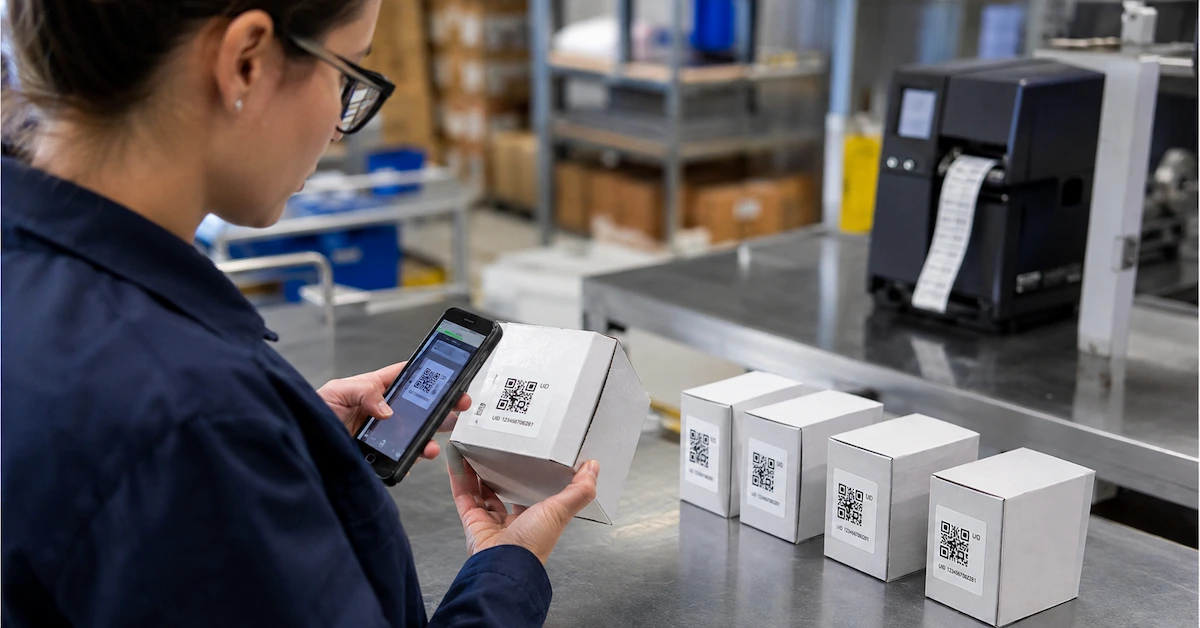
A barcode connects a physical product with digital information.
Depending on the system, barcode labels can support:
- Production records
- Inventory information
- Batch history
- Quality inspection data
- Shipment records
- Service information
- Warranty tracking
For manufacturers, barcode labels can help create visibility throughout production and distribution.
A typical traceability process may include:
Product manufacturing
→ Barcode assignment
→ Quality inspection
→ Warehouse scanning
→ Shipment tracking
→ Customer or service verification
For more advanced applications, barcode labels can be combined with:
- Serial numbers
- QR codes
- Database systems
- ERP systems
- Authentication platforms
GS1 highlights the importance of standardized identification and data sharing for supply-chain visibility. Barcode and identification systems are widely used to support product identification and traceability across industries. Learn about GS1 identification standards.
What Materials Should You Choose for Custom Barcode Labels?
Material selection directly affects barcode performance and durability.
A professional custom barcode labels manufacturer should recommend materials according to the application environment.
Paper Barcode Labels
Paper labels are commonly used for:
- Indoor inventory
- Shipping labels
- Short-term identification
- General warehouse applications
Advantages:
- Lower cost
- Easy printing
- Suitable for temporary use
Limitations:
- Lower moisture resistance
- Lower durability
- Not ideal for harsh environments
Synthetic Barcode Labels
Synthetic materials such as PET or polypropylene provide improved durability.
Suitable applications:
- Industrial equipment
- Electronics
- Automotive parts
- Medical devices
- Outdoor products
Advantages:
- Better moisture resistance
- Better abrasion resistance
- Longer service life
PET Barcode Labels
PET labels are commonly selected when durability is important.
Applications include:
- Machinery identification
- Electrical components
- Equipment tracking
- Industrial assets
Advantages:
- Strong dimensional stability
- Good resistance to wear
- Suitable for long-term identification
Security Barcode Labels
For products with counterfeit risks or warranty concerns, barcode labels can include additional security functions.
Examples:
- Tamper-evident layers
- VOID structures
- Holographic effects
- Hidden features
- Serial verification
This creates a combination of:
Identification + Authentication + Traceability
How Does Adhesive Selection Affect Barcode Label Performance?
Adhesive selection is one of the most overlooked parts of barcode label production.
A barcode label must remain attached throughout its intended lifecycle.
Different surfaces require different adhesive solutions.
| Surface | Adhesive Consideration |
|---|---|
| Metal | Strong bonding and durability |
| Plastic | Surface compatibility |
| Glass | Smooth-surface adhesion |
| Painted surfaces | Avoid coating damage |
| Carton packaging | Fiber bonding |
| Curved products | Flexibility and edge control |
A professional manufacturer should consider:
- Surface material
- Temperature
- Humidity
- Storage time
- Transportation conditions
- Removal requirements
Using the wrong adhesive may cause:
- Label peeling
- Barcode damage
- Product identification failure
- Customer complaints
What Printing Technologies Are Used for Custom Barcode Labels?
Barcode quality depends on accurate printing and inspection.
Common printing methods include:
Thermal Transfer Printing
Suitable for durable barcode applications.
Advantages:
- Long-lasting printing
- Good resistance
- Suitable for industrial environments
Direct Thermal Printing
Commonly used for:
- Shipping labels
- Temporary identification
Limitations:
- Shorter lifespan
- Sensitive to heat and light
Digital Printing
Suitable for:
- Small batches
- Custom designs
- Variable information
Variable Data Printing
Important for:
- Serial numbers
- Batch codes
- QR codes
- Unique product IDs
For traceability projects, variable data accuracy is as important as print quality.
A label with a perfectly printed barcode but incorrect data can still create operational problems.
How Should Buyers Test Barcode Label Quality?
Before mass production, buyers should verify real samples.
Important testing items include:
| Test Item | Purpose |
|---|---|
| Barcode readability | Confirm scanner recognition |
| Print accuracy | Ensure code quality |
| Adhesion test | Confirm bonding strength |
| Environmental test | Check durability |
| Size inspection | Verify specification accuracy |
| Variable data check | Prevent code duplication |
| Surface test | Confirm application compatibility |
Barcode quality should be evaluated using the actual scanning equipment and product environment whenever possible.
A supplier sample that works on a test sheet may perform differently on the final product.
Barcode Labels vs QR Code Labels: Which Is Better?
Barcode and QR code labels solve different identification needs.
| Feature | Barcode Labels | QR Code Labels |
|---|---|---|
| Data capacity | Limited | Higher |
| Scanning method | Line scanner commonly used | Smartphone and camera scanning |
| Cost | Usually lower | Slightly higher depending on system |
| Inventory use | Excellent | Excellent |
| Digital interaction | Limited | Strong |
| Consumer verification | Less common | More suitable |
Many modern products use both:
Barcode → Internal management
QR code → Customer interaction and digital verification
For anti-counterfeiting applications, QR codes can also be combined with security label technologies.
How Can Barcode Labels Be Combined With Security Features?
For high-value products, simple identification may not be enough.
A custom barcode label manufacturer can integrate additional protection features.
Possible combinations:
Barcode + Serial Number
Suitable for:
- Equipment tracking
- Asset management
- Product identification
Barcode + QR Code
Suitable for:
- Digital verification
- Customer interaction
- Traceability
Barcode + VOID Technology
Suitable for:
- Warranty protection
- Unauthorized opening detection
Barcode + Holographic Security
Suitable for:
- Premium products
- Brand protection
- Authentication
HX provides security label solutions including holographic labels, VOID open labels, and other customized security-label technologies. (hxsecuritylabel.com)
What Should You Ask a Custom Barcode Labels Manufacturer Before Ordering?
Before selecting a supplier, buyers should prepare key project information.
Product Information
Provide:
- Product type
- Label application
- Surface material
- Expected lifespan
Barcode Requirements
Confirm:
- Barcode type
- Data format
- Number sequence
- Scanning equipment
- Database requirements
Production Requirements
Discuss:
- MOQ
- Sample availability
- Lead time
- Roll or sheet format
- Packaging method
Quality Requirements
Ask about:
- Barcode inspection
- Adhesive testing
- Material verification
- Production consistency
- Repeat order control
A professional supplier should be able to provide technical recommendations instead of simply quoting based on quantity.
How to Choose a Reliable Custom Barcode Labels Manufacturer?
When evaluating suppliers, consider these factors:
1. Technical Capability
Check whether the factory understands:
- Barcode printing
- Variable data
- Materials
- Adhesives
- Security integration
2. Production Control
Evaluate:
- Printing accuracy
- Inspection process
- Data management
- Packaging standards
3. Customization Ability
A suitable supplier should support:
- Custom sizes
- Custom materials
- Different applications
- OEM projects
4. Sample Development
Before bulk production, the supplier should support:
- Artwork review
- Physical samples
- Application testing
- Final approval
5. Security Integration
For brands requiring authentication, choose a manufacturer that can combine barcode identification with security technologies.
HX Security Label states that it specializes in anti-counterfeiting label development and production, with more than 60 anti-counterfeiting technologies and multiple patented technologies. (hxsecuritylabel.com)
Common Mistakes When Buying Custom Barcode Labels
Choosing Only Based on Price
Lower unit prices may result in:
- Poor adhesive performance
- Low durability
- Printing inconsistency
Ignoring the Application Environment
A label used outdoors or on machinery requires different materials from an indoor warehouse label.
Not Testing With Real Scanners
Barcode readability should be tested using the actual scanning system.
Not Planning Data Management
For serialized labels, define:
- Code generation
- Data storage
- Verification process
- Repeat order management
Treating Barcode Labels as Only Printing Products
Modern barcode labels are part of a larger identification and traceability system.
FAQ About Custom Barcode Labels Manufacturers
1. What does a custom barcode labels manufacturer provide?
A custom barcode labels manufacturer designs and produces barcode labels according to specific product, material, application, and identification requirements.
Services may include custom printing, variable data, serial numbers, QR codes, materials selection, adhesive recommendations, and security integration.
2. Can barcode labels be customized with company logos?
Yes. Custom barcode labels can include logos, product information, colors, serial numbers, QR codes, and other variable information.
3. What materials are best for industrial barcode labels?
PET and synthetic materials are commonly selected for industrial applications because they provide better durability, moisture resistance, and abrasion resistance than standard paper labels.
The best material depends on the surface and environment.
4. Can barcode labels work on metal surfaces?
Yes, but adhesive selection is important. Metal surfaces, coatings, and environmental exposure should be evaluated before production.
5. What is the difference between barcode labels and QR code labels?
Barcode labels are commonly used for inventory and product identification. QR codes can store more information and support digital interaction or verification.
6. Can barcode labels include anti-counterfeit features?
Yes. Barcode labels can be combined with holographic effects, VOID structures, serial numbers, QR verification, and other security technologies.
7. How do manufacturers ensure barcode readability?
Quality control may include barcode verification, print inspection, material testing, and sample testing with actual scanning equipment.
8. What information is needed for a barcode label quotation?
Provide:
- Label size
- Material requirement
- Quantity
- Barcode type
- Data format
- Application surface
- Environment
- Artwork
- Packaging requirements
9. Can barcode labels support product traceability?
Yes. Barcode labels can connect physical products with digital records, supporting inventory, production, logistics, and service management.
10. How do I choose a reliable barcode label supplier?
Evaluate the supplier's printing capability, material knowledge, customization ability, quality control, sample process, and experience with your industry application.
Conclusion
Choosing the right custom barcode labels manufacturer requires more than finding a company that can print barcodes.
The best supplier should understand how labels function inside your production, logistics, inventory, and traceability systems.
Before ordering, evaluate:
- Barcode readability
- Material durability
- Adhesive performance
- Variable data accuracy
- Production consistency
- Security requirements
- Sample testing capability
For standard inventory applications, a simple barcode label may be enough.
For industrial products, electronics, medical devices, automotive components, and high-value goods, barcode labels may need to become part of a broader identification and security system.
HX Security Label provides customized security and identification label solutions, combining barcode, QR, serial number, holographic, and tamper-evident technologies according to application requirements.
Explore HX security label solutions or contact HX Security Label to discuss your custom barcode label requirements, materials, application environment, and production needs.