
How Do You Choose a Reliable Security Sticker Supplier?
A security sticker supplier should provide more than adhesive labels with attractive holographic patterns. For brands, manufacturers, packaging companies, and distributors, a dependable supplier must deliver security stickers that perform a specific protection function, work on the intended packaging surface, and maintain consistent quality across production batches.
The difficulty is that security stickers can appear nearly identical in product photographs while using different materials, adhesives, printing processes, tamper-evident constructions, and verification technologies.
A low-cost holographic sticker may create a decorative authentication feature but offer little resistance to unauthorized transfer. A VOID sticker may reveal a tamper message on one packaging material yet perform differently on another. A QR code may scan successfully without providing meaningful protection against code duplication.
These differences directly affect purchasing decisions.
The best security sticker supplier is not necessarily the company offering the lowest unit price or the largest product catalog. It is the supplier that can match the required security function to the actual product, demonstrate performance through representative samples, and reproduce the approved construction during commercial production.
For companies purchasing custom security stickers, the supplier evaluation process should answer five practical questions:
-
What security threat must the sticker address?
-
Which sticker construction provides the required protection?
-
Will the material and adhesive work on the actual application surface?
-
Can the supplier maintain consistent printing, security features, and variable data during bulk production?
-
Are pricing, sampling, lead time, quality inspection, and repeat-order responsibilities clearly defined?
Buyers can begin by reviewing available security label products, but a final purchasing decision should be based on application-specific requirements rather than product appearance alone.
What Does a Security Sticker Supplier Actually Supply?
A professional supplier may offer customized security stickers for authentication, tamper evidence, anti-transfer protection, product identification, warranty management, or supply-chain traceability.
The term security sticker covers several different product constructions.
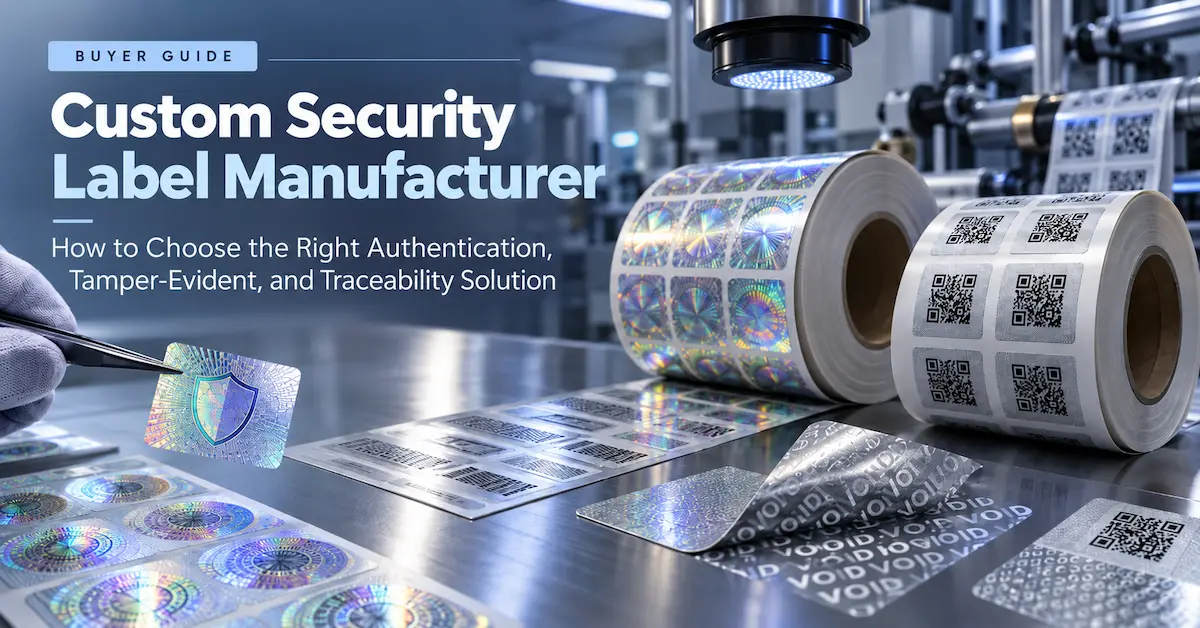
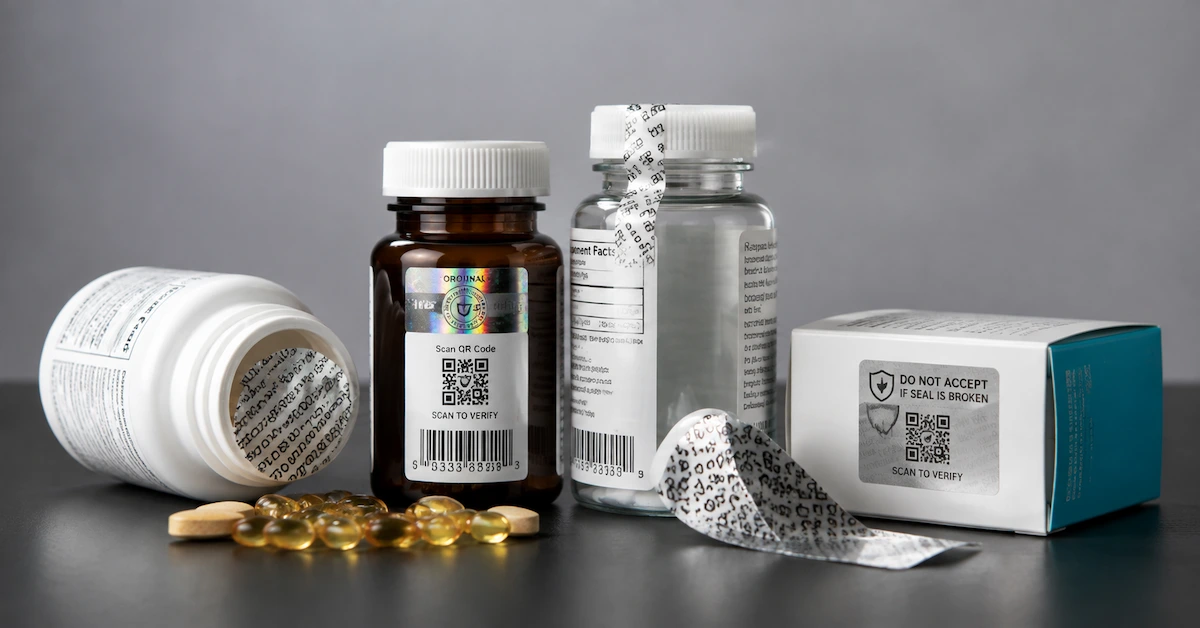
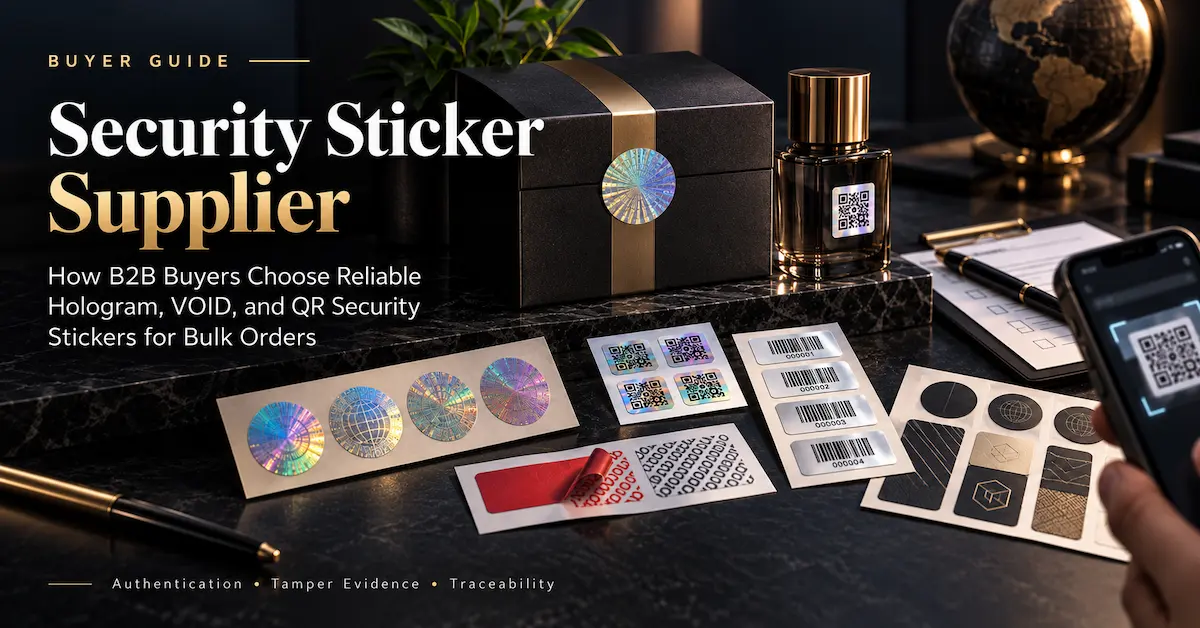
Some stickers rely on visible optical features. Others use special films that reveal removal attempts. Some incorporate concealed inspection elements. More advanced configurations may combine physical security with unique QR codes, serial numbers, or barcodes.
Understanding these differences helps buyers request suitable products instead of asking suppliers for a generic “security sticker.”
Common Types of Security Stickers
| Security sticker type | Main protection function | Typical applications | Important purchasing consideration |
|---|---|---|---|
| Holographic security stickers | Visible authentication | Cosmetics, electronics, liquor, premium packaging | Optical design and copying resistance |
| VOID security stickers | Removal and opening evidence | Electronics, warranty seals, cartons | Tamper message and surface compatibility |
| Destructible security stickers | Anti-transfer protection | Devices, machinery, components | Fragmentation and adhesive performance |
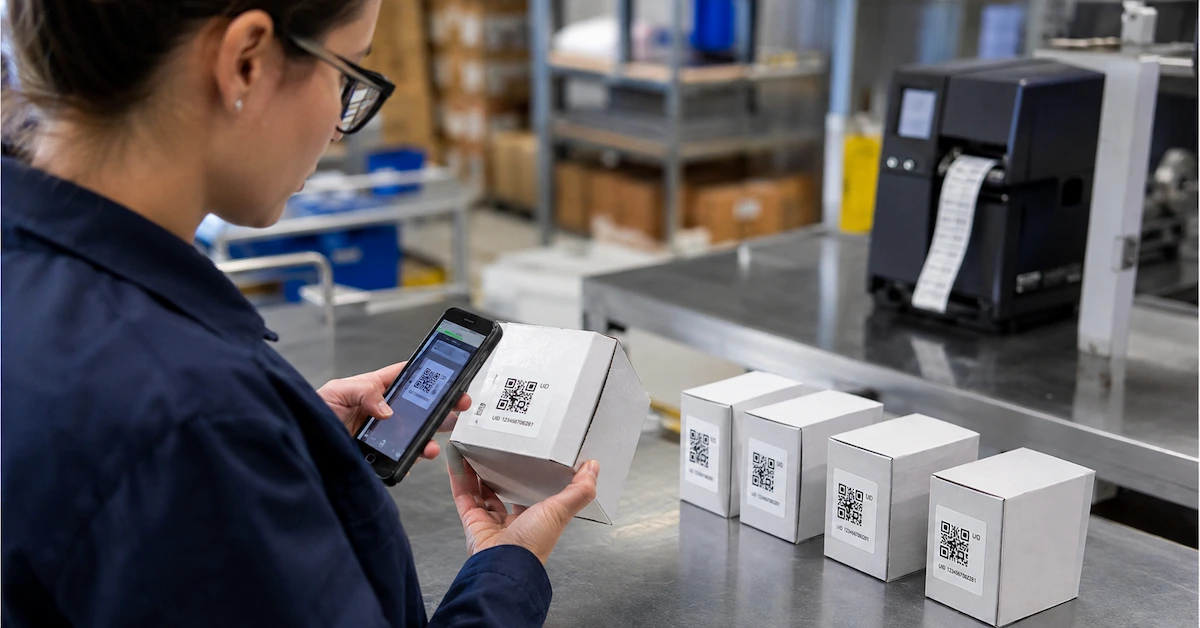
| QR code security stickers | Digital identification and verification | Consumer products, distribution, warranty | Code uniqueness and verification workflow |
| Serialized security stickers | Individual product identification | OEM products, electronics, logistics | Number management and data accuracy |
| Barcode security stickers | Machine-readable identification | Warehousing, manufacturing, inventory | Print quality and scanner compatibility |
| Covert security stickers | Secondary authentication | High-value products, controlled inspections | Verification method and access control |
| Multi-layer security stickers | Combined protection functions | High-risk branded products | Integration and inspection consistency |
These product categories should not be treated as interchangeable.
A company protecting an electronics enclosure may primarily need evidence of unauthorized opening. A cosmetics brand may prioritize visual authentication and discreet package integration. A distributor may require unique identification across markets or product batches.
A qualified supplier should explain why a particular construction fits the application and where its limitations lie.
Security Sticker Supplier vs. Manufacturer vs. Ordinary Printing Company
These terms frequently appear together in supplier searches, but they describe different roles.
A security sticker manufacturer is generally involved in producing or converting the physical label. A security sticker supplier is the organization responsible for delivering the product and managing commercial requirements. A specialized security technology company may also develop custom optical features, materials, authentication structures, or integrated solutions.
A conventional printing company may be suitable for simple serialized labels or decorative stickers, depending on its capabilities. However, higher-risk projects may require specialist knowledge of tamper-evident film, holographic construction, covert authentication, and controlled variable-data production.
The distinction matters because manufacturing ownership and commercial responsibility are not always the same.
For example, a supplier may coordinate specialized film production, security-feature development, printing, die cutting, inspection, and packaging through several controlled manufacturing processes.
For buyers, the important question is whether the supplier can identify responsibility for each operation, maintain traceable specifications, and resolve quality problems.
Before ordering, ask:
-
Which security features are developed or produced directly?
-
Which processes involve external manufacturing partners?
-
Who controls the approved artwork and security construction?
-
Who performs final product inspection?
-
How are production deviations handled?
-
Who is responsible if the delivered security behavior differs from the approved sample?
A transparent supplier should be able to explain the production arrangement without making unsupported claims about owning every piece of equipment or performing every process internally.
For a more detailed comparison of manufacturing capabilities, see the security labels manufacturer selection guide.
Identify the Security Problem Before Requesting Samples
One common mistake in security sticker procurement is selecting a product solely because its appearance resembles an existing label.
Buyers may request a silver hologram because competitors use one. Others choose VOID stickers because the word “security” appears in the product description.
Neither approach establishes whether the sticker will solve the actual problem.
A more effective sourcing process begins with a threat assessment.
Counterfeit Product Substitution
Counterfeiters may imitate packaging, logos, product labels, and visual elements to make unauthorized goods resemble genuine products.
For this situation, buyers may consider holographic features, microtext, hidden authentication elements, serialized identifiers, or combinations of these technologies.
Unauthorized Package Opening
A shipping carton, electronics housing, bottle closure, or retail package may be opened without authorization.
Here, a tamper-evident construction may be more valuable than an attractive authentication feature.
The sticker should create evidence that can be recognized by the intended inspector.
Genuine Label Transfer
An authentic sticker may be removed from a genuine product and placed onto a counterfeit or unauthorized item.
This risk requires attention to destructive removal, VOID transfer, irreversible damage, or other anti-transfer mechanisms.
Warranty Fraud
Electronics and industrial equipment manufacturers may need evidence that a protected access point has been opened.
The sticker design must match the enclosure geometry, substrate, and warranty inspection process.
Distribution and Channel Diversion
Brands selling into different regions may need product-level identifiers, batch information, or market-specific serial records.
A serialized sticker can support identification, but preventing diversion also requires appropriate records, distribution policies, and verification procedures.
Product Traceability
Manufacturers may need to connect a physical product with production, inventory, warranty, or distribution information.
QR codes and barcodes can support this requirement when paired with properly managed data.
Supplier selection becomes much more accurate when buyers specify the threat and desired inspection result instead of simply naming a sticker technology.
How to Select the Right Security Sticker Construction
The appropriate sticker construction depends on the protection function, product surface, expected lifetime, and verification method.
Holographic Security Stickers for Visible Authentication
Holographic stickers create optical effects that can change with viewing angle or lighting.
These features can help distinguish genuine products from ordinary printed imitations while supporting premium visual presentation.
They are commonly considered for:
-
branded cosmetics;
-
spirits and premium beverages;
-
electronics packaging;
-
luxury consumer goods;
-
specialty food and tea products;
-
branded retail packaging.
A buyer should evaluate the complexity of the optical feature, its integration with brand artwork, inspection visibility, and whether the sticker must also provide tamper evidence.
A holographic sticker is not automatically tamper-evident. If the risk involves removal or reuse, an appropriate destructive or transfer construction may be necessary.
Explore the holographic label product category for examples of this product direction.
VOID Security Stickers for Opening Detection
VOID security stickers are designed to produce a visible change during removal.
Depending on their construction, the result may include a transferred message, a visible pattern, residue, or a change in the label itself.
Buyers should define whether they require:
-
full-transfer behavior;
-
partial-transfer behavior;
-
non-transfer tamper indication;
-
a custom message;
-
irreversible visual damage.
The correct choice depends on what the inspector needs to see.
For example, a warranty seal on an electronics housing may require clear evidence on the original surface, while a security sticker used on a retail carton may have different removal and inspection requirements.
The VOID Open Label range is a relevant starting point for this type of project.
Destructible Stickers for Anti-Transfer Protection
Destructible security stickers use a construction intended to break or fragment during removal.
This can reduce the possibility of moving an intact label to another product.
Applications may include electronics, equipment, warranty points, product identification, and selected high-value components.
However, buyers should not assume that every destructible material performs equally on every substrate.
The actual result can depend on:
-
adhesive selection;
-
material strength;
-
surface texture;
-
application pressure;
-
dwell time;
-
temperature;
-
available bonding area.
A destructible construction should be approved only after practical testing on the intended product surface.
QR Code Security Stickers for Digital Identification
QR code security stickers can connect physical products to digital information, authentication workflows, or controlled product records.
They are useful when the buyer needs more than visual identification.
However, a printed QR code does not automatically prevent counterfeiting.
If the same QR code can be copied and printed on multiple unauthorized products, scanning alone may not distinguish those copies.
A stronger digital security program may require unique identifiers, controlled issuance, duplicate-scan analysis, and an appropriate physical security feature.
The unique QR code label supplier guide explains additional procurement considerations for serialized labels.
Should You Combine Multiple Security Features?
Sometimes one security function is sufficient.
A warehouse carton may only need visible evidence of opening. An equipment warranty point may only need a destructive seal.
More complex risks can justify several complementary features.
For instance, a premium product may use:
Layer 1 — Visible authentication: a holographic feature that consumers or distributors can inspect.
Layer 2 — Tamper evidence: a VOID or destructive structure that reacts to unauthorized removal.
Layer 3 — Covert verification: microtext, latent imagery, or another controlled feature for trained personnel.
Layer 4 — Digital identity: a unique QR code or serial number connected to an agreed verification workflow.
These layers do different jobs.
Combining technologies can improve the security architecture, but every additional feature adds potential design, material, manufacturing, inspection, or data-management requirements.
The objective is not maximum complexity.
The objective is to introduce only the protection layers that address identifiable risks.
Why Material and Adhesive Selection Matter
A security sticker may have sophisticated printing and still fail if its adhesive does not work on the packaging.
This is especially important for tamper-evident products because the adhesive is part of the security behavior.
A label designed to reveal VOID evidence may fail to produce the expected response if it cannot bond adequately to the intended surface.
Common application substrates include:
-
glass bottles;
-
coated paperboard;
-
corrugated cartons;
-
PET packaging;
-
polypropylene and polyethylene plastics;
-
ABS or other molded plastic housings;
-
painted metal;
-
stainless steel;
-
laminated surfaces;
-
flexible packaging films.
Different surfaces create different bonding conditions.
Some plastics have relatively low surface energy, making adhesion more challenging. Coatings, varnishes, dust, contamination, curvature, and roughness may also affect contact between the adhesive and substrate.
Buyers should provide actual packaging samples whenever possible.
A supplier should not treat a successful test on clean glass as proof that the same construction will perform identically on textured plastic or coated paperboard.
Application Temperature vs. Service Temperature
Two temperature questions should be distinguished.
Application temperature describes the conditions when the sticker is applied.
Service temperature describes the conditions the applied sticker will encounter later.
These can be very different.
A sticker applied in a controlled factory may later experience cold storage, hot shipping containers, condensation, or prolonged handling.
Even when a material supplier publishes a broad temperature range, that figure should not be interpreted as universal performance across all packaging surfaces and tamper-evident constructions.
The final label must be evaluated under the relevant application conditions.
What Should Be Included in a Technical Specification?
A professional security sticker supplier should be able to work from a specification that contains more than dimensions and artwork.
At minimum, buyers should define the physical construction, required performance, packaging compatibility, inspection method, and supply format.
| Specification item | Information buyers should confirm |
|---|---|
| Finished size | Width, height, diameter, or special shape |
| Face material | Material type and visual requirements |
| Adhesive | Intended surface and bonding requirements |
| Security construction | Hologram, VOID, destructible, covert, QR, or combination |
| Tamper behavior | Expected evidence after removal |
| Artwork | Logo, graphics, colors, text, security design |
| Variable information | Serial numbers, QR codes, barcodes, batch data |
| Application surface | Actual substrate and coating |
| Environmental exposure | Temperature, humidity, abrasion, storage |
| Supply format | Sheets, rolls, or individual stickers |
| Application method | Manual or automated |
| Inspection criteria | Accepted appearance, function, and data quality |
| Order quantity | Sample, pilot, initial bulk order, forecast |
| Packaging | Quantity per pack, roll labeling, protective packaging |
This specification becomes the reference for quoting, sample approval, bulk production, and repeat orders.
Without it, suppliers may quote materially different constructions under the same product description.
How to Evaluate Security Sticker Samples Before Bulk Orders
Sample approval should establish whether a sticker performs its intended function.
A printed design proof is useful for artwork review, but it does not prove final adhesive performance or security behavior.
Buyers should separate approval into three stages.
Stage 1: Visual and Dimensional Inspection
Check whether the sample matches the agreed artwork and physical dimensions.
Inspect:
-
finished size;
-
die-cut alignment;
-
print registration;
-
color consistency;
-
holographic appearance;
-
readable text;
-
intended security graphics;
-
visible printing defects.
If the sticker includes microtext or other fine security elements, the inspection process should also confirm the relevant detail.
Stage 2: Application and Removal Testing
Apply samples to the actual packaging or product surface.
Use the intended application method and reasonable production conditions.
Check:
-
whether the sticker applies cleanly;
-
whether it conforms to the surface;
-
whether lifting or wrinkles appear;
-
whether the adhesive develops the expected bond;
-
whether tamper evidence is visible after removal;
-
whether the sticker can be removed and reapplied;
-
whether the security structure remains stable during normal handling.
The acceptance method should reflect how the sticker will be used.
A product expected to survive cold-chain distribution may require different tests from an indoor electronics warranty sticker.
Stage 3: Identification and Data Testing
For QR, barcode, or serialized stickers, visual inspection alone is insufficient.
The buyer should verify that:
-
codes are readable;
-
each identifier matches the intended data;
-
duplicate identifiers are controlled;
-
text and machine-readable data agree where required;
-
rejected labels are accounted for;
-
code ranges remain consistent with the approved project.
Where formal symbol-quality grading is relevant, buyers may refer to recognized specifications such as ISO/IEC 15415:2024 for two-dimensional barcode symbols and ISO/IEC 15416:2025 for linear barcode symbols.
Such testing should be defined by the buyer's actual requirements. Mentioning a standard does not mean every security sticker is automatically certified to it.
Sample Approval Checklist for Procurement Teams
The following checklist can be used as a practical acceptance framework.
| Test area | What to inspect | Example acceptance principle |
|---|---|---|
| Dimensions | Finished width, height, shape | Conforms to approved drawing and tolerances |
| Printing | Color, registration, legibility | Matches approved artwork |
| Holographic effect | Visible optical security pattern | Consistent with approved reference |
| Adhesion | Bonding on actual packaging | Meets agreed application requirements |
| Tamper response | Removal evidence | Produces the agreed irreversible effect |
| Anti-transfer | Attempted label reuse | Removal behavior meets the agreed security objective |
| QR readability | Scanner performance | Meets agreed verification requirements |
| Serial data | Uniqueness and matching | No unauthorized duplicates in accepted output |
| Roll format | Winding, gaps, orientation | Compatible with application equipment |
| Packaging | Roll or sheet protection | Prevents avoidable transit damage |
These are suggested inspection categories, not universal pass/fail limits. Each buyer and supplier should agree on measurable acceptance criteria for the actual project.
For adhesive performance, standardized approaches such as FINAT peel-adhesion test methods may be useful where applicable. However, laboratory tests should complement, not replace, trials on the actual product surface.
How to Compare Security Sticker Suppliers Objectively
A supplier with attractive product samples is not necessarily ready to manage a long-term security-label program.
A structured evaluation helps prevent decisions based entirely on sales presentations or unit prices.
One practical approach is to create a weighted supplier scorecard.
Suggested B2B Supplier Evaluation Scorecard
| Evaluation category | Suggested weight | What to evaluate |
|---|---|---|
| Technical understanding | 15 points | Security-risk analysis and solution recommendations |
| Sample performance | 25 points | Adhesion, tamper response, appearance, application |
| Artwork and data control | 15 points | Revision control, serialization, confidentiality |
| Quality and repeat-order control | 20 points | Inspection, consistency, change management |
| Commercial capability | 15 points | Quotation clarity, MOQ, lead time, delivery terms |
| Communication and support | 10 points | Responsiveness, technical clarity, issue resolution |
| Total | 100 points | Buyer-side evaluation framework |
This is a recommended procurement tool, not an official industry certification or an assessment of any particular manufacturer.
Its value comes from making supplier comparisons more consistent.
For a simple decorative security sticker, artwork and price may receive greater weight.
For a serialized warranty program, data integrity and repeat-order control may deserve more attention.
For high-risk tamper-evident applications, sample performance and security behavior should carry substantial weight.
Buyers can adapt the scorecard to their project rather than accepting a fixed ranking.
Five Warning Signs When Selecting a Security Sticker Supplier
Several supplier behaviors deserve closer examination before a purchase order is issued.
1. The Supplier Quotes Without Asking About the Surface
Adhesion and removal behavior depend heavily on the application.
If a supplier recommends the same construction for glass, textured plastic, and coated cartons without further discussion, the buyer should request more technical clarification.
2. The Supplier Cannot Explain the Tamper Result
Terms such as “high security,” “tamper proof,” and “anti-counterfeit” are not enough.
The supplier should explain what the sticker will visibly do when someone attempts to remove or transfer it.
3. No Representative Physical Sample Is Available
Digital artwork can confirm appearance, but it cannot demonstrate actual adhesion, destructive behavior, or converting performance.
4. Serialized Codes Have No Defined Management Process
If a project requires unique data, the buyer should understand how duplicate codes, rejected labels, and reprints are handled.
5. The Quotation Does Not Define the Construction
A quotation stating only “hologram sticker, 50,000 pieces” leaves important questions unanswered.
Material, adhesive, dimensions, security feature, data requirements, packing format, inspection scope, and delivery terms should be sufficiently clear to compare offers.
What Affects Wholesale Security Sticker Prices?
Buyers searching for wholesale security stickers often want an immediate unit price.
However, customized security products rarely have a meaningful universal price.
Two stickers with the same dimensions may have different costs because their constructions and production requirements differ.
Common cost drivers include:
-
face material and adhesive;
-
holographic or optical security development;
-
VOID or destructive construction;
-
print colors and finishing;
-
die-cut complexity;
-
serial numbers and variable data;
-
QR or barcode inspection;
-
sample development;
-
total quantity;
-
number of designs or SKUs;
-
roll or sheet format;
-
quality inspection;
-
protective packaging;
-
freight and delivery requirements.
Unit Price vs. Total Procurement Cost
Suppose one supplier offers a lower price but the labels are incompatible with the customer's automatic applicator.
Even a modest unit-price saving can disappear if the buyer must manually apply labels, stop the packaging line, or replace rejected stock.
Similarly, a security sticker that loses adhesion during distribution may create customer complaints or require packaging rework.
For this reason, buyers should compare total project costs rather than unit prices alone.
A useful internal calculation is:
Total Procurement Cost = Product Cost + Development/Tooling + Inspection + Logistics + Expected Rework or Failure Costs
The final component should be based on the buyer's actual risk assessment, not an invented universal failure rate.
For a detailed breakdown of the variables behind pricing, see the custom security label cost guide.
How Does MOQ Affect Security Sticker Sourcing?
Minimum order quantity depends on the specification.
A supplier may have one MOQ for a relatively standard security material and a different MOQ for a customized construction requiring special preparation.
Variables may include:
-
holographic master preparation;
-
specialty film availability;
-
adhesive and material requirements;
-
custom die cutting;
-
variable-data printing;
-
inspection requirements;
-
multiple designs or SKUs;
-
total expected production volume.
Buyers should distinguish three different purchasing stages.
Prototype stage: confirm feasibility and security behavior.
Pilot stage: test the approved design under representative application and distribution conditions.
Commercial stage: purchase production quantities based on the approved construction.
A pilot order may be particularly valuable for brands introducing security stickers across multiple product lines or packaging materials.
Instead of requesting only a minimum quantity, ask whether the supplier can quote prototype, initial production, and forecast repeat-order quantities separately.
Additional information is available in the security label MOQ guide.
How Long Does Custom Security Sticker Production Take?
Lead time is often misunderstood because buyers and suppliers may start counting from different milestones.
A custom order can include several activities:
-
technical requirement confirmation;
-
security structure selection;
-
artwork and design approval;
-
material preparation;
-
sample production;
-
sample testing and approval;
-
bulk manufacturing;
-
quality inspection;
-
packing and dispatch;
-
transportation.
The duration of each step depends on the project.
A repeat order using an unchanged design and existing materials may differ from a first order requiring new optical artwork or customized tamper-evident development.
Buyers should clarify whether the quoted production lead time begins after:
-
artwork approval;
-
sample approval;
-
purchase-order confirmation;
-
material availability;
-
payment confirmation.
A reliable timeline should also identify which approvals are required from the customer.
For product-launch planning, review the custom label lead-time guide.
Why Production Consistency Matters More Than a Perfect First Sample
A successful sample is only the beginning.
Long-term supplier reliability depends on the ability to reproduce the approved product without uncontrolled changes.
This becomes particularly important when security stickers are used across several product batches, factories, distributors, or export markets.
Potential differences between orders include:
-
material substitutions;
-
adhesive changes;
-
revised holographic artwork;
-
altered die-cut dimensions;
-
different release liners;
-
inconsistent VOID performance;
-
QR or serial-number errors;
-
changed roll orientation;
-
incorrect packaging quantities.
These changes can affect security performance even when the sticker still looks acceptable.
Establish an Approved Reference
The buyer and supplier should retain a clearly identified approved sample or equivalent controlled specification.
The reference should include:
-
artwork version;
-
physical dimensions;
-
construction details;
-
material and adhesive requirements;
-
tamper response;
-
data format;
-
application format;
-
inspection criteria.
Control Changes
Any proposed change affecting the security function or application should be reviewed before implementation.
A material substitute should not automatically be considered equivalent merely because its appearance or thickness is similar.
Record Repeat Orders
Repeat orders should reference the existing specification and identify any approved revisions.
For serialized products, new orders also need clear data-range control to prevent unintended identifier reuse.
A broader discussion of these issues is available in the bulk security labels supplier guide.
Variable Data and Authentication: Define Who Controls What
Some buyers assume that ordering QR security stickers automatically includes a complete authentication system.
That assumption can lead to serious scope misunderstandings.
Physical label printing and digital authentication services are related but distinct activities.
A project may involve:
-
creating unique codes;
-
preparing a print-ready data file;
-
printing those codes;
-
verifying code readability;
-
checking code-to-product matching;
-
maintaining a database;
-
hosting verification pages;
-
analyzing repeat scans;
-
integrating with warranty or traceability systems.
Not every supplier provides every service.
Before purchasing serialized security stickers, confirm which party is responsible for each activity.
Questions to Ask About Data Ownership
Who generates the codes?
Who owns the identifier records?
How are duplicate codes prevented?
What happens if a printed sticker is rejected?
How are damaged labels replaced?
Who manages verification URLs?
How long will any digital service remain available?
How are changes to the destination website handled?
A supplier may be fully capable of printing serialized QR stickers without providing database hosting or consumer authentication software.
That arrangement can still work well when responsibilities are clearly defined.
The most important requirement is that the physical security sticker and the digital identity system operate according to one agreed specification.
Protect Custom Artwork and Security Features
Custom security stickers may contain sensitive brand assets.
These can include logos, security artwork, optical patterns, proprietary identifiers, and unpublished product information.
Buyers should establish appropriate controls for:
-
original artwork files;
-
approved print files;
-
security master artwork;
-
customer-specific code databases;
-
obsolete revisions;
-
production overrun labels;
-
rejected security stickers;
-
unused serialized labels.
For higher-risk programs, buyers may request written procedures covering confidentiality, access authorization, handling of production waste, and disposition of unused labels.
These controls should be discussed in the commercial agreement rather than assumed.
The purpose is to reduce the risk that authentic security materials or confidential data become available outside authorized channels.
Three Practical Security Sticker Sourcing Scenarios
Different industries require different purchasing priorities.
The following examples are illustrative procurement scenarios, not claims about completed HX customer projects.
Scenario 1: Electronics Manufacturer Requiring Warranty Protection
An electronics company wants to place a security sticker over a device access point.
The main concern is unauthorized opening during the warranty period.
A decorative hologram may not solve this problem because the company needs visible evidence when the sticker is removed.
The buyer should initially evaluate VOID or destructible constructions.
The technical brief should identify:
-
enclosure material;
-
available bonding area;
-
location of the protected seam or access point;
-
desired removal evidence;
-
expected service conditions;
-
warranty inspection method.
If product identification is also required, the company may consider serial numbers or QR codes.
The most important test is whether the approved construction creates the intended evidence on the actual device housing while remaining stable during normal use.
Scenario 2: Premium Cosmetics Brand Requiring Authentication
A cosmetics brand distributes premium products through retail and e-commerce channels.
Its packaging team wants an authentication feature that supports brand recognition without making the carton look inexpensive.
A holographic security sticker may be suitable, particularly when the design can be integrated into the packaging artwork.
However, the team should also consider the risk of genuine stickers being transferred.
If transfer is a meaningful threat, the supplier may need to evaluate an appropriate destructive or tamper-evident construction.
The buyer should request:
-
physical appearance samples;
-
packaging mock-ups;
-
different label-placement options;
-
visibility checks under retail lighting;
-
adhesive testing on the final coated carton.
A visually impressive sticker is not successful if it interferes with packaging aesthetics or creates application problems.
Scenario 3: Distributor Requiring Serialized Product Identification
A distributor manages several product ranges across multiple markets.
The company wants each item to carry a unique identifier that can be associated with a product batch or distribution record.
A serialized QR or barcode sticker may meet the identification requirement.
Before ordering, the buyer must define:
-
code structure;
-
identifier ownership;
-
SKU and batch mapping;
-
print sequence;
-
duplicate prevention;
-
inspection process;
-
rejected-code handling;
-
repeat-order rules.
If the stickers also need physical anti-counterfeit protection, a holographic, covert, or anti-transfer layer can be evaluated separately.
In this scenario, data accuracy and operational control may matter more than decorative appearance.
How Packaging Companies and OEM Buyers Should Work With Suppliers
Packaging converters and OEM manufacturers often purchase security stickers on behalf of other brands.
This creates a more complex approval structure.
The packaging supplier may manage sticker purchasing while the final brand owner controls the visual identity or authentication requirements.
Successful projects require clarity about who approves each element.
The brand owner may approve:
-
security objective;
-
artwork;
-
authentication method;
-
product appearance.
The packaging manufacturer may approve:
-
roll format;
-
liner;
-
automatic application compatibility;
-
production schedule;
-
packaging-line performance.
The security sticker supplier may be responsible for:
-
proposed construction;
-
sample preparation;
-
specified manufacturing processes;
-
agreed inspections;
-
sticker delivery.
A project becomes risky when nobody clearly owns these decisions.
For OEM and packaging programs, approval records should identify the authorized decision-maker for design, material, security function, and commercial production.
What Are the Special Requirements for Automatic Labeling?
A sticker that works during manual application may not work on an automatic packaging line.
Automated label application can require more detailed converting specifications.
Buyers should confirm:
-
core size;
-
roll diameter;
-
web width;
-
label pitch;
-
liner characteristics;
-
winding direction;
-
label orientation;
-
dispensing direction;
-
label gap;
-
sensor compatibility;
-
machine speed where relevant.
The liner's release behavior can be especially important because the sticker must dispense consistently without separating prematurely or failing to release.
Where applicable, buyers can discuss recognized test methods for release force and adhesive performance, but final line trials remain essential.
If the sticker must cross a carton seam or fit a curved closure, placement tolerances and application equipment should also be considered.
A supplier quotation should identify the required format rather than simply stating “supplied in rolls.”
How to Manage Security Sticker Orders for International Markets
International buyers often focus on sticker manufacturing costs while overlooking shipping preparation and downstream handling.
Security stickers can be damaged through improper winding, packing, storage, or transportation.
Projects may require attention to:
-
protective wrapping;
-
carton organization;
-
roll identification;
-
humidity protection;
-
storage conditions;
-
batch labeling;
-
serial-range identification;
-
delivery documentation;
-
shipment traceability.
For products containing unique identifiers, shipment records should make it possible to determine which sticker quantities or code ranges were delivered.
Buyers should also clarify destination-market requirements.
A security sticker used for ordinary brand protection is different from an officially regulated tax stamp or a label subject to pharmaceutical or other sector-specific rules.
General security-label manufacturing capability should never be treated as automatic proof of approval for regulated applications.
Any required certificates, standards, or market authorizations should be verified for the exact project.
A Better RFQ Template for Security Sticker Suppliers
A well-structured request for quotation improves supplier responses and reduces unnecessary revisions.
Instead of sending only a photograph and desired quantity, prepare a short technical brief.
| RFQ requirement | Information to send |
|---|---|
| Company / industry | Brand owner, electronics OEM, cosmetics company, distributor, packaging converter |
| Product being protected | Name and general application |
| Primary security risk | Counterfeit, tamper, transfer, warranty, traceability |
| Label size | Width × height or required shape |
| Label placement | Flat surface, seam, cap, housing, bottle neck |
| Substrate | Glass, plastic, coated carton, metal, or other |
| Security feature | Hologram, VOID, destructible, QR, serial, covert feature |
| Desired removal behavior | Visible message, residue, fragmentation, other |
| Artwork | Logo, design files, required colors |
| Data requirements | QR, barcode, serialization, batch mapping |
| Application method | Manual or automatic |
| Supply format | Rolls, sheets, individual stickers |
| Quantity | Sample, pilot, first bulk order, forecast |
| Environment | Temperature, humidity, transport, handling |
| Destination market | Country or region |
| Delivery requirement | Target approval and shipment date |
| Quality requirement | Agreed inspection or verification criteria |
This information gives the supplier a technical starting point.
Not every field must be finalized before the first inquiry. However, unresolved requirements should be clearly identified rather than silently assumed.
For a custom quotation, buyers can send their project details through the HX Security Label contact page.
How HX Security Label Supports Custom Security Sticker Projects
HX Security Label is the brand of Shenzhen Huaxin Anti-Counterfeiting Technology Co., Ltd., a Shenzhen-based company specializing in anti-counterfeiting technology, label development, production, and sales.
According to its published company profile, Huaxin was established in February 2008 and reports 40 anti-counterfeiting patents, including four invention patents, together with more than 60 anti-counterfeiting technologies.
Its technical portfolio includes holographic and laser-based features, microtext, latent-image technology, digital identification, QR codes, barcodes, and other customized anti-counterfeiting solutions.
The company's published production process includes:
Requirements Confirmation: understanding the customer application and defining project requirements.
Design Draft: developing security artwork and integrating the selected features.
Product Proof: preparing a physical proof for review.
Material Selection: identifying materials appropriate to the intended application.
Sample Confirmation: obtaining approval before commercial production.
Logistics & Packaging: preparing and delivering the finished products.
These stages create a useful framework for buyers seeking customized products.
The final construction, MOQ, technical performance, available digital services, inspection scope, and delivery schedule should still be confirmed during the project quotation process.
Brands can review the HX security label product collection to identify relevant product directions before requesting technical recommendations.
What Should You Send to HX for Faster Technical Evaluation?
A security sticker inquiry becomes more productive when the buyer can describe the real application.
For example:
Product: Electronic control module
Application: Warranty seal over enclosure access point
Surface: Textured plastic housing
Security objective: Visible evidence after attempted opening
Preferred construction: VOID or destructible, subject to sample testing
Identification: Product serial number required
Application: Manual during assembly
Quantity: Sample evaluation followed by planned bulk order
Environment: Indoor equipment storage and transportation
This information helps the supplier identify which technical questions need to be resolved.
A liquor, cosmetics, logistics, or food-packaging project would require a different specification.
The buyer does not need to know the final material or adhesive formulation in advance. Instead, the goal is to communicate the desired performance and commercial constraints clearly enough for the supplier to propose an appropriate construction.
Frequently Asked Questions About Security Sticker Suppliers
1. What Is a Security Sticker Supplier?
A security sticker supplier provides adhesive security products used for authentication, tamper evidence, anti-transfer protection, product identification, warranty protection, or traceability. Depending on the supplier's capabilities, services may include custom design, holographic features, VOID materials, destructible constructions, QR codes, serialization, sample development, printing, converting, and bulk delivery.
2. How Do I Find a Reliable Security Sticker Supplier?
Start by identifying your security risk and application surface. Compare suppliers based on technical understanding, suitable product constructions, representative samples, quality-control methods, data management, quotation transparency, and repeat-order capability. A supplier should be able to explain why a proposed sticker is appropriate rather than simply offering a catalog product.
3. Can Security Stickers Be Customized With My Brand Logo?
Yes. Many security sticker projects can incorporate brand logos, custom artwork, colors, shapes, optical features, and variable data. The available customization depends on the selected construction and production process. The buyer should provide appropriate artwork files and approve physical samples before bulk production.
4. What Is the Difference Between a Hologram Sticker and a VOID Sticker?
A hologram sticker mainly provides a visible optical authentication feature. A VOID sticker is designed to show evidence when removal is attempted. They serve different purposes. Some applications may benefit from combining visual authentication with a tamper-evident structure, subject to design and sample validation.
5. Can Security Stickers Prevent Counterfeiting Completely?
No physical security sticker can guarantee that counterfeiting will never occur. Security features can increase copying difficulty, support authentication, expose tampering, or reduce reuse risks, but their effectiveness depends on the threat model and surrounding verification process. A layered solution may be appropriate for higher-risk products.
6. Do Security Sticker Suppliers Offer Unique QR Codes?
Some suppliers can provide variable-data stickers containing unique QR codes, serial numbers, or barcodes. Buyers should confirm whether the service includes only printing or also code generation, data management, verification websites, database hosting, and other digital functions. These services should not be assumed to be included automatically.
7. Which Security Sticker Is Best for Electronics Warranty Protection?
VOID and destructible stickers are common options when the goal is detecting unauthorized opening or label removal. The suitable construction depends on the enclosure material, available bonding area, intended tamper response, operating conditions, and inspection process. Testing on the actual device surface is essential.
8. What Is the MOQ for Wholesale Security Stickers?
MOQ depends on material, adhesive, security construction, dimensions, customization, tooling, variable-data requirements, and quantity. Buyers should request a project-specific quotation and ask whether sample, pilot, and commercial quantities can be evaluated separately.
9. How Can I Check Security Sticker Quality Before Bulk Production?
Use representative physical samples and an agreed inspection checklist. Evaluate dimensions, appearance, adhesive behavior, tamper response, application compatibility, and barcode or QR readability where relevant. Document the approved construction and define acceptance criteria for production batches.
10. How Much Do Custom Security Stickers Cost?
Pricing varies with materials, adhesive systems, security features, optical development, customization, data printing, order quantity, inspection, converting format, and delivery requirements. Request quotations based on a common specification so competing prices reflect comparable products.
11. Can One Security Sticker Work on Glass, Plastic, and Paper Cartons?
Not necessarily. Different surfaces can require different adhesive or material constructions. Glass, coated paperboard, PET, PP, and textured plastic may produce different bonding and removal behavior. Testing should be carried out on each relevant application surface before final approval.
12. Can I Order Security Stickers in Rolls for Automatic Application?
Roll supply may be available, but the buyer must confirm technical details such as core size, winding direction, web width, label spacing, liner, roll diameter, and machine compatibility. Automatic application requirements should be included in the RFQ and verified before full production.
13. What Should I Ask About Security Sticker Lead Time?
Ask the supplier to distinguish artwork approval, sample development, material preparation, production, inspection, dispatch, and shipping. The quoted lead time should specify when the production schedule starts and what customer approvals are required.
14. Is It Better to Buy Directly From a Security Sticker Manufacturer?
Direct manufacturing access can be useful, especially for custom technical development. However, supplier reliability also depends on accountability, quality control, specialized capabilities, communication, and delivery management. Buyers should assess who controls critical processes and who is responsible for the final approved product.
15. What Information Does HX Need to Prepare a Security Sticker Quote?
Provide the protected product, application surface, label location, dimensions, required security function, artwork, quantity, application method, environmental conditions, destination market, and any QR or serial-number requirements. Packaging photographs or physical samples can make technical evaluation more accurate. Buyers can submit the project through the HX contact page.
Conclusion
Choosing the right security sticker supplier requires a clear security objective, suitable materials, representative sample testing, and dependable production controls. Buyers should compare holographic, VOID, destructible, and serialized solutions according to actual risks rather than appearance or unit price alone.
For custom or wholesale projects, prioritize suppliers that can document specifications, verify security performance, and maintain consistency across repeat orders.
Explore HX Security Label's products or contact the HX team with your packaging details, security requirements, and target quantity to discuss a suitable solution.