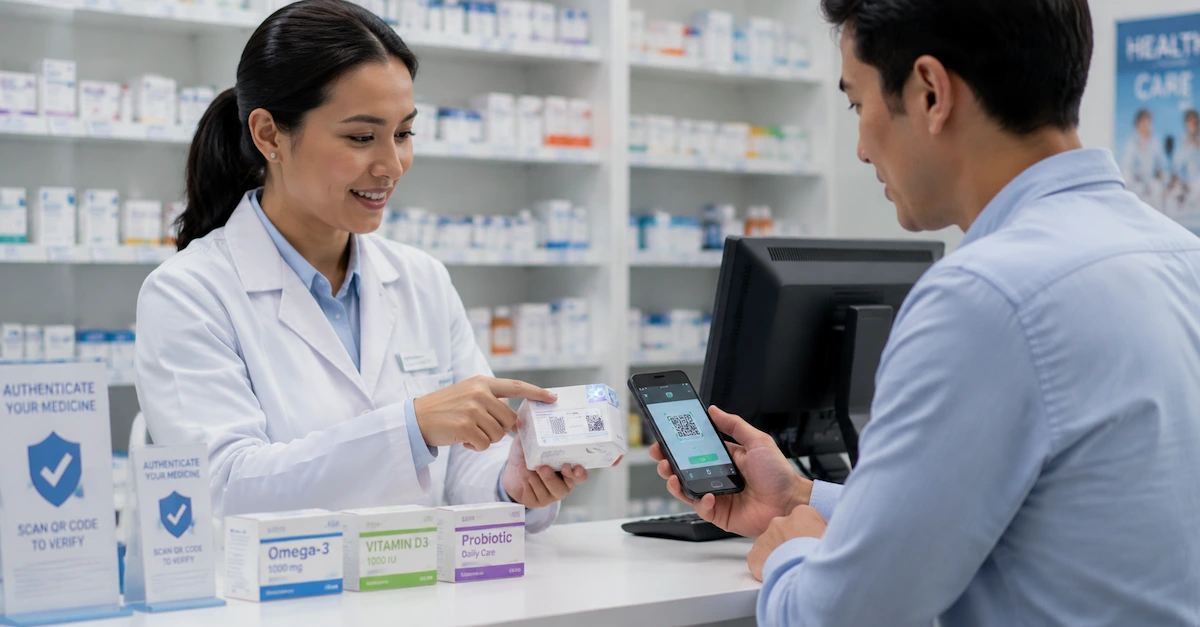

A custom security label manufacturer should do more than print a logo on an adhesive film. For a B2B buyer, the real value is turning a specific risk—counterfeiting, unauthorized opening, label transfer, warranty fraud, product substitution, channel diversion, or traceability failure—into a label construction that can be tested on the real package and reproduced consistently during mass production.
That distinction matters. A label can look sophisticated and still fail its job. A holographic effect may help people recognize a genuine product but may not show that a carton has been opened. A VOID film may reveal removal but may not give every unit a unique identity. A QR code may connect a product to digital information, but a copied static code does not automatically create strong anti-counterfeit protection. The right solution depends on what must be protected, who will inspect the label, how the product is packed and handled, and what should happen when the label is attacked.
If you are starting a new project, review the HX security label product range first, then use this guide to turn a broad request such as “we need an anti-counterfeit sticker” into a specification that a manufacturer can actually sample, quote, inspect, and produce.
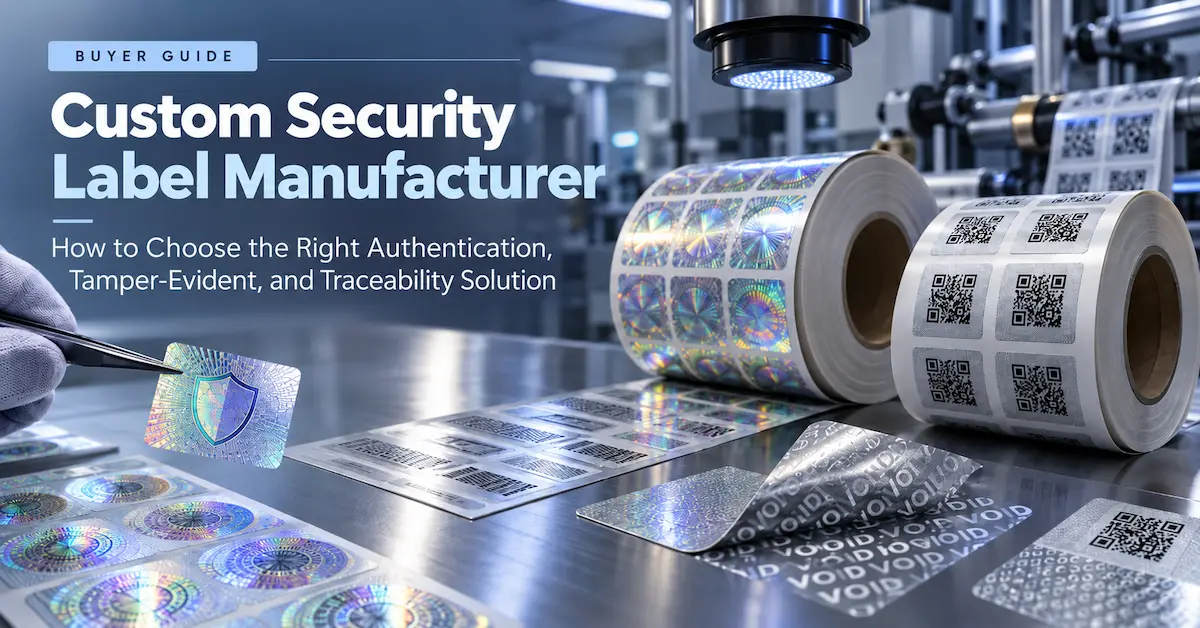
What Should a Custom Security Label Manufacturer Actually Provide?
A specialized manufacturer should help connect five things: the threat, the physical label, the packaging surface, the verification method, and the production-control process.
For example, an electronics manufacturer may need a warranty seal that breaks when a housing is opened. A liquor brand may need a bottle-neck security label that combines visible authentication with evidence of opening. A cosmetics company may want a premium holographic feature that does not damage the visual design of the carton. An industrial equipment supplier may need a durable serialized label that remains readable after storage, transport, and handling. These projects are all “security labels,” but they should not be built the same way.
A capable supplier should therefore be able to discuss:
-
the security problem being controlled;
-
the surface where the label will be applied;
-
label size, shape, and placement;
-
material and adhesive behavior;
-
visible, hidden, tamper-evident, or digital security features;
-
QR codes, barcodes, serial numbers, or other variable data when required;
-
sample proofing and application testing;
-
quality criteria for mass production;
-
roll, sheet, or individual-piece supply format;
-
repeat-order version and data control.
This is also why comparing manufacturers only by unit price can be misleading. Two quotations may refer to labels that look similar in a PDF but behave very differently when removed, applied to a curved bottle, exposed to humidity, scanned at production speed, or used on an automatic labeling line.
For a broader overview of how professional suppliers are evaluated, see the security labels manufacturer buyer guide.
Which Buyers Need a Specialized Security Label Manufacturer?
Security labeling becomes especially relevant when a normal product label cannot control the commercial or operational risk.
Typical buyers include:
-
brand owners dealing with counterfeit products;
-
electronics companies protecting warranty points;
-
liquor and beverage companies concerned about bottle opening, refilling, or label reuse;
-
cosmetics and personal-care brands that need authentication without compromising premium packaging;
-
pharmaceutical and medical-device packaging teams that require controlled identification and tamper evidence;
-
food, tea, and agricultural brands using product authentication or batch identification;
-
industrial equipment and component manufacturers needing anti-transfer, warranty, or serialization;
-
importers and distributors that need market, channel, batch, or product identification;
-
packaging converters producing secure packaging for third-party brands;
-
OEM/ODM suppliers that need customer-specific security artwork and repeat production.
Not every project needs a specialized security construction. If the only purpose is decoration, product information, or a temporary promotional sticker, an ordinary label supplier may be sufficient. Security features create value when they answer a defined question such as:
“Is this product genuine?”
“Has this package been opened?”
“Has this original label been transferred to another product?”
“Which individual unit is this?”
“Can this code be matched to a batch, SKU, warranty record, or product record?”
A good custom security label manufacturer should be willing to simplify a project when extra features do not solve a real problem. More complexity is not automatically more security.
Start With the Risk, Not With the Technology
One of the most common sourcing mistakes is choosing the feature before defining the threat.
A buyer sees a hologram and asks for a hologram. Another sees a VOID sticker and asks for VOID. A third wants a QR code because competitors have one. This feature-first approach often leads to over-specified labels that cost more but still leave the main risk untreated.
A better approach starts with the attack or misuse scenario.
If the Risk Is Counterfeit Substitution
The buyer may need a visible authentication layer, a harder-to-copy hidden element, a unique identifier, or a combination of physical and digital verification.
Potential options include:
-
holographic features;
-
microtext;
-
latent-image elements;
-
fluorescent or other covert features;
-
serialized QR codes;
-
unique serial numbers;
-
combined physical and digital authentication.
If the Risk Is Unauthorized Opening
The buyer needs the label to create clear evidence when a closure, carton edge, device housing, or bottle seal is disturbed.
Potential options include:
-
VOID structures;
-
destructive materials;
-
breakable or fragmenting seals;
-
visible residue or transfer patterns;
-
combinations of tamper evidence and product identification.
If the Risk Is Label Transfer or Reuse
A genuine label may be valuable to a counterfeiter if it can be removed cleanly and placed on an unauthorized product. The design should therefore focus on what happens during removal.
Questions include:
-
Should the label break?
-
Should a message remain on the surface?
-
Should part of the construction transfer?
-
Should the security image be permanently damaged?
-
Should the serial number become invalid after use?
-
Who will inspect the evidence?
For packaging-focused projects, the VOID Open Label category and the tamper-proof label supplier guide provide useful starting points.
Build the Security Architecture Around the Verification Job
A security label often performs more than one function. Separating those functions makes supplier comparison much easier.
| Security function | Main question it answers | Typical technologies | Common applications |
|---|---|---|---|
| Visible authentication | Does this look like the genuine product? | Holographic or optical features, custom graphics | Liquor, cosmetics, electronics, premium packaging |
| Tamper evidence | Has this package or protected area been opened? | VOID, destructible structures, transfer patterns | Cartons, electronics, equipment, bottles |
| Anti-transfer | Can a genuine label be removed and reused? | Destructible material, VOID response, structural damage | Warranty, electronics, branded goods |
| Covert verification | Can trained staff perform a second-level check? | Latent image, microtext, fluorescent/hidden elements | High-value goods, internal inspection |
| Product identification | Which item, batch, or SKU is this? | Barcode, serial number, variable data | Manufacturing, logistics, warranty |
| Digital interaction | Can the user or system scan a product identity? | QR code, serialized QR, linked data | Authentication, traceability, service, channel management |
| Layered security | Do we need several controls at once? | Physical + covert + digital combination | Higher-risk products and markets |
This table is important because security technologies are not interchangeable. A holographic feature and a VOID structure solve different problems. A QR code and a destructible film also solve different problems. The strongest design is not the one with the longest feature list; it is the one where every feature has a defined job.
When Holographic Security Labels Make Sense
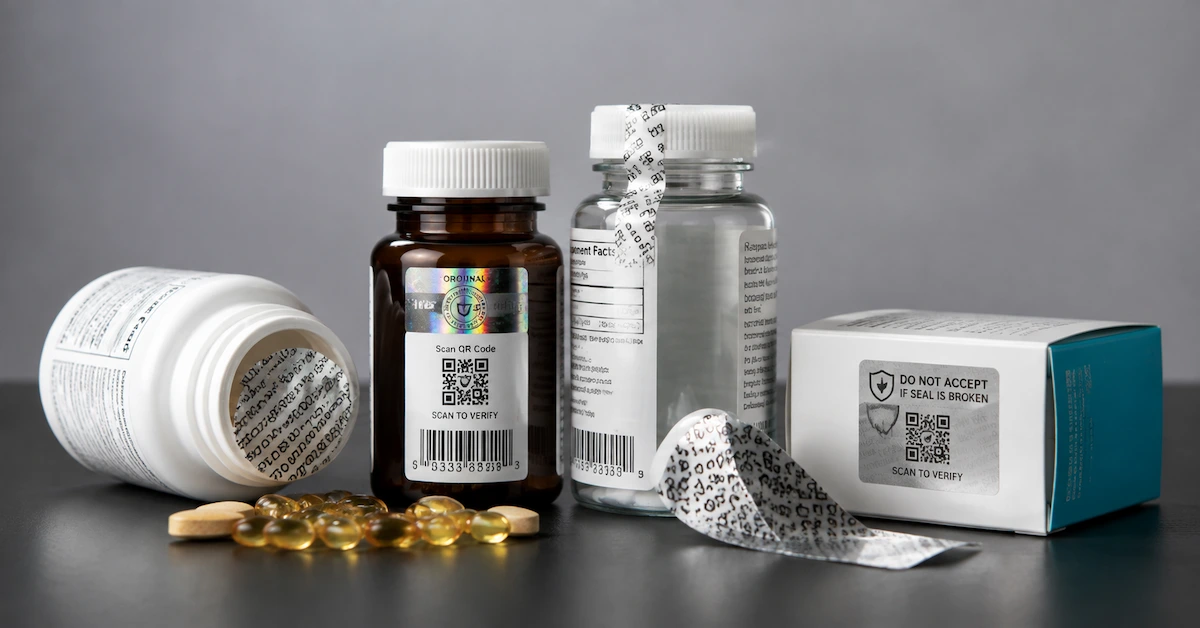
Holographic labels are particularly useful when fast visual recognition matters. They can add dynamic optical effects that are difficult to reproduce with ordinary commercial printing and can also support premium packaging aesthetics.
A buyer may choose a holographic security label when:
-
consumers or distributors need a visible authenticity cue;
-
the brand wants a recognizable security element;
-
premium appearance matters;
-
the security feature must be integrated into a logo or branded design;
-
a visible layer will be combined with hidden or digital verification.
However, a hologram should not automatically be treated as a tamper seal. If the project also needs evidence of opening or anti-transfer behavior, those requirements should be specified separately.
For example, an electronics brand might combine a holographic feature with a destructible or VOID structure. A liquor brand may combine an optical feature with a serialized code and a bottle-opening seal. A cosmetics brand may use a transparent or visually restrained security element to protect authenticity without overwhelming the carton design.
When VOID or Destructible Labels Are the Better Choice
VOID and destructible labels are built around removal behavior.
A VOID construction can reveal a word, pattern, or transferred image when someone attempts to remove the label. Depending on the design, the effect may remain on the surface, appear within the label, or create a combination of both.
Destructible materials work differently. Instead of lifting cleanly, the label breaks into pieces or becomes unusable during removal.
These technologies are often relevant for:
-
electronics warranty points;
-
device housings;
-
industrial equipment;
-
retail cartons;
-
logistics packaging;
-
security seals;
-
access points;
-
product-opening evidence.
The critical purchasing question is not “Do you have VOID material?” It is “What exact evidence should appear, on which surface, after what kind of removal attempt?”
A sample that performs well on glass may behave differently on rough carton, painted metal, PET, PP, or textured plastic. That is why physical testing on the real surface is more useful than approving only a digital artwork proof.
When Covert Features Add Value
Not every security feature should be obvious to the public.
Covert or semi-covert features are useful when brands want a second verification layer for distributors, quality teams, inspectors, or internal staff. HX’s latent image label range represents one such approach.
Other projects may use microtext or hidden visual elements as part of a layered design.
The value of a covert feature depends on the inspection process. Before adding one, buyers should decide:
-
Who knows the feature exists?
-
What tool or viewing method is required?
-
How will staff be trained?
-
Is the feature for consumer use or internal verification?
-
What happens if the public security feature is copied?
A hidden feature that nobody knows how to inspect adds little operational value. A useful covert layer has an owner, a verification method, and a defined reason for being there.
QR Codes, Serial Numbers, and Barcodes: Printing Is Only Half the Job
Digital identity is one of the areas where buyers should ask more technical questions.
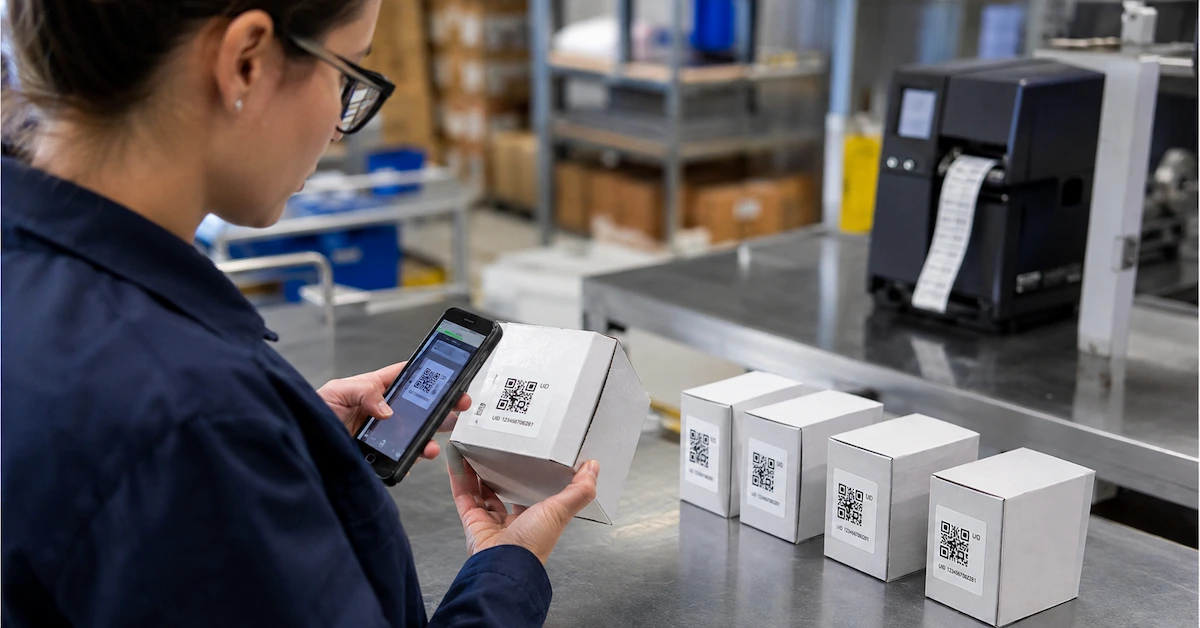
Printing 100,000 different QR codes does not automatically mean that a reliable serialization system exists. For product-level identity, each physical label should correspond to controlled data, and the manufacturer or project owner should define how that data is generated, checked, mapped, rejected, reprinted, and managed during repeat orders.
For serialized projects, clarify:
-
whether every QR code must be unique;
-
whether serial numbers are sequential or randomized;
-
whether QR, barcode, and human-readable data must match;
-
whether codes map to SKU, batch, market, or product records;
-
how duplicate codes are prevented;
-
what happens to a label rejected during inspection;
-
whether replacement labels reuse or retire the original identity;
-
how future orders avoid overlapping serial ranges;
-
what data the buyer provides and what data the supplier generates;
-
whether the project requires only printing or also a separate verification platform.
HX discusses these controls in more detail in its unique QR code labels supplier guide.
This distinction is especially important for GEO and AI-search visibility because many buyers now ask direct questions such as “Is a QR code enough for anti-counterfeiting?” The practical answer is no: a QR code is an identification and interaction tool. Its security value depends on uniqueness, data control, verification logic, and whether physical copying or label transfer is part of the threat model.
Material and Adhesive Selection Should Start With the Real Surface
The same label construction will not perform identically on every package.
Before choosing material or adhesive, a custom security label manufacturer should ask what the label will actually touch. Common surfaces include:
-
coated cartons;
-
corrugated boxes;
-
paperboard;
-
PET bottles;
-
PP or PE plastics;
-
glass;
-
painted metal;
-
stainless steel;
-
molded plastic;
-
textured housings;
-
flexible films;
-
bottle caps;
-
bottle necks;
-
curved packages.
Surface condition matters as well. A smooth high-energy surface is different from a rough, dusty, low-energy, curved, or coated surface. Even two cartons that look similar may use different varnishes, laminations, or surface treatments that change adhesion.
Useful information to send the manufacturer includes:
-
a photo of the exact application area;
-
the substrate name if known;
-
whether the surface is flat, curved, textured, or recessed;
-
whether the label crosses a seam or opening point;
-
whether the label is applied manually or by machine;
-
how long the label should remain in service;
-
whether removal evidence must remain on the product.
For industrial projects, the industrial security labels guide goes deeper into product surfaces, operating conditions, and tamper-evident specification.
Environment and Logistics Can Change Label Performance
Security labels rarely stay in a controlled office environment. They may be applied in a factory, packed into cartons, stacked in a warehouse, moved through cold or humid conditions, rubbed during transportation, handled by several distributors, and inspected months later.
That means a buyer should consider:
-
application temperature;
-
service temperature;
-
humidity;
-
condensation;
-
refrigeration;
-
abrasion;
-
dust;
-
vibration;
-
compression;
-
long-term storage;
-
repeated handling;
-
transport between different climates.
A security feature that reacts unintentionally during normal logistics creates false alarms. A label that lifts at the edge may look tampered even when nobody attacked it. Conversely, a label that remains completely reusable after removal may fail the security objective.
The sample plan should therefore reproduce important real conditions as closely as practical. A visually perfect sample on a clean test panel is not enough if the production label will be applied to a textured electronics housing or a chilled bottle.
How to Test Samples Before Approving Bulk Production
Sample testing is one of the strongest ways to reduce risk in a custom project.
A useful approval sample should represent the intended construction, not merely the artwork. Depending on the project, buyers may need to evaluate:
Appearance
Check:
-
dimensions;
-
shape;
-
print quality;
-
color;
-
registration;
-
holographic or optical effect;
-
readability of microtext or hidden features where applicable;
-
die-cut accuracy.
Application
Check:
-
how easily the label can be positioned;
-
whether the liner releases correctly;
-
whether the label conforms to curves;
-
whether bubbles or lifting appear;
-
whether the package surface needs cleaning or preparation.
Adhesion
Check the label after realistic dwell time rather than judging only seconds after application. The purpose is not simply to ask whether adhesion is “strong,” but whether it is appropriate for the intended product and security response.
Tamper Behavior
Try the type of attack the label is intended to reveal. Record what happens:
-
Does a VOID message appear clearly?
-
Does the label fragment?
-
Does residue remain?
-
Can the label be reapplied?
-
Is the evidence obvious to the intended inspector?
QR or Barcode Readability
Scan codes using the devices and distances likely to be used in practice. For serialized projects, sample inspection should also confirm data matching, not just visual print quality.
Packaging-Line Compatibility
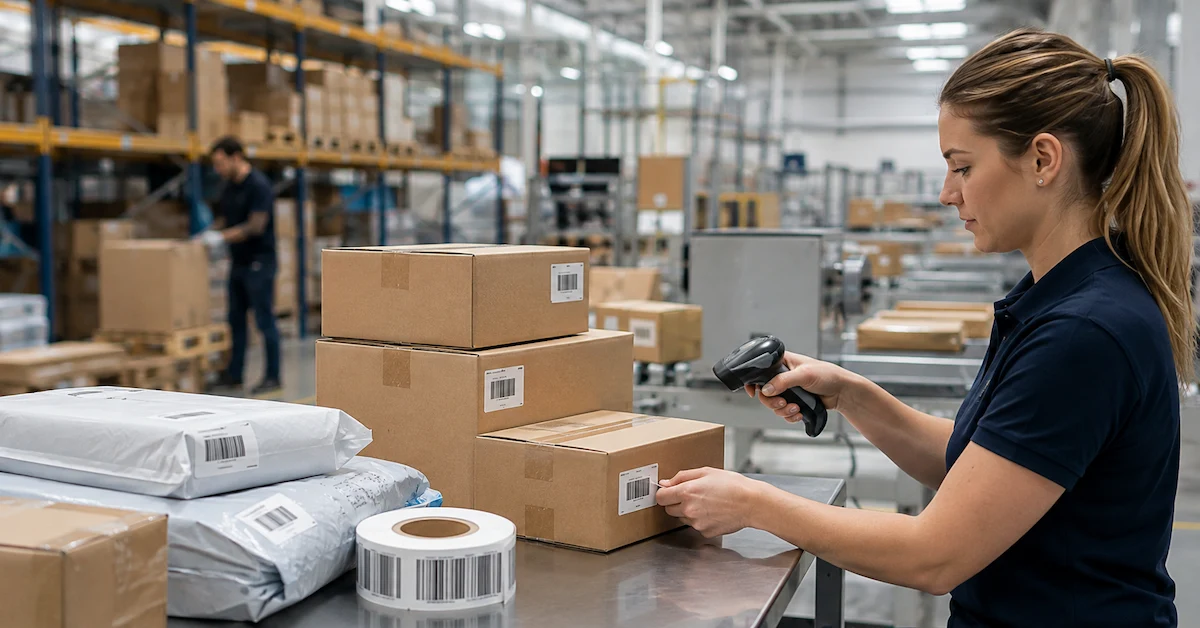
If labels will run on automatic equipment, a hand-applied sample does not prove line compatibility. Roll specification, spacing, winding direction, liner, core, and dispensing behavior also matter.
A manufacturer and buyer should agree on what “approved” means before mass production begins.
Quality Control Should Be Based on an Approved Specification
“Good quality” is too vague for security labels.
Bulk-order quality should be tied to measurable or observable acceptance criteria. Depending on the label, these may include:
-
label dimensions and tolerance;
-
print registration;
-
die-cut position;
-
security-image consistency;
-
VOID or destructible response;
-
adhesive and surface compatibility;
-
barcode or QR readability;
-
serial-number or data accuracy;
-
label count;
-
roll direction and roll presentation;
-
liner and gap;
-
packaging;
-
consistency with the approved sample.
For repeat orders, version control becomes just as important as initial inspection. A buyer should know which artwork version, material construction, security pattern, die-cut file, data range, and roll format are approved.
If any of those change, the change should be visible and controlled rather than silently introduced during production.
Automatic Labeling Requires More Than “Supply in Rolls”
For manual application, roll format may be simple. For automated packaging lines, it becomes a technical specification.
Buyers should provide:
-
roll direction;
-
label orientation;
-
core size;
-
maximum roll diameter;
-
label gap;
-
web width;
-
liner material or relevant converting requirement;
-
winding direction;
-
sensor or registration requirements where applicable;
-
expected application speed if it affects the project.
This information is easy to overlook during quotation and difficult to fix after tens of thousands of labels have already been converted.
A custom security label manufacturer that serves OEM and packaging-line customers should treat application format as part of the product, not as an afterthought.
How to Compare Security Configurations Before Requesting a Quote
Many custom security labels do not have standardized model numbers. Comparing functional configurations is therefore more useful than asking several suppliers for “the same model.”
| Configuration | Main features | Main value | Best fit | Typical cost drivers |
|---|---|---|---|---|
| Visible authentication | Holographic or branded optical feature | Fast visual recognition | Cosmetics, liquor, premium retail | Optical design, material, finishing |
| Tamper-focused | VOID or destructible construction | Detects opening or removal | Electronics, cartons, equipment | Material, adhesive, die cutting |
| Authentication + tamper | Visible security + tamper response | Protects authenticity and opening points | Liquor, cosmetics, premium goods | Combined construction, customization |
| Serialized label | Unique number, QR, or barcode | Product-level identity | Warranty, logistics, channels | Data preparation, print inspection |
| Visible + digital | Holographic feature + QR/serial | Physical recognition plus scan interaction | Retail brands, exports | Optical process, variable data, data control |
| Multi-layer security | Visible + covert + tamper + digital | Controls several defined threats | Higher-risk programs | Design complexity, proofing, QC |
This approach also improves quotation quality because every supplier is being asked to solve the same problem.
What Drives the Cost of Custom Security Labels?
The cost of a security label is not based on size alone.
Pricing can be influenced by:
-
material;
-
adhesive structure;
-
holographic or optical development;
-
hidden security elements;
-
VOID or destructive behavior;
-
number of print colors;
-
label dimensions;
-
die-cut complexity;
-
variable data;
-
barcode or QR inspection;
-
serial-number management;
-
proofing;
-
quantity;
-
roll or sheet format;
-
inspection requirements;
-
packaging and shipping.
The lowest unit price is not always the lowest total cost. A label that fails on the real surface can create scrap, rework, rejected packaging, shipment delay, warranty disputes, or an entire batch of unusable inventory.
For a more detailed cost breakdown, read the custom security label cost guide.
A practical cost discussion should start with the minimum security architecture that controls the identified risk. Extra features should then be added only when they provide measurable value.
MOQ: Why There Is No Useful Universal Number
Buyers often ask for MOQ before they have defined the label.
That is understandable, but a universal number is rarely useful because minimum order quantity can depend on:
-
material availability;
-
custom holographic preparation;
-
VOID structure;
-
special adhesive;
-
label shape;
-
die cutting;
-
variable data;
-
number of SKUs;
-
roll specifications;
-
proofing requirements.
A basic printed label and a highly customized holographic serialized seal do not carry the same setup work.
For a new project, it is often safer to think in stages:
Sample → Trial Order → Bulk Order → Repeat Program
This allows the brand to confirm construction before scaling volume.
HX provides a separate security label MOQ guide explaining the main variables buyers should prepare before asking for a minimum quantity.
Lead Time Should Be Broken Into Milestones
“Production takes X days” is not enough information for a customized security project.
A more useful schedule separates:
-
requirement confirmation;
-
artwork and security design;
-
material confirmation;
-
physical proof or sample;
-
sample testing;
-
buyer approval;
-
bulk production;
-
quality inspection;
-
packaging and dispatch;
-
transportation.
A first order may require development and sample iterations. A repeat order using an unchanged approved construction may follow a different timeline.
The buyer should also ask when the quoted lead time begins. Does it begin when the inquiry is received, when artwork is approved, when payment is confirmed, when material is available, or when the sample is signed off?
For planning product launches and export shipments, see HX’s custom label lead-time guide.
OEM/ODM Projects Need Clear Responsibility Boundaries
Custom security labels can involve sensitive brand assets and controlled data. Responsibility should therefore be defined early.
Clarify:
-
who supplies the logo and artwork;
-
who develops the security pattern;
-
who approves the final file;
-
who controls revisions;
-
how old artwork versions are retired;
-
who generates QR or serial data;
-
who verifies data uniqueness;
-
who keeps production records;
-
what happens to rejected serialized labels;
-
who approves a repeat order;
-
whether digital verification services are part of the label order or a separate scope.
The phrase “OEM/ODM security label” can hide many assumptions. A detailed responsibility matrix prevents later disputes and helps the manufacturer provide a more accurate quotation.
Certifications and Compliance Must Match the Actual Project
B2B buyers often ask whether a supplier is “certified.” That question should be made more specific.
There is a difference between:
-
company-level quality certification;
-
material documentation;
-
product-specific testing;
-
customer-required inspection records;
-
destination-market labeling rules;
-
regulated tax-stamp or government-document authorization;
-
pharmaceutical, food-contact, or other application-specific compliance.
A general quality certificate does not automatically prove that every material or security label is approved for every regulated application.
HX’s company profile states that the business has operated since 2008 and describes its anti-counterfeiting R&D, production process, patents, technologies, and quality credentials. Buyers can review the HX company background, but any regulated or market-specific requirement should still be verified against the exact project before an order is placed.
How Different Industries Specify Security Labels
Electronics and High-Tech Products
Common priorities include:
-
warranty control;
-
evidence of device opening;
-
anti-transfer labels;
-
serial numbers;
-
QR codes;
-
component identification;
-
high-volume repeat production.
A device manufacturer may place a destructible or VOID label over an enclosure screw, seam, or access point. If the label is also used for warranty identification, it may include serial or QR data. The critical issue is making sure the label remains stable in normal use but creates clear evidence after unauthorized access.
Liquor, Wine, and Spirits
Liquor packaging often combines several risks:
-
counterfeit bottles;
-
label reuse;
-
bottle refilling;
-
unauthorized opening;
-
channel diversion;
-
consumer authentication.
That may justify a layered design using visible authentication, a bottle-opening security structure, and unique identification. The security label should be tested on the real glass, cap, closure, or bottle-neck geometry rather than a flat test surface.
Cosmetics and Premium Retail Packaging
Cosmetics brands often want security without making the package look industrial.
A visually refined holographic element, hidden feature, unique QR code, or small tamper seal can be integrated into the packaging design. Here, appearance and security are both part of the specification.
The buyer should define whether the label is intended to be noticed immediately or remain visually subtle.
Pharmaceuticals and Medical Products
These projects may require tamper evidence, identification, serialization, or controlled traceability, but regulated-market requirements must be handled carefully.
Do not assume that a generic security label automatically meets pharmaceutical regulations in every destination market. The packaging team should identify required documentation, data formats, market rules, and validation requirements before production.
Food, Tea, and Agricultural Products
Common goals include:
-
brand authenticity;
-
origin communication;
-
batch identification;
-
product verification;
-
distributor or consumer scanning.
For products sold through multiple channels, serialized QR or barcode data can also support internal identification, but the digital workflow should be defined before printing begins.
Industrial Equipment and Components
Industrial products can expose labels to rough surfaces, oils, dust, abrasion, temperature variation, long storage, or frequent handling.
Security design should therefore consider not only tamper evidence but also label durability and placement. In many cases, the best application point is a protected seam or access point rather than the most visually prominent location.
Logistics and Export Cartons
The key question may be very simple: “Has this carton been opened or resealed?”
In that case, a tamper-evident seal may create more value than an expensive visual authentication feature. The buyer should focus on carton coating, closure position, label size, storage conditions, and inspection procedures at receiving.
How to Audit a Custom Security Label Manufacturer
A supplier audit does not always require a physical factory visit. Even during remote sourcing, buyers can ask questions that reveal how mature the supplier’s process is.
Ask the manufacturer to explain:
1. How Do You Translate a Security Problem Into a Label Specification?
A useful answer should discuss the threat, surface, environment, inspection method, and required response—not simply offer the most expensive technology.
2. How Do You Select Materials and Adhesives?
The supplier should ask about the real application surface and conditions.
3. What Will the Sample Prove?
The answer should include more than color and artwork. It should address security behavior and application.
4. How Is Bulk Production Compared With the Approved Sample?
Look for clear version and acceptance control.
5. How Is Variable Data Managed?
If QR codes, barcodes, or serial numbers are involved, ask how uniqueness, matching, rejects, and repeat orders are handled.
6. How Are Changes Controlled?
Material substitutions, artwork revisions, data-range changes, die-cut revisions, and packaging changes should not happen invisibly.
7. What Information Is Required for an Accurate Quotation?
A technically capable supplier should ask for more than size and quantity.
8. How Are Repeat Orders Controlled?
The second order is often where weak suppliers create inconsistency. Ask how the approved construction is recorded and reproduced.
What Information Should You Send in an RFQ?
A detailed RFQ makes the response faster and more technical.
Use this checklist:
| RFQ item | Information to provide |
|---|---|
| Product / industry | Electronics, liquor, cosmetics, machinery, food, etc. |
| Main security risk | Counterfeit, opening, transfer, warranty fraud, traceability |
| Verification user | Consumer, distributor, QC team, service center, customs/inspection |
| Application surface | Glass, carton, PET, PP, painted metal, film, textured plastic |
| Label position | Flat area, seam, cap, bottle neck, access point, housing |
| Size and shape | Width, height, diameter, special die-cut geometry |
| Required security | Hologram, VOID, destructible, latent image, microtext, QR, barcode, serial |
| Tamper result | Residue, VOID message, fragmentation, irreversible damage |
| Variable data | Unique QR, serial range, barcode type, SKU/batch mapping |
| Artwork | Logo, brand files, colors, text, layout |
| Quantity | Sample, trial order, first bulk order, forecast |
| Supply format | Roll, sheet, individual pieces |
| Application method | Manual or automatic |
| Environment | Heat, cold, humidity, abrasion, refrigeration, storage |
| Destination market | Country/region and any project-specific requirements |
| Timeline | Sample deadline, production deadline, shipping deadline |
When you send these details, the manufacturer can discuss an actual construction instead of returning a generic price-per-thousand quotation.
How HX Approaches Custom Security Label Projects
HX Security Label is the brand of Shenzhen Huaxin Anti-Counterfeiting Technology Co., Ltd. According to its About Us page, the company has worked in anti-counterfeiting since 2008 and reports 40 anti-counterfeiting patents, including four invention patents, together with more than 60 anti-counterfeiting technologies.
Its public product structure includes holographic labels, VOID open labels, wine-related security labels, other-use security labels, and latent image labels. The company also publishes technical purchasing guides on serialized QR labels, industrial security labels, tamper-evident packaging, MOQ, lead time, and cost.
For buyers, the useful point is not the number of available features by itself. The project should still begin with the application. HX’s published workflow covers requirement confirmation, design, proofing, material selection, sample confirmation, and logistics/packaging. That structure is suitable for customized projects because it gives the buyer several points to verify the construction before mass production.
If you are comparing a new security program, start with the product categories and send the real packaging, surface, risk, quantity, and data requirements through the HX contact page.
Frequently Asked Questions
1. What Is a Custom Security Label Manufacturer?
A custom security label manufacturer develops labels around a defined security and packaging requirement rather than supplying only standard decorative stickers. The project may include authentication, tamper evidence, anti-transfer behavior, covert verification, QR codes, serial numbers, barcodes, or several layers together. A specialized manufacturer should also support material selection, proofing, sample testing, bulk quality control, and repeat-order consistency.
2. What Is the Difference Between a Security Label and an Ordinary Product Label?
An ordinary label mainly communicates branding, instructions, ingredients, specifications, or product identity. A security label is designed to create an additional protective or verification function. It may help users recognize authenticity, detect opening, identify product transfer, verify a unique code, or connect a physical item with a controlled record.
3. Is a Holographic Label Enough to Stop Counterfeiting?
Not always. Holographic security is useful for visible authentication and can increase copying difficulty, but the correct design depends on the threat. If counterfeiters can reuse genuine labels, you may also need anti-transfer behavior. If individual product identity matters, unique serial or QR data may be appropriate. Higher-risk programs often combine several layers with different jobs.
4. What Is the Difference Between VOID and Destructible Labels?
A VOID label is designed to reveal a message, pattern, transfer effect, or other visible change after removal. A destructible label is designed to break apart or become physically unusable when someone tries to remove it. The better choice depends on the surface, inspection method, and evidence you want to create.
5. Can Security Labels Include Unique QR Codes or Serial Numbers?
Yes. Variable-data security labels can include unique QR codes, serial numbers, barcodes, batch information, or combinations of these. Buyers should define how codes are generated, checked, mapped, rejected, and managed during repeat orders. For anti-counterfeit use, consider whether the code also needs a physical security layer to reduce copying or transfer risk.
6. How Should I Test a Security Label Sample?
Apply the sample to the real product or packaging surface. Check appearance, adhesion, placement, normal handling, removal response, tamper evidence, scan readability, and environmental conditions relevant to the product. If the label will run on automatic equipment, test roll and dispensing compatibility as well. Document the approved result so mass production can be compared against it.
7. What Affects Custom Security Label Pricing?
Key cost factors include material, adhesive, label size and shape, holographic or hidden features, VOID or destructive structures, printing complexity, die cutting, variable data, sample development, inspection, order quantity, roll specifications, packaging, and logistics. Compare suppliers using the same approved specification instead of comparing unrelated labels only by unit price.
8. What Is the MOQ for Custom Security Labels?
There is no useful universal MOQ for every security-label project. Minimum quantity can vary with material, tooling, security features, customization, variable data, number of SKUs, and production format. New buyers should usually confirm samples first, then request a project-specific MOQ based on the approved construction.
9. How Long Does Custom Security Label Production Take?
Lead time depends on artwork, material selection, security-feature development, proofing, sample approval, variable data, quantity, inspection, and shipping. Ask the manufacturer to separate development, sampling, production, inspection, dispatch, and transit instead of giving only one undifferentiated number.
10. What Should I Send HX to Request a Quotation?
Send your product or industry, packaging photo, application surface, label location, required size and shape, main security problem, preferred security features if known, artwork, quantity, manual or automatic application method, environmental conditions, variable-data requirements, and target delivery schedule. You can submit these details through the HX contact page.
Conclusion
Choosing a custom security label manufacturer is ultimately a risk-control and production-consistency decision, not just a printing purchase.
The right project starts by defining the problem: counterfeit substitution, unauthorized opening, label reuse, warranty fraud, product identification, or traceability. From there, the buyer can decide whether the label needs visible holographic authentication, VOID or destructive tamper evidence, covert verification, QR or serial identity, barcode tracking, or a layered combination.
The next step is physical reality. The construction has to work on the actual glass, carton, plastic, film, painted metal, bottle neck, or device housing. It has to survive normal logistics without creating false tamper evidence. It must be testable during sample approval and reproducible during bulk production. If variable data are involved, code control and repeat-order management matter as much as print appearance.
For procurement teams, the strongest supplier comparison is therefore based on a controlled specification: security objective, surface, environment, tamper behavior, data requirements, application method, QC criteria, quantity, and delivery milestones. That makes cost comparisons fairer, reduces sample-to-bulk surprises, and gives both buyer and manufacturer a clearer definition of success.
HX Security Label supports customized anti-counterfeiting, tamper-evident, holographic, VOID, latent-image, QR, barcode, and serialized-label projects. Review the HX security label solutions, learn more about the company’s anti-counterfeiting background, and then contact HX Security Label with your packaging photos, application surface, label size, security risk, quantity, and data requirements. A detailed project brief is the fastest way to move from a generic sticker request to a security label that can be tested, approved, and produced for real commercial use.