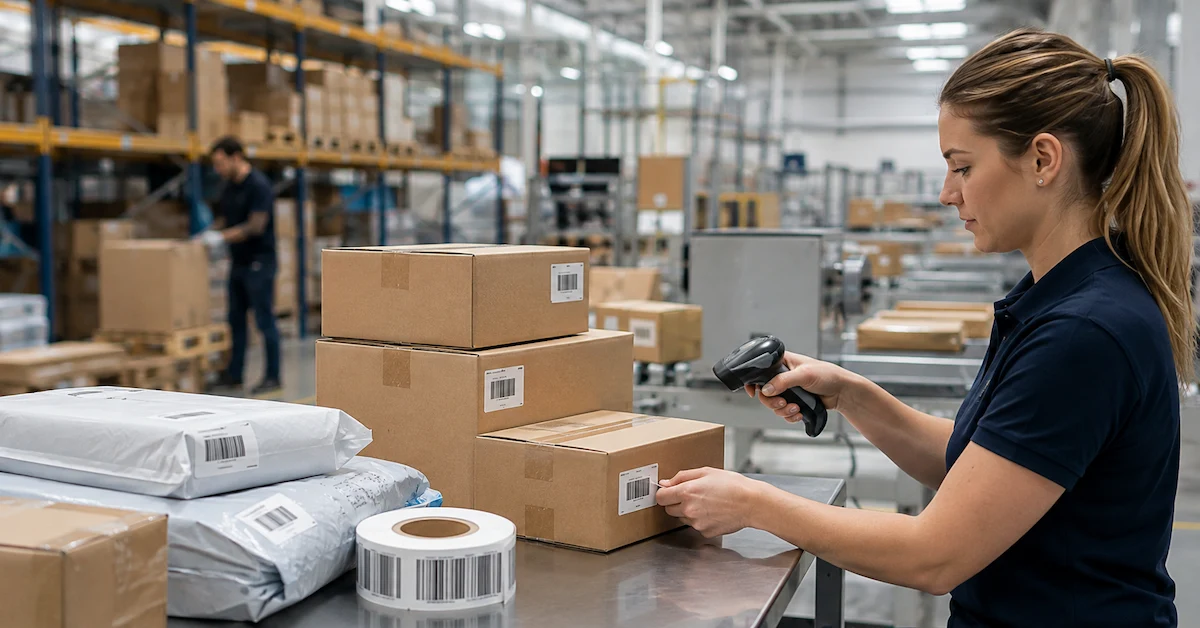

What Should a Unique QR Code Labels Supplier Actually Provide?
A unique QR code labels supplier should provide more than thousands of labels containing different-looking QR codes.
For a real serialization, authentication, or product-traceability project, every physical label must correspond to a controlled digital identity. The supplier therefore needs to manage printing accuracy, code uniqueness, product mapping, material selection, scan performance, variable-data inspection, and repeat-order control as one connected process.
For buyers, the key distinction is simple:
Printing different QR codes is variable-data printing. Building reliable unique QR labels requires data control as well.
A typical project may need the supplier to support:
- One unique QR code per product
- Sequential or non-sequential serial numbers
- SKU or batch mapping
- Barcode or human-readable number matching
- Data import and export
- Scan verification
- Duplicate-code prevention
- Rejected-label control
- Multiple product models or markets
- Roll or sheet production
- Holographic, VOID, destructible, or covert security integration
HX Security Label already works with QR codes, serialization, barcodes, holographic security, tamper-evident structures, and other anti-counterfeiting technologies across its security-label portfolio. Buyers can review the HX security label product range before defining a custom project.
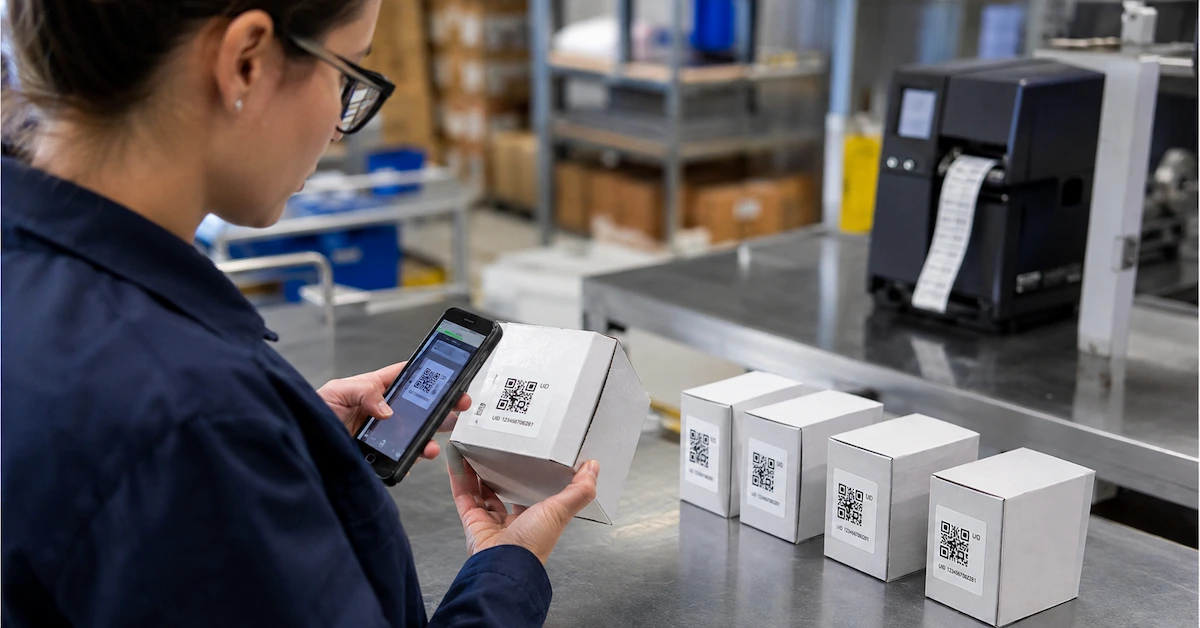
Who Should Buy Unique QR Code Labels?
Unique QR code labels make the most commercial sense when a company needs to identify or verify individual units rather than only identify a product category.
| Buyer Type | Main Requirement | Typical QR Label Function |
|---|---|---|
| Brand owners | Counterfeit protection | Unique product authentication |
| Electronics manufacturers | Warranty and unit control | QR + serial number |
| Pharmaceutical suppliers | Product-level identification | Serialization and verification |
| Cosmetics brands | Consumer authentication | QR + brand security |
| Wine and spirits companies | Bottle-level verification | QR + hologram/tamper evidence |
| Industrial manufacturers | Equipment identification | Unique QR + asset ID |
| Distributors | Channel management | Region or batch-linked QR |
| OEM/ODM factories | Customer-specific coding | Variable QR production |
| Food and tea brands | Traceability and verification | QR + batch information |
| Packaging companies | Integrated security packaging | Custom serialized labels |
When Unique QR Labels May Be Unnecessary
Not every QR label needs individual serialization.
A static QR code may be sufficient when every label only links to:
- A product manual
- A company website
- Generic marketing information
- The same product specification page
In these applications, producing a unique code for every unit adds complexity without necessarily creating business value.
Unique serialization becomes important when the buyer needs to answer questions such as:
Which individual product is this? Has this code been issued before? Which batch or market does it belong to? Should this code still be valid?
Why a Unique QR Code Is Not Automatically an Anti-Counterfeit Solution
One of the most important procurement mistakes is assuming that printing a different QR code on every package automatically prevents counterfeiting.
It does not.
A visible QR code can potentially be photographed or copied. The effectiveness of the system depends on what happens behind the code and whether the physical label contains additional protection.
A stronger architecture can combine:
Unique identity + database verification + physical security + tamper evidence
For example:
QR code
→ Unique product record
→ Verification page
→ Scan history or status logic
→ Physical holographic or tamper-evident feature
HX's existing secure QR label content similarly distinguishes ordinary printed QR labels from labels that combine serialized digital information with physical security features.
ISO 22383:2020 also frames authentication technology selection around the authenticity and integrity requirements of the product and recommends choosing authentication elements after assessing counterfeiting-related risks.
That leads to a better buyer question:
What problem should the unique QR label solve?
Not simply:
How many QR codes can you print?
Four Common Unique QR Label Architectures
Different security risks require different label structures.
1. Unique QR Code + Human-Readable Serial Number
This is one of the simplest serialized configurations.
Each label contains:
- Unique QR code
- Matching serial number
- Optional SKU or batch information
Best for:
- Product registration
- Equipment identification
- Warranty management
- Internal traceability
Main advantage:
A user can still identify the product manually if the QR code cannot be scanned.
2. Unique QR Code + Holographic Security
This combines digital identity with visible authentication.
The label may include:
- Unique QR code
- Serial number
- Custom holographic pattern
- Microtext
- Optical security effect
Best for:
- Premium consumer products
- Cosmetics
- Wine and spirits
- Electronics
- High-value branded products
The holographic layer provides a physical verification feature while the QR code connects the product with digital information.
HX offers custom holographic security labels and has published dedicated guidance on combining QR serialization with holographic authentication.
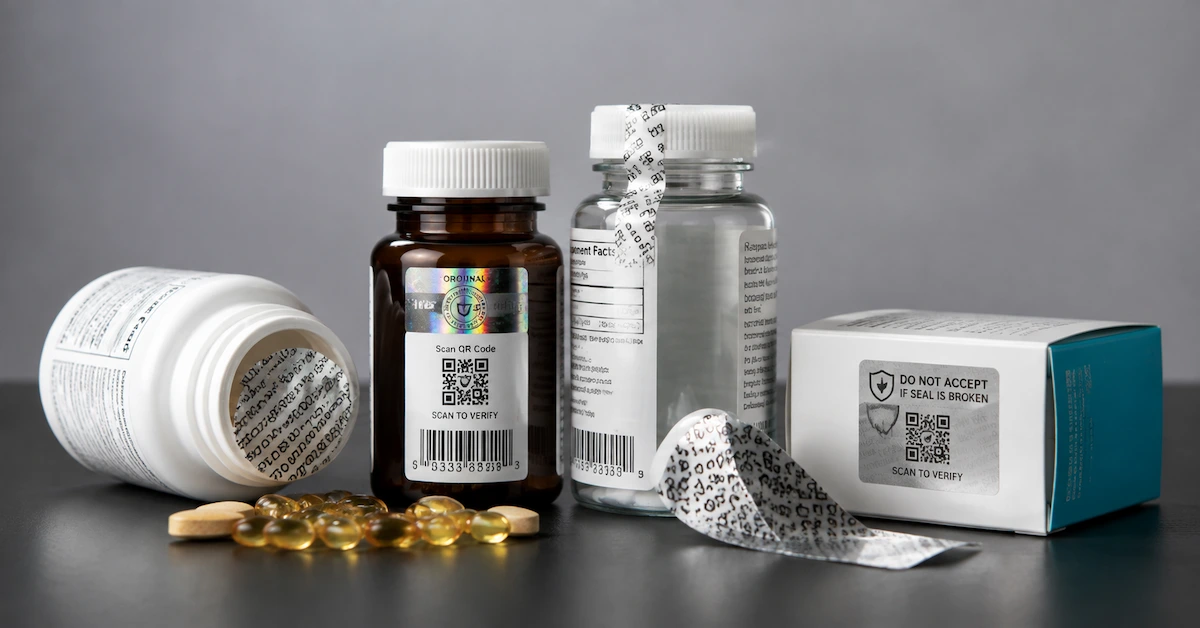
3. Unique QR Code + VOID or Destructible Label
This configuration is useful when product identity and tamper evidence must work together.
Possible behavior:
- QR identifies the individual product
- VOID layer shows attempted removal
- Destructible material prevents clean label transfer
Best for:
- Electronics
- Warranty protection
- Industrial equipment
- Product boxes
- Components
- Secure packaging
HX's VOID Open Label solutions can be considered when visible tamper evidence is part of the project.
4. Multi-Layer Serialized Security Label
Higher-risk applications may require several layers:
Unique QR + serial number + hologram + tamper evidence + covert feature
This can provide different verification methods for:
- Consumers
- Distributors
- Inspectors
- Brand protection teams
The objective should not be to add as many technologies as possible.
Each feature should address a specific risk.
What Data Controls Should You Ask a QR Code Labels Supplier About?
This is where many supplier evaluations remain too superficial.
Before mass production, ask how the supplier manages the unique-code lifecycle.
Code Generation
Clarify:
- Who creates the unique codes?
- Does the buyer provide them?
- Does the supplier generate them?
- What format is required?
- Are codes random, sequential, or structured?
- Is a separate serial number needed?
Duplicate Prevention
Ask how the supplier prevents:
- Duplicate QR images
- Duplicate serial numbers
- Reused code ranges
- Accidental overlap between repeat orders
- Duplicate codes across different SKUs
Data Mapping
If the QR code corresponds to specific product information, define the relationship between:
- QR code
- Serial number
- SKU
- Batch
- Production date
- Destination market
This relationship should be established before production starts.
Rejected Label Management
This is frequently overlooked.
Suppose 100,000 unique QR labels are generated but 230 labels fail inspection.
What happens to those 230 codes?
Buyers should define whether rejected codes are:
- Cancelled
- Reprinted
- Marked invalid
- Returned in an exception file
Otherwise, the physical quantity and digital records may stop matching.
Repeat-Order Control
For repeat orders, suppliers should know:
- The last code range used
- Which codes have already been printed
- Which SKUs they belonged to
- Whether a new market requires a different series
- Whether the previous artwork or data structure has changed
These controls become increasingly important as order volumes and product lines grow.
What Should Be Tested Before Mass Production?
A good-looking QR label is not necessarily a production-ready QR label.
Buyers should approve physical samples under realistic conditions.
| Test Item | What It Helps Confirm |
| QR scan test | Code can be read reliably |
| Data verification | QR opens the correct record |
| Duplicate check | Every required identity is unique |
| Serial matching | Printed number matches QR data |
| Artwork inspection | Brand and regulatory text are correct |
| Adhesion test | Label bonds to actual surface |
| Tamper test | VOID/destructible behavior works |
| Die-cut inspection | Label fits the intended area |
| Environmental test | Label survives expected conditions |
| Roll inspection | Format works with labeling equipment |
HX's published production workflow includes requirements confirmation, design drafting, physical proofing, material selection, and final sample confirmation before mass production.
For security projects, sample testing reduces risk much more effectively than relying on a digital PDF approval alone.
How Should QR Code Size and Print Quality Be Evaluated?
There is no single QR size that is correct for every project.
Readability depends on factors such as:
- Amount of encoded data
- QR structure
- Printing resolution
- Label material
- Surface finish
- Printing contrast
- Scanning distance
- Camera or scanner type
- Packaging curvature
- Final application environment
This is why buyers should avoid requesting:
“Make the QR code as small as possible.”
Instead, provide the supplier with:
- Intended label dimensions
- Scanner type
- Typical scanning distance
- Packaging surface
- Required data
- Expected print volume
Then test actual production samples.
A QR code that scans perfectly on a computer screen may behave differently after printing on reflective holographic film, curved packaging, textured material, or a very small label.
What Materials Work for Unique QR Code Labels?
Material selection depends on both the physical environment and security objective.
| Material Direction | Typical Advantage | Suitable Applications |
| Paper label | Economical identification | Cartons, short-life applications |
| Synthetic material | Better moisture resistance | Consumer packaging |
| PET film | Durability and stability | Electronics, industrial products |
| Holographic film | Visible authentication | Premium brand protection |
| VOID film | Tamper evidence | Warranty and packaging seals |
| Destructible material | Anti-transfer behavior | Components and electronics |
The correct material must also be matched with the adhesive.
A label applied to glass may require different behavior from one applied to:
- PP or PE plastic
- ABS housing
- Painted metal
- Coated carton
- Flexible film
- Curved bottle surfaces
For higher-risk projects, send the supplier the real substrate or packaging sample before final approval.
How Do Unique QR Labels Support Traceability?
Unique QR labels can give individual products a digital identity, but the label is only one component of a traceability system.
A typical structure might be:
Production
→ Unique ID assignment
→ QR label printing
→ Product-label association
→ Warehouse scan
→ Distribution
→ Consumer or distributor verification
GS1 Digital Link provides a standards-based way to represent GS1 identification keys in web addresses and connect those identifiers with online information or services.
This distinction matters:
The QR symbol is a data carrier. Traceability comes from the data architecture, identification rules, and business processes behind it.
Buyers planning supply-chain integration should therefore clarify whether their project is intended for:
- Consumer authentication
- Internal manufacturing traceability
- Distributor verification
- Inventory management
- Warranty registration
- Product information
- Recall or service information
The required data structure may differ for each purpose.
Unique QR Labels vs Static QR Labels vs Serialized Barcode Labels
| Solution | Unique per Unit | Consumer Scanning | Traceability Potential | Security Potential | Best For |
| Static QR label | No | High | Low | Low | Manuals and marketing |
| Unique QR label | Yes | High | High | Medium | Product-level identification |
| QR + hologram | Yes | High | High | High | Brand authentication |
| QR + tamper evidence | Yes | High | High | High | Secure packaging |
| Serialized barcode | Yes | Usually scanner-based | High | Medium | Internal logistics |
| Multi-layer security QR | Yes | High | High | Highest of these options | Higher-risk branded goods |
The appropriate solution depends on who will scan the label and what decision should happen after the scan.
What Industries Benefit Most From Unique QR Security Labels?
Pharmaceuticals and Healthcare Products
Possible needs include:
- Product-level identification
- Package verification
- Batch connection
- Traceability
For regulated industries, QR label design must be coordinated with applicable destination-market regulations and the company's own serialization system.
Cosmetics and Beauty Brands
Unique QR labels can support:
- Consumer verification
- Product registration
- Brand campaigns
- Anti-counterfeit programs
For premium packaging, holographic security can be added without turning the label into a purely functional tracking sticker.
Wine and Spirits
Bottle-level QR identity can help with:
- Product verification
- Distribution control
- Market-specific identification
- Anti-counterfeit programs
Tamper evidence or holographic technology may be added where bottle reuse or label transfer is part of the threat model.
Electronics
Useful applications include:
- Warranty registration
- Product verification
- Component identification
- After-sales service
A QR code can be combined with VOID or destructible technology when unauthorized opening is also a concern.
Food, Tea and Agricultural Products
Unique QR codes may connect consumers or distributors with:
- Batch information
- Product origin
- Brand verification
- Product details
HX states that its anti-counterfeiting products serve wine, pharmaceutical, electronics, tea, food, and agricultural enterprises.
What Affects the Cost of Unique QR Code Labels?
Buyers should compare quotations based on the same technical scope.
The main cost factors include:
Label Material
Standard paper, PET, holographic film, VOID film, and destructible materials have different cost structures.
Order Quantity
Higher production volumes can reduce unit manufacturing cost, but serialized projects may require additional data preparation and inspection.
Variable Data Complexity
Cost can be affected by:
- QR generation
- Serial number printing
- Multiple SKUs
- Multiple batches
- Region-specific data
- Data matching requirements
Security Features
Adding technologies such as:
- Holograms
- VOID structures
- Microtext
- Latent features
- Special security patterns
can increase production complexity.
Inspection Requirements
A high-volume unique-code project may need more extensive verification than static-label printing.
Packaging Format
Roll diameter, core size, winding direction, label spacing, and sheet format can also influence production planning.
The correct comparison is therefore not:
Which supplier has the lowest price per label?
It is:
Which supplier can deliver the required number of usable, correctly mapped, scannable and secure labels with controlled data?
What Should You Send When Requesting a Quote?
To receive a technically useful quotation, send more than quantity and size.
A strong RFQ should include:
| RFQ Information | Example |
| Product | Cosmetics, electronics, wine, equipment |
| Label purpose | Authentication, traceability, warranty |
| Quantity | Trial quantity + expected annual volume |
| Size | Width × height |
| Surface | Glass, plastic, metal, carton |
| Material preference | If already defined |
| QR data source | Buyer-generated or supplier-generated |
| Unique IDs | Required / not required |
| Serial number | Required / not required |
| Security feature | Hologram, VOID, destructible |
| Application method | Manual / automatic |
| Format | Roll / sheet |
| Destination market | Country or region |
| Sample requirement | Physical testing required |
A Better Inquiry Example
Instead of sending:
“Please quote 100,000 QR labels.”
Send:
“We need 100,000 unique QR security labels for cosmetic packaging. Each QR must match a unique serial number. Labels will be applied to coated cartons, supplied in rolls for automatic application, and we want to evaluate a holographic security layer. Please advise material, data format, sample process, MOQ, production requirements and quotation.”
That gives the supplier enough information to respond technically instead of sending a generic price.
How to Evaluate a Unique QR Code Labels Supplier
Before placing a bulk order, evaluate six areas.
1. Variable-Data Capability
Confirm whether the supplier can reliably print:
- Unique QR codes
- Serial numbers
- Barcodes
- Batch information
- Multiple SKUs
2. Data-Control Process
Ask specifically about:
- Duplicate prevention
- Data import
- Matching logic
- Failed-label handling
- Repeat orders
3. Physical Security Capability
If the project is anti-counterfeit rather than simple traceability, determine whether the supplier can integrate:
- Holographic security
- VOID
- Destructible material
- Covert features
4. Materials and Adhesives
The supplier should recommend a construction based on the actual product surface and environment.
5. Proofing and QC
Request a physical sample and define the acceptance criteria before mass production.
6. Long-Term Production Consistency
For recurring programs, verify how the supplier manages:
- Artwork revisions
- Material specifications
- Code ranges
- Product models
- Packaging requirements
- Future repeat orders
Why Work With HX for Custom Unique QR Security Labels?
HX Security Label is the brand of Shenzhen Huaxin Anti-Counterfeiting Technology Co., Ltd., which states that it was established in Shenzhen in 2008 and specializes in anti-counterfeiting label R&D, production, and sales. Its company profile reports 40 anti-counterfeiting patents, including four invention patents, and more than 60 anti-counterfeiting technologies.
This background is particularly relevant when a QR project needs to move beyond ordinary variable-data printing.
Depending on the application, HX can combine digital identification with security technologies such as:
- Unique QR codes
- Serial numbers
- Barcodes
- Holographic security
- VOID structures
- Destructible materials
- Latent or covert features
Buyers can review HX's company and R&D background, explore security label products, or review HX's existing guide to serialized anti-counterfeit labels.
For a project quotation, the most efficient next step is to send the intended application, label size, surface, quantity, QR data requirements, security level, and sample requirements through HX Security Label's contact page.
FAQ About Unique QR Code Labels Suppliers
1. What is a unique QR code label?
A unique QR code label contains a QR identity that differs from other labels in the same serialization program. It can be linked to an individual product, package, batch record, or verification record.
2. Can every product have a different QR code?
Yes. Variable-data printing allows each physical label to contain a different QR code. The data-generation and production process must also prevent duplicates and maintain correct product mapping.
3. Are unique QR code labels anti-counterfeit?
They can support anti-counterfeit programs, but a unique QR code alone should not be treated as complete protection. Higher-risk products may benefit from holographic, tamper-evident, destructible, or covert security layers.
4. Can QR codes and serial numbers appear on the same label?
Yes. A human-readable serial number can be printed alongside the QR code and mapped to the same product identity.
5. Can unique QR labels be supplied in rolls?
Yes, depending on the project. For automatic application, buyers should confirm roll direction, core size, label spacing, liner, roll diameter, and labeling-machine requirements before production.
6. What material is best for QR security labels?
There is no universal best material. The correct choice depends on the surface, environment, lifespan, security requirement, and whether the label needs tamper evidence.
7. How can buyers prevent duplicate QR codes?
Define the code-generation method, production range, data validation, failed-label handling, repeat-order process, and final inspection requirements before mass production.
8. Can unique QR labels include holographic security?
Yes. QR codes can be integrated with holographic features when a product requires both digital verification and visible physical authentication.
9. What affects the MOQ and price of unique QR labels?
Material, size, quantity, variable-data complexity, security features, finishing, proofing, inspection, and roll specifications can all affect pricing and minimum production requirements. HX's existing MOQ guidance also notes that QR and serial-number projects may require additional data preparation and inspection.
10. What information should I send HX for a quotation?
Send:
- Product and industry
- Label dimensions
- Application surface
- Expected quantity
- QR data requirements
- Serial-number requirements
- Required security features
- Roll or sheet format
- Application environment
- Artwork or reference design
- Destination market
- Expected sample and delivery schedule
This allows HX to evaluate the project as a security and serialization requirement rather than provide only a generic sticker price.
Conclusion
Choosing a unique QR code labels supplier is ultimately a data-control and product-security decision.
A reliable supplier should be able to answer four questions clearly:
- How is every product identity kept unique?
- How are printing and data errors detected before shipment?
- How will the label perform on the real product and packaging line?
- What physical security layer is needed if copied QR codes are part of the risk?
For basic product information, a static QR code may be enough.
For product-level traceability, warranty control, authentication, channel management, or anti-counterfeiting, buyers should evaluate serialization, data mapping, inspection, material performance, and security integration together.
If your project requires unique QR codes combined with serial numbers, holographic security, VOID tamper evidence, destructible materials, or other authentication technologies, send HX your application details and expected order volume.
A detailed RFQ allows the supplier to recommend the right label construction, data workflow, proofing process, and production approach—and usually produces a much more useful quotation than simply asking for a price per thousand labels.