
Why Tamper Evident Seals Are Essential for Modern Product Protection
Product security is no longer limited to preventing counterfeit products. Brands today must also control unauthorized opening, package replacement, warranty fraud, and supply chain risks.
A professional tamper evident seals manufacturer helps companies develop security solutions that provide visible evidence when a package, product, or device has been opened or altered.
Unlike ordinary adhesive stickers, tamper evident seals are designed with special structures that create irreversible changes after removal.
Depending on the application, these changes may include:
- VOID messages appearing after removal
- Material fragmentation
- Adhesive transfer
- Pattern destruction
- Hidden security feature exposure
- Digital verification through QR codes or serial numbers
For manufacturers, distributors, and brand owners, tamper evidence creates a visible security barrier between production, transportation, and final users.
HX Security Label develops customized security label solutions combining tamper evidence, authentication, and traceability technologies for industries requiring stronger product protection.
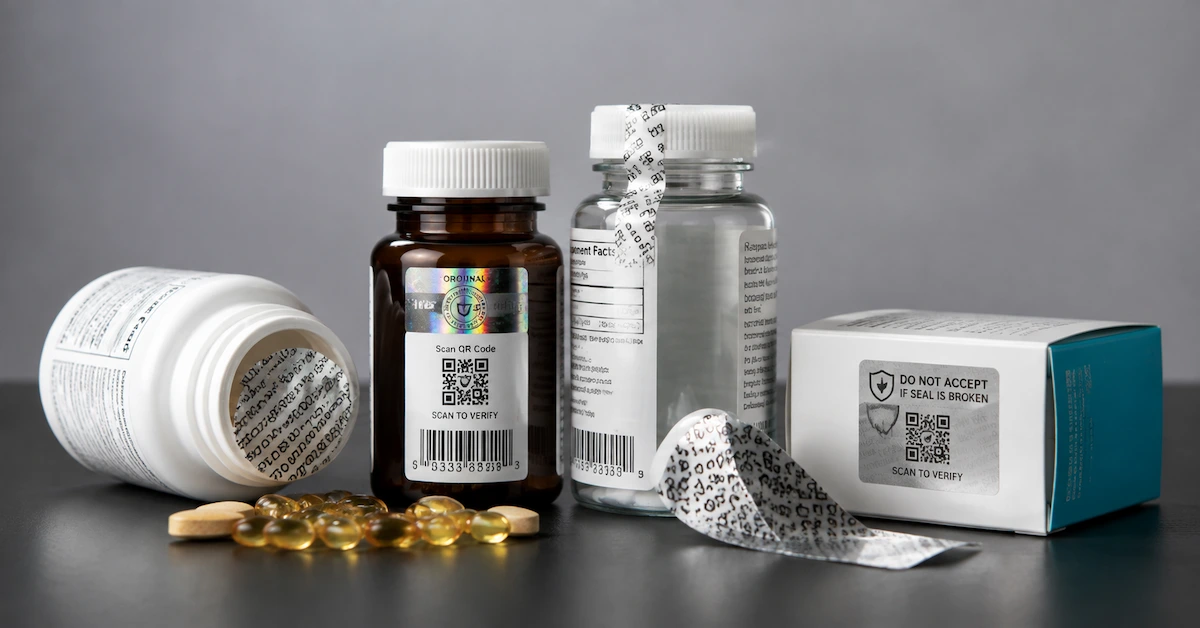
What Are Tamper Evident Seals?
Tamper evident seals are security labels or sealing solutions designed to show clear evidence of unauthorized access.
The main purpose is not necessarily to make removal impossible. Instead, the goal is to make unauthorized opening detectable.
A properly designed tamper evident seal helps answer critical questions:
- Has this product been opened?
- Has the package been changed?
- Has someone attempted to replace the product?
- Is the warranty seal still intact?
- Can the customer verify product authenticity?
A typical tamper evident seal system may combine:
| Security Function | Technology Example |
|---|---|
| Opening detection | VOID label structure |
| Anti-transfer protection | Destructible material |
| Visual authentication | Holographic security features |
| Product identification | Serial numbers |
| Digital verification | QR codes |
| Hidden inspection | Latent image or covert features |
The correct solution depends on the product risk, packaging structure, application environment, and verification requirements.
Why Brands Need Tamper Evident Seals
Modern supply chains involve multiple stages:
Manufacturer → Packaging → Warehouse → Distribution → Retail → Consumer
At every stage, products may face risks including:
Unauthorized Opening
For products requiring warranty protection or safety control, opening evidence is essential.
Common applications:
- Electronics
- Industrial equipment
- Medical devices
- Consumer products
Product Replacement
High-value products may face replacement risks during transportation or distribution.
Tamper evident seals help companies identify whether packaging integrity has been compromised.
Counterfeit Protection
Tamper evidence alone does not always prevent counterfeiting, but it can become one layer of a broader security system.
A stronger solution may combine:
- Tamper evidence
- Holographic authentication
- Serial numbers
- QR verification
- Database tracking
Warranty Protection
Many industries use security seals to prevent unauthorized repairs or modifications.
Examples:
- Electronic devices
- Machinery
- Equipment
- Appliances
When the seal is broken, service teams can determine whether unauthorized access has occurred.
How Do Tamper Evident Seals Protect the Supply Chain?
A complete product protection system connects physical security with operational control.
Manufacturing Stage
Tamper evident seals can help confirm:
- Packaging integrity
- Product completion
- Factory release status
Distribution Stage
Security seals help identify:
- Unauthorized package opening
- Product substitution
- Transportation risks
Retail Stage
Customers and distributors can check whether the product remains sealed.
After-Sales Stage
Warranty teams can identify whether products have been opened before service requests.
For higher-value products, tamper evident seals can work together with serialization and digital authentication to create product-level traceability.
Types of Tamper Evident Seals
Different industries require different security behaviors.
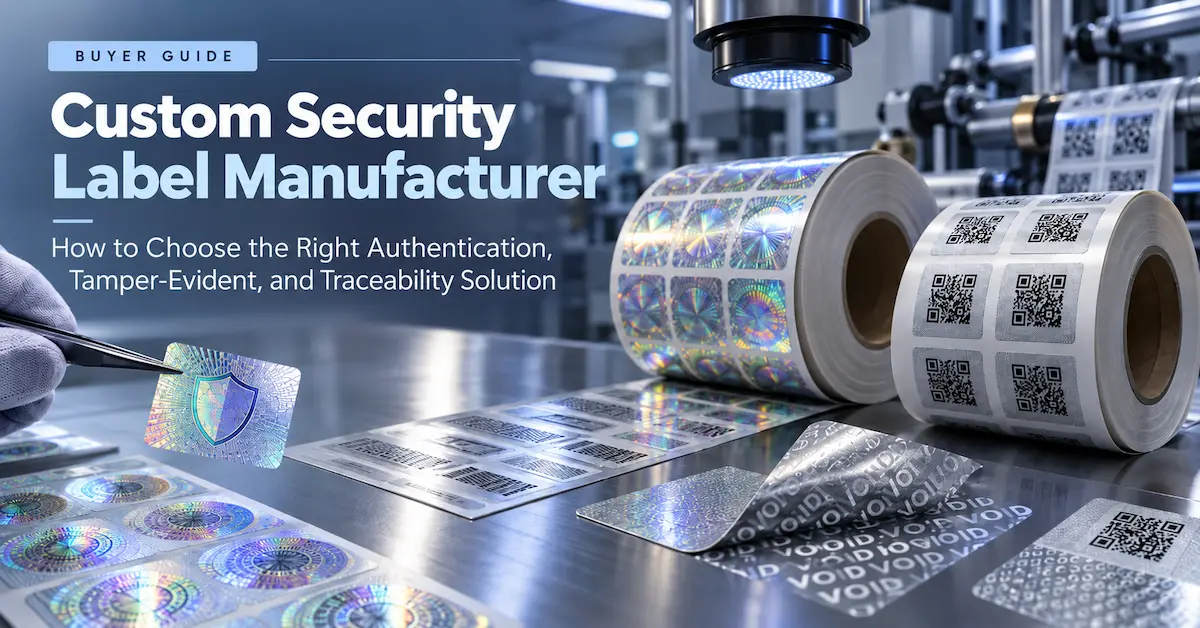
VOID Security Seals
VOID seals are among the most commonly used tamper evident solutions.
When removed, the label may display:
- VOID text
- Security patterns
- Adhesive transfer
- Residual marks
They are suitable for:
- Electronics warranty labels
- Equipment protection
- Product boxes
- Shipping packages
HX provides VOID open label solutions designed for applications where visible tamper evidence is required.
Destructible Security Seals
Destructible seals are manufactured using fragile materials that break apart during removal.
Their main advantage is preventing the label from being removed and reused intact.
Typical applications include:
- Warranty seals
- Electronic components
- Industrial devices
- Security packaging
They are especially useful when transfer prevention is more important than visible VOID messaging.
Holographic Tamper Evident Seals
Holographic seals combine tamper evidence with visual authentication.
They can include:
- Custom holographic patterns
- Laser effects
- Microtext
- Optical features
- Brand-specific designs
These solutions are often used for:
- Premium products
- Brand protection
- High-value consumer goods
- Authentication programs
HX provides holographic security label solutions as part of its customized anti-counterfeiting solutions.
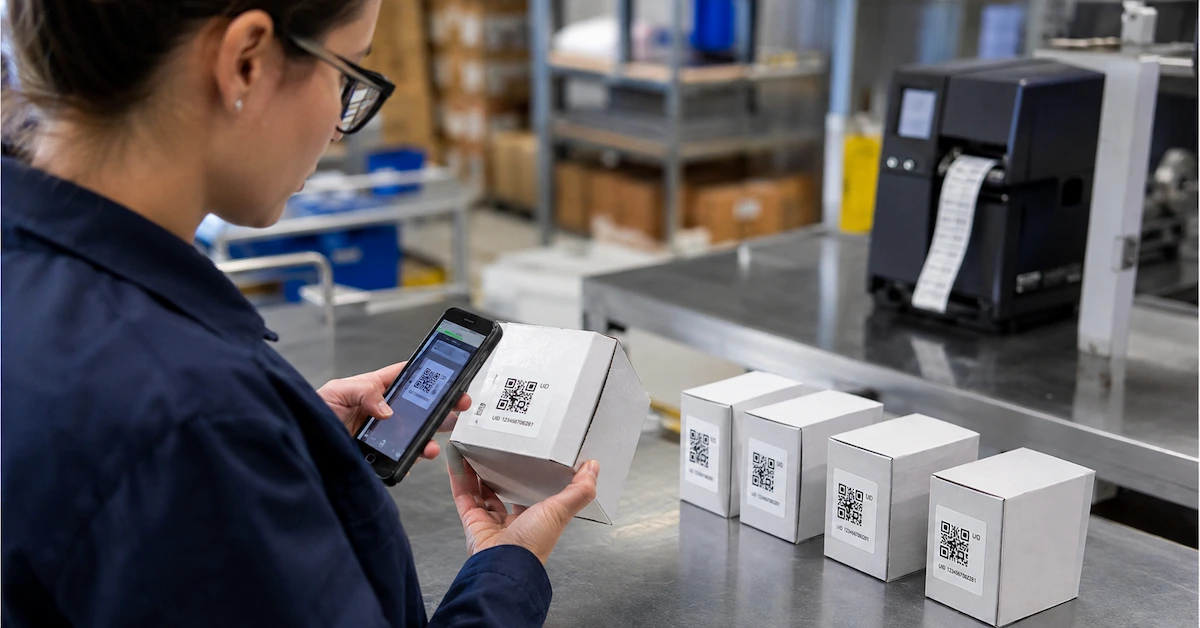
QR Code Tamper Evident Seals
Digital authentication adds another verification layer.
QR-enabled tamper evident seals can support:
- Product verification
- Consumer interaction
- Batch tracking
- Warranty registration
- Digital authentication
However, QR codes should be supported by a proper data management system.
A printed QR code alone does not create complete traceability.
How to Choose Materials for Tamper Evident Seals
Material selection directly affects security performance.
A professional tamper evident seals manufacturer should evaluate:
- Product surface
- Adhesive requirements
- Environmental conditions
- Required removal behavior
- Product lifecycle
Common materials include:
| Material | Characteristics | Application |
|---|---|---|
| PET Film | Durable and stable | Electronics, equipment |
| Holographic Film | Optical security effect | Premium products |
| Destructible Material | Breaks during removal | Warranty protection |
| Synthetic Paper | Flexible and durable | Packaging |
| Coated Paper | Cost-effective | General applications |
Surface Compatibility Matters
The same security seal may perform differently on different surfaces.
Important application surfaces include:
- Metal
- Plastic
- Glass
- Painted surfaces
- Coated cartons
- Electronic housings
Before mass production, buyers should test samples on the actual product surface.
A suitable adhesive should provide:
- Reliable bonding
- Stable performance
- Expected tamper behavior
- Compatibility with the product material
Environmental Factors Affecting Tamper Evident Seals
Industrial and commercial products may experience different conditions.
Important factors include:
- Temperature changes
- Humidity
- Condensation
- Transportation vibration
- Storage time
- Outdoor exposure
For example:
A warehouse carton label and an industrial machine security seal should not use the same construction.
The correct solution depends on where the seal will operate.
Customization Options From a Tamper Evident Seals Manufacturer
A professional manufacturer should support customized security solutions.
Common customization options include:
Design Customization
- Company logo
- Brand colors
- Security graphics
- Custom shapes
Security Customization
- VOID pattern
- Holographic effect
- Hidden image
- Microtext
- UV features
Data Customization
- QR codes
- Barcodes
- Serial numbers
- Batch numbers
- Variable information
Production Customization
- Roll format
- Sheet format
- Die-cut size
- Packaging requirements
HX supports customized security label development based on customer requirements, including design confirmation, material selection, sample testing, and production preparation.
Tamper Evident Seals Manufacturing Process
A reliable manufacturing process reduces production risks.
Requirement Analysis
The manufacturer should understand:
- Product type
- Security objective
- Application surface
- Quantity
- Environment
- Verification method
Security Design
The design stage determines:
- Security features
- Label structure
- Data elements
- Visual appearance
Material Selection
Materials should be selected according to:
- Adhesion requirements
- Surface conditions
- Durability expectations
Sample Production
Physical samples allow buyers to test:
- Adhesion
- Removal behavior
- Security effect
- Application performance
Quality Inspection
Important QC items include:
| Inspection Item | Purpose |
|---|---|
| Artwork accuracy | Ensure correct design |
| Size inspection | Confirm specifications |
| Adhesion testing | Verify bonding |
| Tamper testing | Confirm security behavior |
| QR scanning | Verify digital function |
| Variable data check | Prevent errors |
Bulk Production
After approval, production should maintain consistency in:
- Materials
- Security effects
- Artwork
- Data control
- Packaging format
Tamper Evident Seals vs Other Security Solutions
| Solution | Main Purpose | Best Application |
|---|---|---|
| Tamper evident seals | Detect opening | Packaging protection |
| Holographic labels | Visual authentication | Brand protection |
| QR security labels | Digital verification | Traceability |
| Serial number labels | Product identification | Asset tracking |
| Destructible labels | Prevent transfer | Warranty protection |
A strong security strategy often combines multiple technologies instead of relying on only one feature.
How to Evaluate a Tamper Evident Seals Manufacturer
Before selecting a supplier, buyers should evaluate:
Security Technology Capability
Check whether the manufacturer can provide:
- VOID technology
- Destructible materials
- Holographic features
- QR authentication
- Serial numbering
Material Knowledge
The supplier should understand:
- Adhesive selection
- Surface compatibility
- Environmental requirements
Sample Testing Process
A professional supplier should support physical testing before bulk production.
Data Management Ability
For serialized or QR projects, confirm:
- Code uniqueness
- Data control
- Verification process
Production Consistency
Long-term buyers need reliable repeat production, not only a successful first order.
Why Choose HX Security Label for Custom Tamper Evident Seals?
HX Security Label focuses on customized anti-counterfeiting and security label solutions.
The company provides solutions involving:
- Tamper evident labels
- VOID security labels
- Holographic labels
- QR authentication labels
- Serial number labels
- Customized security printing
HX states that Shenzhen Huaxin Anti-Counterfeiting Technology Co., Ltd. was established in 2008 and focuses on anti-counterfeiting technology development, production, and customized security solutions.
The company also states that it has developed more than 60 anti-counterfeiting technologies and holds multiple anti-counterfeiting patents.
For businesses requiring customized security seals, HX supports the process from:
Requirement analysis
→ Security design
→ Sample confirmation
→ Production
→ Delivery
Learn more about HX through:
FAQ About Tamper Evident Seals Manufacturers
1. What are tamper evident seals?
Tamper evident seals are security labels designed to show visible evidence when a product or package has been opened, removed, or altered.
2. What is the difference between VOID seals and destructible seals?
VOID seals typically leave visible evidence such as text or patterns after removal.
Destructible seals break apart during removal, making reuse more difficult.
3. Can tamper evident seals include QR codes?
Yes. QR codes can be combined with tamper evidence to support digital verification, traceability, and product information access.
4. What industries use tamper evident seals?
Common industries include:
- Electronics
- Pharmaceuticals
- Food and beverage
- Cosmetics
- Industrial equipment
- Logistics
- Consumer goods
5. Can tamper evident seals be customized with logos?
Yes. Manufacturers can customize logos, colors, shapes, security patterns, QR codes, serial numbers, and other design elements.
6. How long does custom tamper seal production take?
Production time depends on design complexity, materials, quantity, testing requirements, and customization details.
7. What affects tamper evident seal cost?
Main factors include:
- Material
- Size
- Security technology
- Quantity
- Printing method
- Data requirements
- Packaging format
8. Should samples be tested before bulk production?
Yes. Sample testing helps confirm adhesion, security performance, barcode or QR readability, and compatibility with the actual product.
9. Can tamper evident seals prevent counterfeiting completely?
No single label can eliminate all counterfeit risks. However, combining tamper evidence, authentication features, and digital verification can significantly improve product protection.
10. How do I choose a reliable tamper evident seals manufacturer?
Evaluate technology capability, material expertise, customization ability, sample process, quality control, and experience with your specific application.
Conclusion
Choosing the right tamper evident seals manufacturer requires understanding the security risks behind your product.
The best solution is not always the most complex seal. It is the one that provides the correct protection level for your application.
Whether you need VOID seals for warranty protection, destructible labels for anti-transfer security, holographic seals for authentication, or QR-enabled solutions for traceability, the design should be based on:
- Product value
- Security risks
- Surface conditions
- Environment
- Verification requirements
HX Security Label provides customized tamper evident and anti-counterfeiting label solutions for businesses seeking stronger product protection and supply chain security.
Contact HX Security Label to discuss your tamper evident seal requirements and develop a security solution matched to your product application.