
What Does a Void Label Manufacturer Actually Provide?
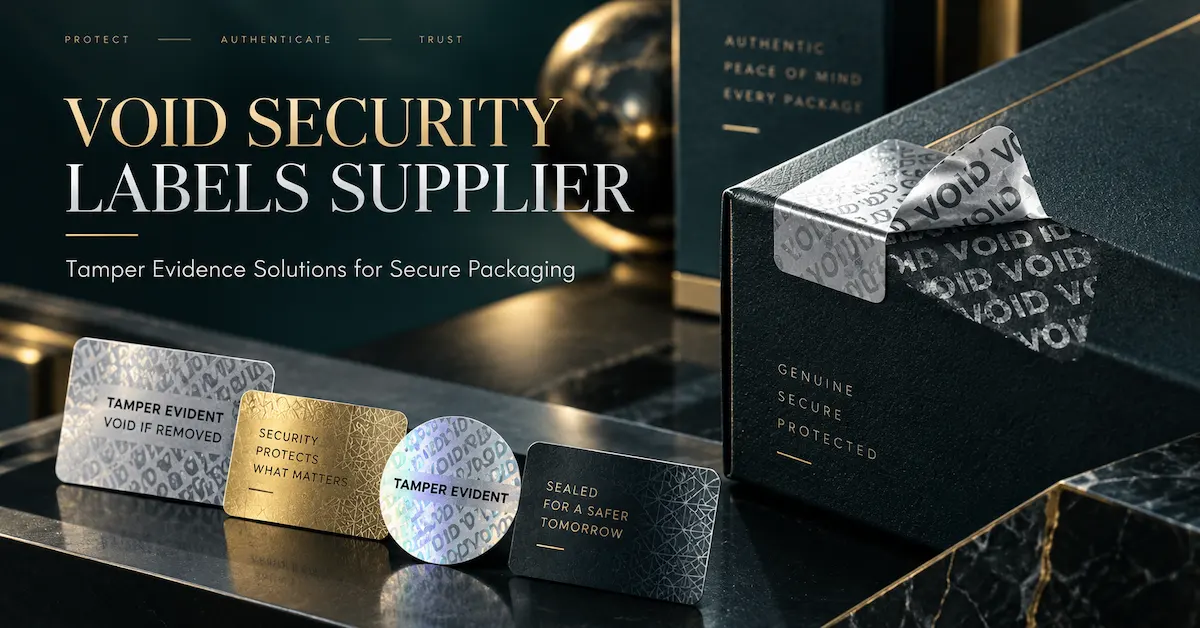
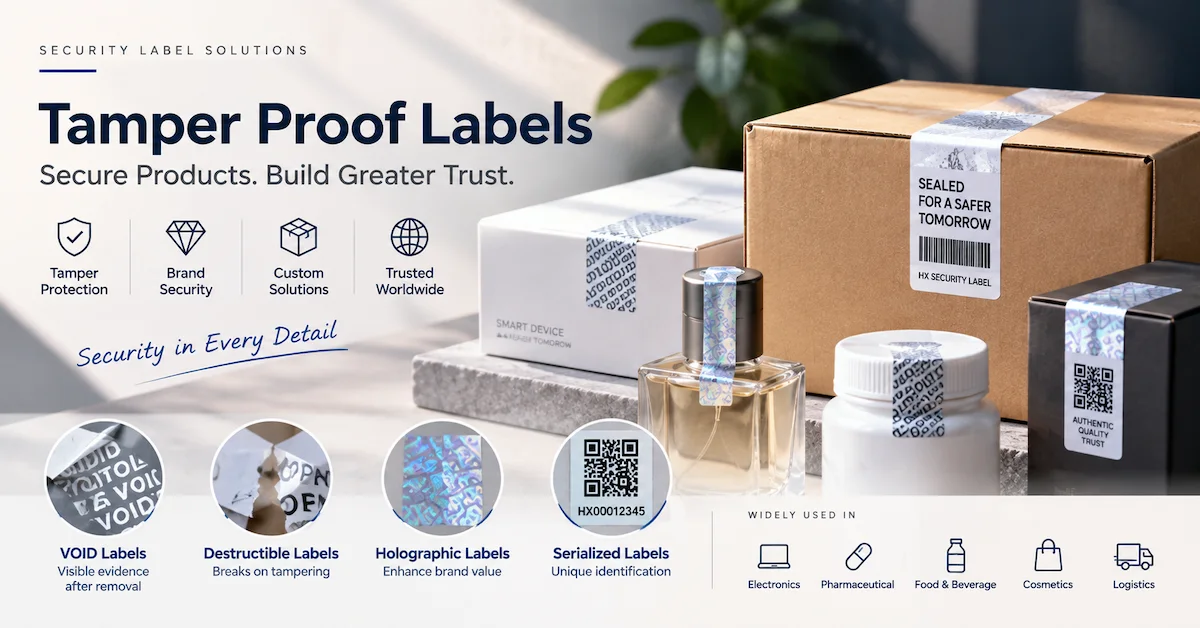
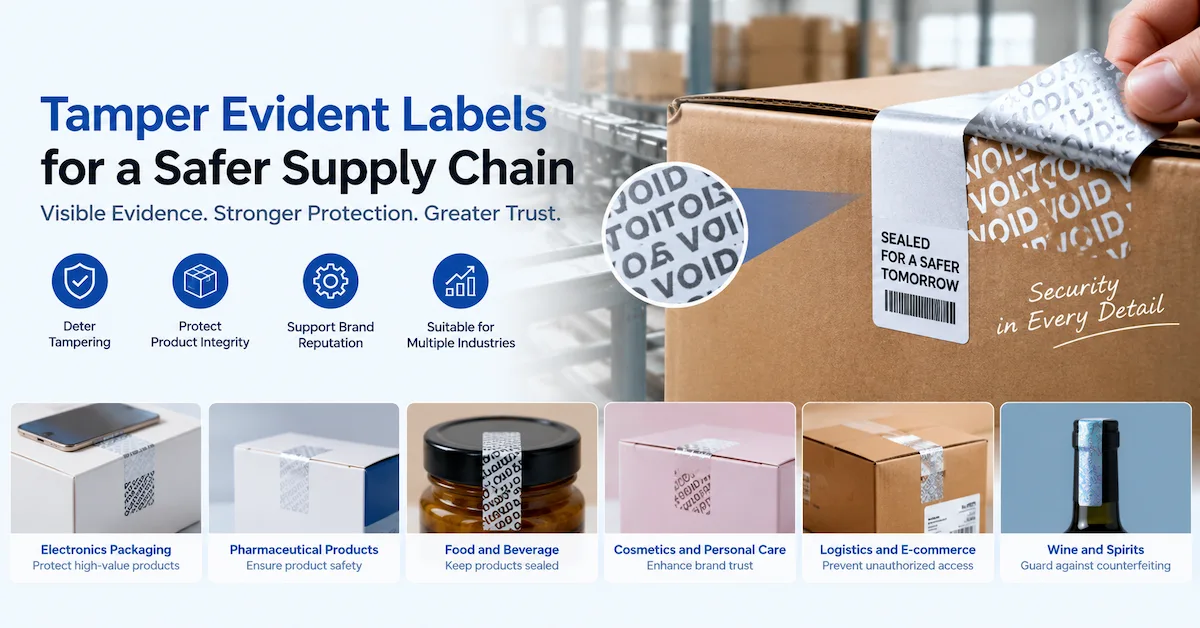
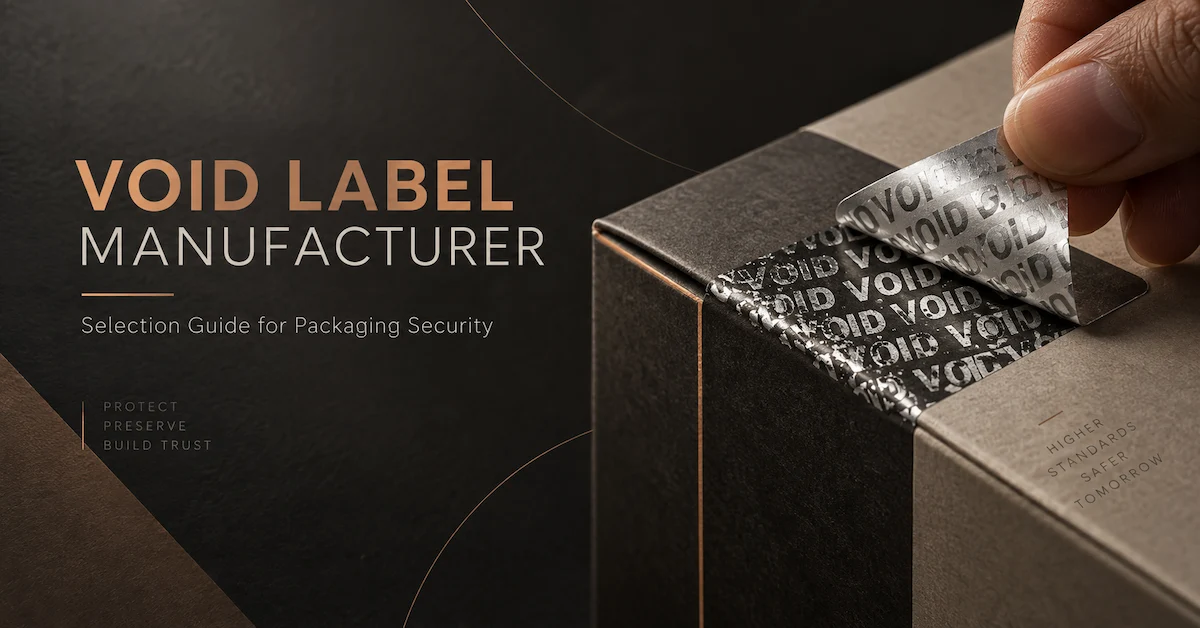
A professional void label manufacturer provides more than a label with a printed VOID message. The core value of a VOID security label is that it creates visible evidence when someone attempts to remove, open, or transfer the label. Depending on the construction, the label may reveal a hidden message, leave a pattern on the applied surface, show material damage, or become visibly altered after removal.
For buyers, the key question is not simply “Do you provide VOID labels?” but:
- What type of tamper evidence is required?
- Where will the label be applied?
- Who will inspect the result?
- What should happen after unauthorized removal?
- How will the approved sample be reproduced during mass production?
A suitable VOID label solution should connect the security requirement with the actual package, product, and inspection process. HX Security Label provides different security label categories, including Void Open Label solutions, for applications requiring visible opening evidence.
Why Businesses Choose VOID Labels for Product Protection
VOID labels are widely considered by companies that need a simple and visible way to identify unauthorized access. Unlike ordinary adhesive stickers, a VOID label is designed to change when removed.
Common application goals include:
- Protecting electronics from unauthorized opening
- Securing product cartons before shipment
- Supporting warranty management
- Protecting equipment panels and components
- Sealing premium consumer products
- Reducing the risk of label transfer and reuse
However, VOID labels should not be viewed as a universal anti-counterfeit solution. Their main function is usually tamper indication. For stronger brand protection, buyers may combine VOID structures with holographic features, hidden verification elements, QR codes, or serial numbers.
HX also provides other security label categories that can be combined with different authentication requirements.
How Should Buyers Select a Void Label Manufacturer?
Selecting a void label manufacturer requires evaluating several factors beyond price.
A qualified supplier should help buyers answer:
| Evaluation Area | Key Questions |
|---|---|
| Security Function | What evidence appears after removal? |
| Application Surface | Does the label work on the actual packaging material? |
| Adhesive Performance | Is bonding stable during normal use? |
| Removal Response | Does the label show the expected tamper evidence? |
| Customization | Can size, artwork, message, and structure be adjusted? |
| Production Control | Can the approved sample be reproduced consistently? |
| Data Management | Can serial numbers or QR codes be controlled if required? |
| Supply Stability | Can future orders match the approved version? |
A supplier that only provides attractive samples but cannot explain testing conditions, production control, and repeat-order management creates unnecessary purchasing risks.
Understand Different VOID Label Structures Before Ordering
Not every VOID label creates the same removal effect. Buyers should understand the differences before requesting quotations.
1. Residue VOID Labels
These labels leave a visible pattern, message, or material transfer on the applied surface after removal.
Typical advantages:
- Easy visual inspection
- Suitable for packaging closures
- Provides clear evidence of opening
Important confirmation points:
- What remains on the product surface?
- Is the remaining mark acceptable?
- Does the effect remain visible under normal lighting?
2. Non-Residue VOID Labels
These labels are designed so that the security message appears mainly on the label itself after removal.
Typical advantages:
- Cleaner product surface
- Suitable for applications where residue is undesirable
Important confirmation points:
- Is the opening evidence obvious enough?
- Can the label be reused?
- Does removal behavior remain consistent?
3. Destructible VOID-Style Labels
These labels use fragile materials that break apart during removal.
Typical advantages:
- More difficult to transfer intact
- Suitable for warranty and equipment protection
Important confirmation points:
- Does normal handling damage the label?
- Is the fragmentation pattern acceptable?
- Can operators easily identify tampering?
The final choice should depend on the package, security objective, and inspection process rather than choosing the most complicated construction.
Packaging Surface Determines VOID Label Performance
One of the most important factors when working with a void label manufacturer is surface compatibility.
The same VOID label may perform differently on:
- Coated paper cartons
- Corrugated packaging
- Plastic housings
- Glass bottles
- Painted metal surfaces
- Textured materials
- Flexible packaging films
Before bulk production, buyers should provide:
- Actual packaging samples
- Surface treatment information
- Label placement location
- Application method
- Storage conditions
- Expected handling environment
For example, a label applied to a smooth coated carton may behave differently from the same label applied to a rough recycled cardboard surface. Adhesion, removal evidence, and visual appearance should all be evaluated on the final application surface.
HX’s industrial security label guide explains why application conditions should be considered during supplier selection.
Create a Clear Specification Before Requesting Quotes
Many buyers receive inconsistent quotations because suppliers receive incomplete information.
Instead of asking:
“Please quote VOID labels.”
Provide a complete requirement.
| Specification | Information Needed |
|---|---|
| Product application | Electronics, cartons, equipment, bottles, etc. |
| Security purpose | Opening detection, warranty protection, anti-transfer |
| Label size | Width, height, shape |
| Surface material | Paper, plastic, glass, metal, coating |
| VOID effect | Message, pattern, residue, destruction |
| Artwork | Logo, text, color requirements |
| Quantity | Sample quantity and production quantity |
| Application method | Manual or automatic labeling |
| Environment | Temperature, humidity, transportation conditions |
| Supply format | Roll or sheet requirements |
A detailed specification allows buyers to compare suppliers fairly and reduces problems after production.
Sample Testing Should Be Completed Before Mass Production
A sample approval process is one of the most important steps when selecting a VOID label supplier.
Testing should include:
Application Test
Apply samples to the real packaging surface.
Check:
- Adhesion quality
- Edge lifting
- Position accuracy
- Appearance after application
Removal Test
Remove samples under controlled conditions.
Check:
- Whether the expected VOID effect appears
- Whether the message is visible
- Whether removal evidence matches the approved sample
Handling Test
Evaluate the label during normal product handling.
Check:
- Packaging movement
- Transportation conditions
- Storage environment
- Accidental damage risk
A sample that works on a demonstration board does not automatically prove that it will perform on production packaging.
HX describes physical proofing and sample confirmation as important stages in its manufacturing process.
VOID Labels and Digital Authentication Can Work Together
Some brands require more than opening detection. They also need product identity management.
In these cases, VOID labels may be combined with:
- QR codes
- Barcodes
- Serial numbers
- Batch identification
- Authentication information
However, buyers should separate two different functions:
VOID function:
Shows whether the label has been removed or disturbed.
Digital identification function:
Provides product-related information through codes or databases.
A QR code does not automatically prove that a product is genuine. The verification process, data management, and physical label protection should be considered together.
HX discusses customized QR and security label applications through its security label solutions.
Quality Control Requirements for VOID Label Production
A reliable VOID label manufacturer should have clear quality controls related to the approved specification.
Possible inspection items include:
| Quality Item | Purpose |
|---|---|
| Label dimensions | Maintain packaging compatibility |
| Printing accuracy | Ensure correct branding and information |
| VOID effect consistency | Confirm tamper evidence performance |
| Die-cut precision | Maintain correct shape and placement |
| QR/barcode readability | Ensure data usability |
| Material consistency | Support repeat orders |
| Roll format | Ensure production-line compatibility |
Quality control should be connected to the actual application requirements rather than a generic inspection checklist.
How OEM Buyers Work With a Void Label Manufacturer
OEM and private-label projects often require customized solutions.
Customization may include:
- Brand logo
- Label size
- Shape design
- VOID message
- Security pattern
- Holographic elements
- Serial numbers
- QR codes
- Packaging format
Before production, buyers should clarify:
- Who provides artwork
- Who approves samples
- How revisions are controlled
- How repeat orders are matched
- How customer data is protected
A good OEM relationship depends on clear communication and controlled documentation, not only printing capability.
Cost Factors When Buying VOID Security Labels
The cost of VOID labels depends on multiple factors.
Common cost factors include:
- Label material
- Adhesive structure
- Security technology
- Custom artwork
- Size and shape
- Printing requirements
- Variable data
- Quantity
- Packaging format
- Testing requirements
A lower unit price may not represent lower total cost if the label fails during application or requires replacement.
Buyers should compare suppliers based on:
- Security performance
- Production consistency
- Testing support
- Communication efficiency
- Long-term supply reliability
HX provides additional information about factors affecting customized security label pricing in this security label cost guide.
Frequently Asked Questions
1. What is a VOID label manufacturer?
A VOID label manufacturer produces security labels designed to show visible evidence when the label is removed or tampered with. The exact effect depends on the label structure and application requirements.
2. Are VOID labels the same as anti-counterfeit labels?
Not exactly. VOID labels mainly provide tamper evidence, while anti-counterfeit solutions may include holographic features, hidden verification, QR codes, and other authentication methods.
3. Can VOID labels be customized with a company logo?
Yes. Custom designs may include logos, text, colors, patterns, and other branding elements depending on the selected construction.
4. Do VOID labels work on all surfaces?
No. Performance depends on the substrate, coating, texture, environmental conditions, and application process. Testing on the actual packaging is recommended.
5. Can VOID labels include QR codes?
Yes. VOID labels can be combined with QR codes or serial numbers when product identification or verification is required.
6. How do I test a VOID label before bulk ordering?
Apply samples to the actual package, evaluate normal handling, perform controlled removal tests, and compare the results with the approved sample.
7. What affects VOID label pricing?
Material, size, security structure, customization, quantity, printing, data requirements, and production format can influence pricing.
8. Can VOID labels be used for electronics warranty protection?
Yes. Many electronics applications use security labels to show whether a product enclosure or warranty area has been opened.
9. What information should I provide when contacting a VOID label supplier?
Provide application details, packaging material, label size, quantity, expected tamper effect, artwork, and any QR or serial-number requirements.
10. How can I request a VOID label sample from HX?
Prepare your packaging information and requirements, then contact HX through the Contact Us page to discuss sampling and customization.
Conclusion
Choosing the right void label manufacturer requires more than selecting a label with a security message. Buyers should evaluate the complete solution, including removal evidence, packaging compatibility, adhesive performance, customization options, sample testing, quality control, and repeat-order consistency. A properly selected VOID label can provide clear tamper visibility while supporting broader product protection strategies. For electronics, packaging, equipment, beverage, cosmetics, and other applications requiring security protection, review HX’s VOID security label solutions and contact the team with your application details to discuss a suitable custom approach.