
Start With Evidence of Opening, Not Sticker Appearance
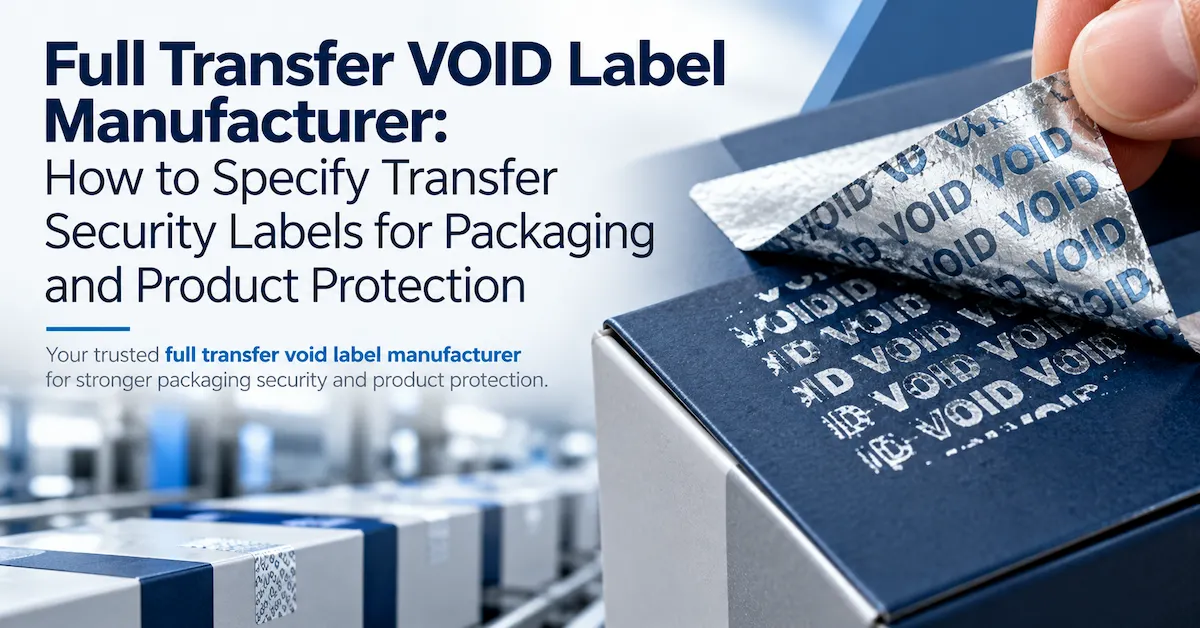
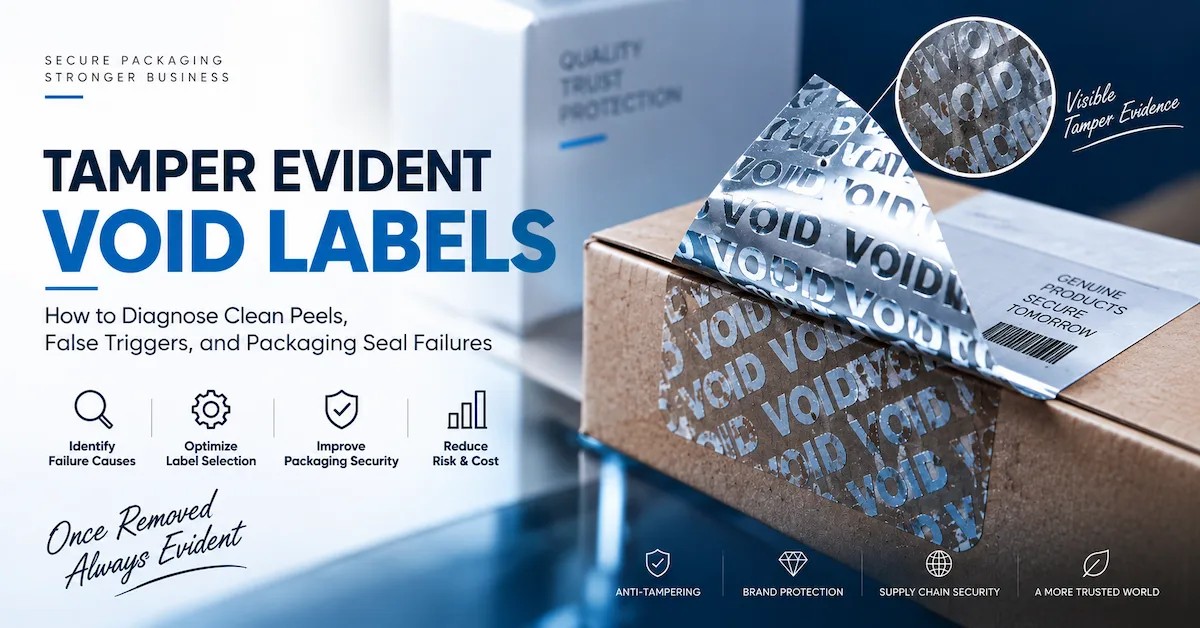
A tamper evident labels manufacturer should help you establish two things before a bulk order: the seal remains in its approved condition during normal handling, and opening or removal produces the agreed visible evidence. Tamper-evident labels are designed to reveal interference through effects such as a VOID message, material damage, or pattern transfer; they do not make access impossible or independently prove that the contents are genuine. For carton sealing, begin with the opening you need to monitor, then select the construction and inspection method. HX’s VOID open labels provide a relevant starting point for discussing this type of packaging requirement.
Define the Packaging Application and the Person Checking It
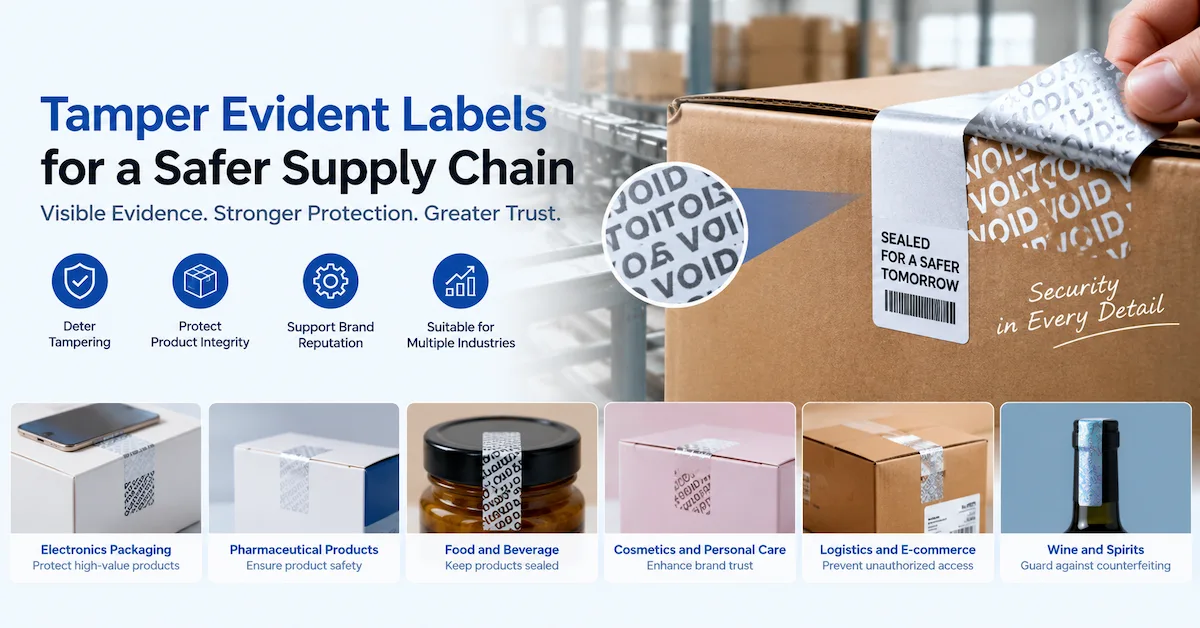
For an electronics brand, a useful project brief might require a receiving team to identify an opened retail carton before accepting a return. A packaging converter may instead need a branded seal that works on a customer’s coated folding box and dispensing equipment. An importer may need a serial number to connect the inspected package with an order record. Treat these as different requirements, even when the labels look similar. Identify who checks the seal, where the inspection happens, and what should trigger further investigation. For a package intended to open and reclose, define whether you need first-opening evidence or a new seal after each inspection. Decorative branding alone does not justify security features without a defined need.
Specify the Label Before Asking for Comparable Quotes
Give each prospective tamper evident labels manufacturer the same application brief. “A strong security sticker for a box” leaves too many decisions unresolved, including what counts as acceptable damage after opening. The following is a specification worksheet, not a list of standard HX product ratings. Complete the packaging details first, then ask the supplier to propose materials and confirm the remaining specifications through samples. This turns a price comparison into a comparison of equivalent deliverables.
| Item | Specification to Confirm |
|---|---|
| Packaging surface | Actual carton material, coating, laminate, or other finish; provide production packaging samples |
| Seal position | Closure being monitored, placement drawing, and available bonding area |
| Finished dimensions | Width, length, shape, and agreed dimensional tolerance |
| Label construction | Face material, adhesive, tamper mechanism, and release liner proposed for the application |
| Opening evidence | Required message, fragmentation, or visible change; permitted residue and packaging damage |
| Application conditions | Manual or machine application, surface preparation, and conditions during labeling |
| Storage and use | Expected temperature, moisture, handling, transport exposure, and required service period |
| Printing and data | Approved artwork, colors, serial numbers, QR content, and data ownership |
| Supply format | Rolls or sheets; for rolls, winding direction, core dimensions, spacing, and equipment requirements |
| Acceptance | Approved samples, test conditions, inspection responsibilities, and pass/fail criteria |
Match the Material and Adhesive to the Actual Surface
The carton description matters as much as the label description. Coated paperboard, plastic packaging, painted surfaces, and curved components require application-specific evaluation; a successful result on one surface is not evidence of suitability for another. Ask your tamper evident labels manufacturer to identify the proposed face material and adhesive rather than accepting a description such as “premium film.” Also confirm how the construction is intended to change during removal. Consider two packaging versions with identical dimensions but different finishes: qualify them separately before assuming one seal specification will cover both. The industrial security label selection guide explains why surface information belongs in the initial brief, not in a complaint after delivery.
Compare Tamper-Evident Configurations by Their Intended Function
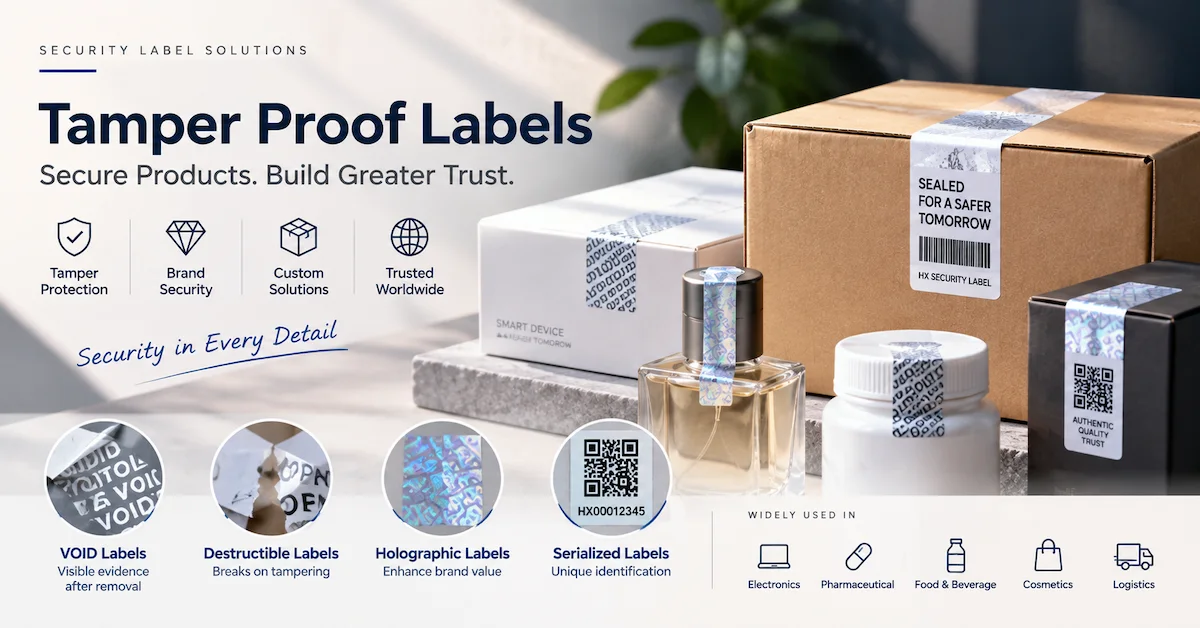
VOID effects, destructible materials, holographic features, and serialized printing perform different jobs. Compare configurations according to the evidence you need, rather than treating every security feature as an interchangeable upgrade. The table below is a configuration comparison, not a catalog of fixed models; confirm availability, material details, and quotation scope for the proposed combination. In particular, holographic appearance should not be accepted as proof of tamper evidence unless a suitable removal-sensitive construction is included and validated.
| Configuration | Main Function | Procurement Fit | Essential Approval Check | Cost Driver to Clarify |
|---|---|---|---|---|
| VOID security seal | Reveals an agreed message or transfer effect after removal | Carton or package opening checks | Visibility and location of evidence on the real surface | Film, adhesive, size, and printed design |
| Destructible security label | Uses material damage to make intact transfer more difficult | Projects concerned with label removal or reuse | Removal response and acceptable handling durability | Material, shape, and converting requirements |
| Holographic tamper-evident seal | Combines a visual authentication feature with opening evidence | Branded packaging requiring both functions | Optical recognition and tamper response tested separately | Optical design and combined construction |
| Serialized tamper-evident seal | Combines physical opening evidence with a product identifier | Packages requiring identity-linked inspection records | Tamper response, code readability, and data matching | Variable-data preparation and inspection |
Qualify Samples Through Three Separate Approval Checks
Ask your tamper evident labels manufacturer for physical samples representative of the proposed production construction. Artwork approval is useful for reviewing text and layout, but it cannot establish adhesive or tamper performance. Use the following buyer-side checks alongside the supplier’s agreed test methods. Record the sample identity, packaging version, application conditions, elapsed time before testing, observations, and photographs so that another person can understand the decision. HX’s published production workflow includes physical proofing and sample confirmation as distinct stages.
Check 1: Normal Handling Must Not Look Like Opening
Keep a set of sealed packages unopened and expose them to the handling and storage conditions included in your project brief. Inspect for edge lifting, unintended cracking, damaged graphics, or warning effects appearing without the planned opening test. Agree beforehand which cosmetic changes are acceptable and which require investigation. This control group helps prevent a misleading approval based only on how dramatically a freshly applied label breaks when peeled. The required outcome is not simply a fragile label; it is a seal whose normal and opened conditions can be distinguished.
Check 2: Opening Must Produce Recognizable Evidence
Use a separate sample group for the agreed opening and removal tests. Check the actual package closure, not only a label attached to a flat test card. Confirm that the monitored opening affects the seal and that the resulting change is recognizable to the intended inspector. Record whether the evidence remains on the packaging, on the label, or on both, and whether the result matches the approved example. If the package can be opened through another closure without disturbing the label, reconsider the sealing layout rather than expecting a different print design to solve the problem.
Check 3: Repeat the Inspection After Relevant Exposure
Repeat the comparison between unopened and opened samples after the agreed environmental and transport exposures. Include only conditions relevant to the product’s route and use, such as humidity, temperature changes, abrasion, or refrigerated handling. Do not apply a temperature claim from one material to another construction. Ask for separate application, storage, and service-condition instructions, including the test duration and method supporting any performance claim. Keep the acceptance criteria tied to the packaging being approved; a generic demonstration is not a substitute for project-specific evidence.
Check Printing, Die-Cutting, and Packaging-Line Compatibility
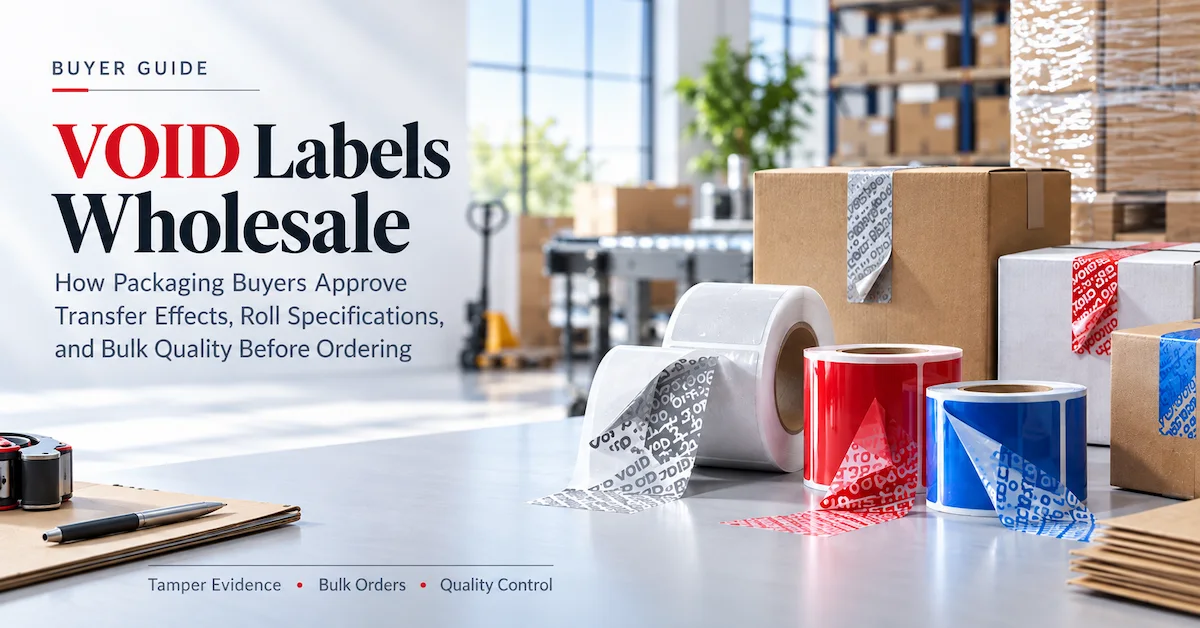
A tamper evident labels manufacturer must translate the approved construction into a usable production format. During supplier review, ask how printed graphics, die-cut position, label dimensions, and roll presentation are controlled. For automatic application, confirm the winding direction, core dimensions, label spacing, and liner requirements with the equipment team before production. Request a dispensing trial where appropriate, particularly when changing shape or material. Also clarify which operations are performed in-house and how any outside processing is controlled. The practical question is whether the supplier can reproduce the approved label and deliver it in a format your line can apply consistently.
Keep QR Codes and Serial Numbers Connected to the Right Records
A QR code is not, by itself, evidence that a carton has remained unopened. For serialized seals, define the separate responsibilities of physical tamper indication, printed identity, and any verification service. Confirm who supplies the data, how printed numbers are matched with QR content, how rejected labels are handled, and how repeat orders avoid reusing an existing code range. Test finished labels on the intended packaging with the intended reading devices, rather than accepting a code that scans only on a screen. HX’s unique QR code label sourcing guide provides a useful checklist for discussing data control and physical-label approval together.
Approve a Repeatable Quality Plan, Not Just One Good Sample
Before selecting a tamper evident labels manufacturer for repeat orders, request an inspection plan linked to the approved specification. It should identify the checks for dimensions, artwork, tamper response, adhesion, data accuracy, and supply format, along with sampling responsibilities and defect handling. Ask for retained reference samples and traceable artwork and material versions. A certificate may be relevant to supplier qualification, but it should not replace evidence for the particular label and packaging combination. Verify its issuing body, named company, scope, and validity rather than relying on a logo. Agree which changes require notification and reapproval, especially substitutions affecting material, adhesive, graphics, or serialized data.
Compare Total Project Cost, MOQ, and Delivery Milestones
Ask each tamper evident labels manufacturer to itemize setup, materials, printing, variable data, converting, sampling, inspection, and delivery. MOQ and lead time depend on the construction and production requirements, so avoid treating an advertised figure as a commitment for an unconfirmed specification. Ask for sample timing, approval dependencies, production scheduling, dispatch, and transit to be distinguished. For cost comparison, use the same tested construction and order assumptions across quotations. A lower unit price is not a saving when it excludes required inspection or creates unusable stock. The custom security label cost guide explains the main quotation variables; confirm current commercial terms for your actual order.
Define OEM Customization and Development Responsibilities With HX
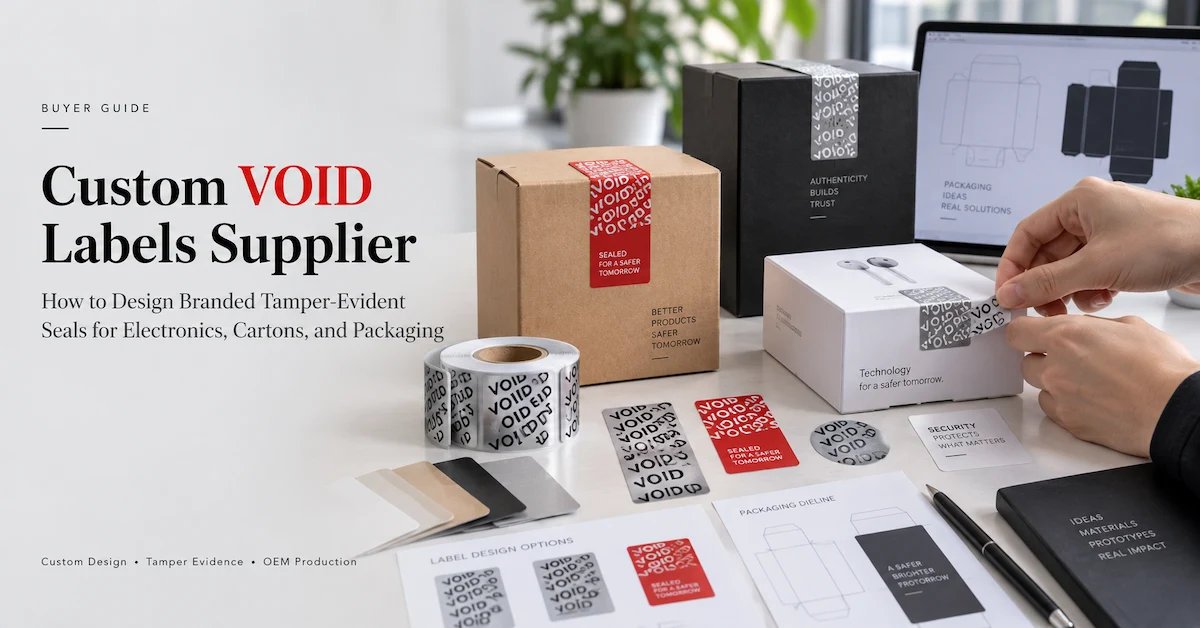
HX Security Label, operated by Shenzhen Huaxin Anti-Counterfeiting Technology Co., Ltd., specializes in anti-counterfeiting label development, production, and sales. Its company and production overview lists requirements confirmation, design drafting, physical proofing, material selection, sample confirmation, and logistics and packaging. For an OEM project, your tamper evident labels manufacturer should clarify which artwork and specifications your team supplies and which construction decisions need supplier input. Where you need development support rather than reproduction of an existing design, agree the proposed work, sample iterations, file ownership, and approval responsibilities explicitly. Review HX’s custom security label options, then submit the packaging application for assessment instead of choosing a security effect solely from a photograph.
Frequently Asked Questions
What should I ask a tamper evident labels manufacturer first?
Ask how the supplier would demonstrate both normal-use stability and visible opening evidence on your actual packaging. Provide the surface, closure, application method, and inspection objective before asking for a material recommendation or final price.
Should I send a carton sample or only artwork?
Send the actual carton or representative production packaging as well as artwork. Identify its finish and intended seal position. Ask the supplier to distinguish visual proof approval from physical application approval; both should be resolved before releasing the production specification.
Does a holographic label automatically provide tamper evidence?
No. Holographic features address visual authentication, while tamper evidence requires a suitable removal- or opening-sensitive construction. When both are required, ask for separate demonstrations rather than assuming an optical effect proves that a package has remained sealed.
How should I specify a no-residue requirement?
State exactly which surface must remain free of residue and where the opening evidence must remain visible. Request a proposed construction and actual-surface testing. Do not assume that all VOID labels meet the same residue requirement or that a no-residue version is available for every application.
Can one seal specification cover several packaging versions?
Treat each material and finish as an application to qualify. Ask the supplier to identify which versions have been tested and approved. Standardize only after confirming the required result on each relevant package, not merely because their dimensions match.
What temperature range should I put in the inquiry?
Provide the conditions during labeling, subsequent storage, transport, and product use. Ask the supplier to confirm suitability for the proposed construction, exposure duration, and packaging surface. Do not substitute an unspecified “heat-resistant” or “cold-resistant” claim for these details.
Does adding a QR code include an authentication platform?
Do not assume it does. Specify code printing, data generation, database services, verification pages, and ongoing support as separate deliverables. Confirm the responsible party for each service and test the agreed data-to-label relationship before launch.
What should I retain after sample approval?
Keep the approved specification, artwork revision, physical reference samples, packaging identification, test conditions, results, and acceptance decision. Include the agreed roll or sheet format and any data rules so that repeat orders can be checked against the same reference.
What are the MOQ and production lead time?
Request project-specific confirmation after providing the construction, dimensions, artwork versions, data requirements, quantity, and delivery destination. Ask whether quoted timing starts at inquiry, order confirmation, or final approval, and whether it includes shipping.
How do I begin a carton-seal project with HX?
Send packaging photos or samples, label dimensions, the intended opening evidence, application method, order quantity, and any serial or QR requirements. Use the HX contact page to request a discussion of construction, sampling, and quotation scope.
Conclusion
Choose a tamper evident labels manufacturer by the evidence it can provide for your packaging, not by the appearance of a sample or the lowest quoted price. Define the opening to be monitored, compare suitable constructions, test normal handling and opening separately, and document the conditions that support approval. Then carry those requirements into production inspection, data control, and repeat-order management. For retail cartons and electronics packaging, contact HX Security Label with your packaging details, expected tamper response, and order requirements to discuss a sample-based selection process before committing to bulk production.