
VOID Labels Wholesale: What Should Buyers Check Before Placing a Bulk Order?
When purchasing VOID labels wholesale, the most important question is not how many stickers a supplier can print. It is whether every accepted production batch can deliver the tamper evidence that the buyer originally approved.
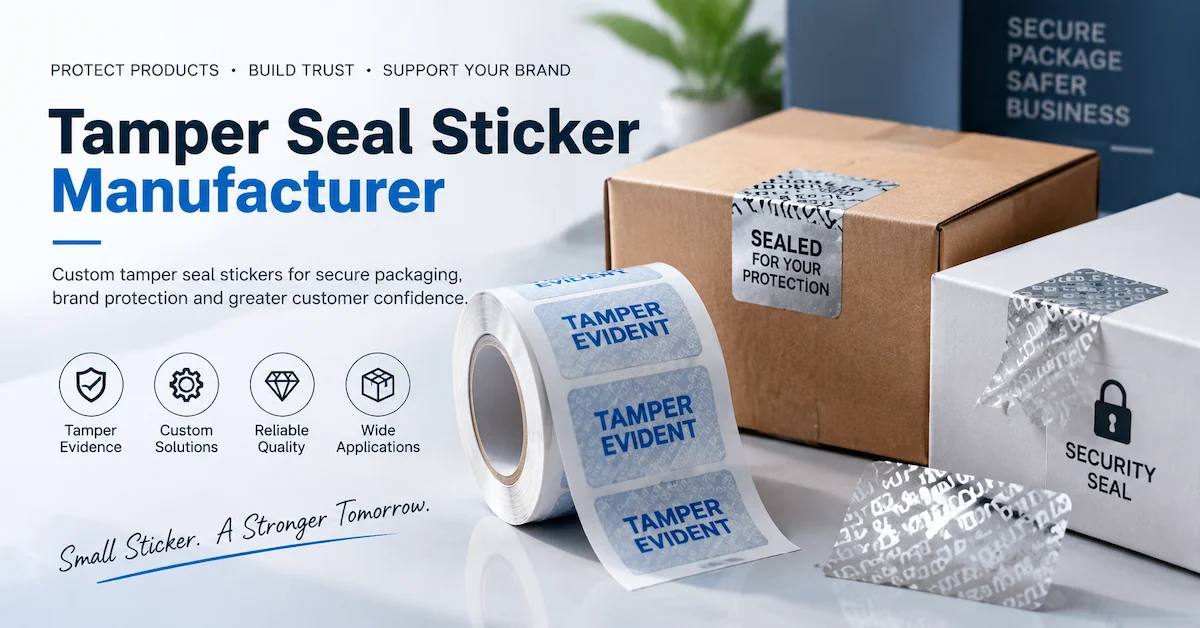
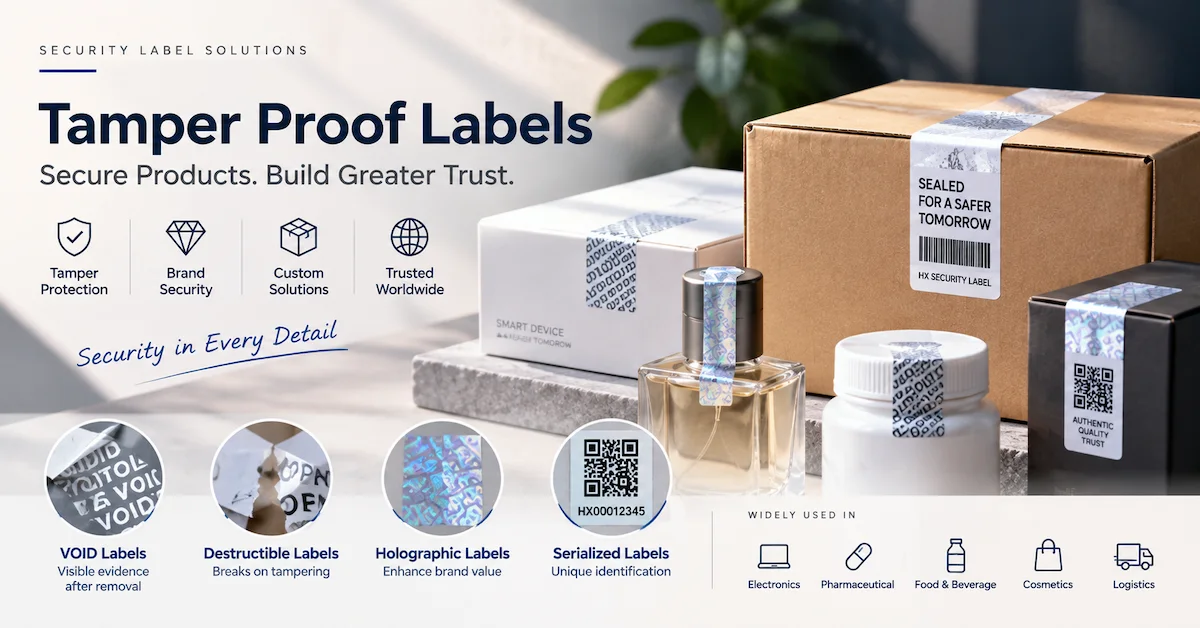
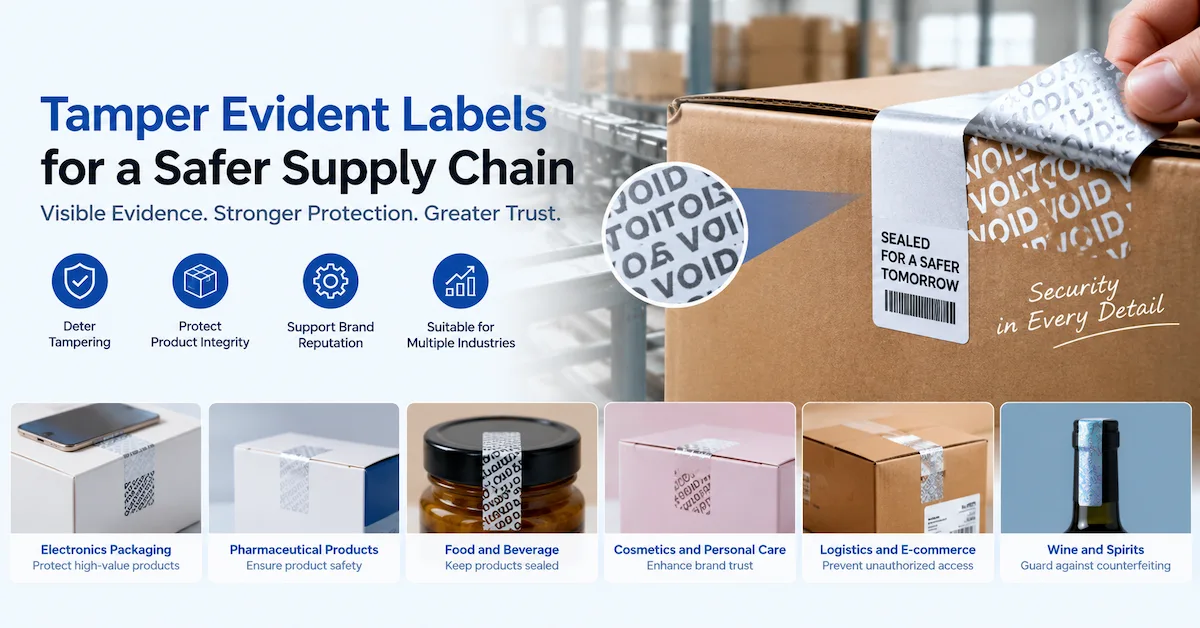
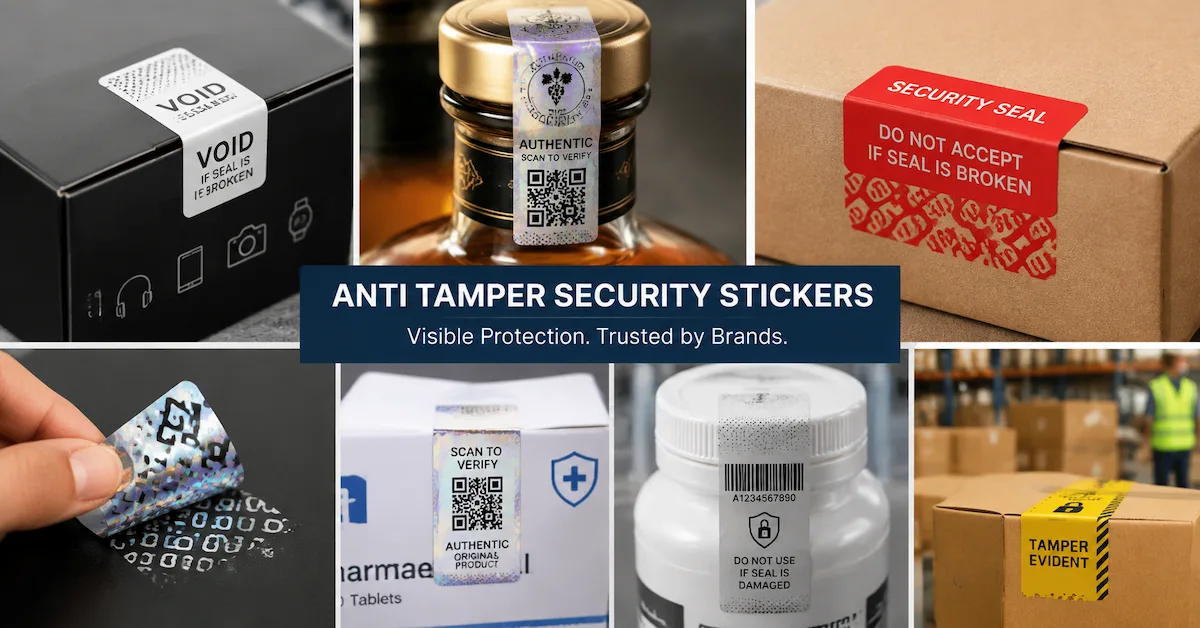
A VOID security label is designed to reveal evidence of removal or interference. Depending on its construction, a hidden message may appear, a pattern may transfer to the applied surface, or the label may show an irreversible visual change.
That sounds straightforward until thousands of labels must be applied to different product housings, cartons, bottles, or shipping packages.
A sample that reveals a clear VOID message on smooth glass may produce a different result on coated paperboard. A label that performs during a laboratory demonstration may lift unintentionally after prolonged storage. A roll that passes visual inspection may create dispensing problems on an automatic packaging line.
For B2B procurement teams, wholesale purchasing introduces several additional responsibilities:
-
Selecting the correct tamper-evident construction
-
Confirming compatibility with the actual packaging material
-
Defining the acceptable removal result
-
Approving representative samples
-
Specifying roll or sheet delivery requirements
-
Establishing batch inspection criteria
-
Evaluating MOQ, pricing, and lead time
-
Maintaining consistency across repeat orders
The most reliable wholesale VOID label program is built around an approved security performance specification, not simply a printed design or a supplier's catalog description.
Companies exploring available constructions can begin with the HX VOID Open Label product category. However, the final selection should be based on the intended application and demonstrated sample performance.
This guide focuses specifically on the engineering and commercial decisions involved in buying tamper-evident labels in volume.
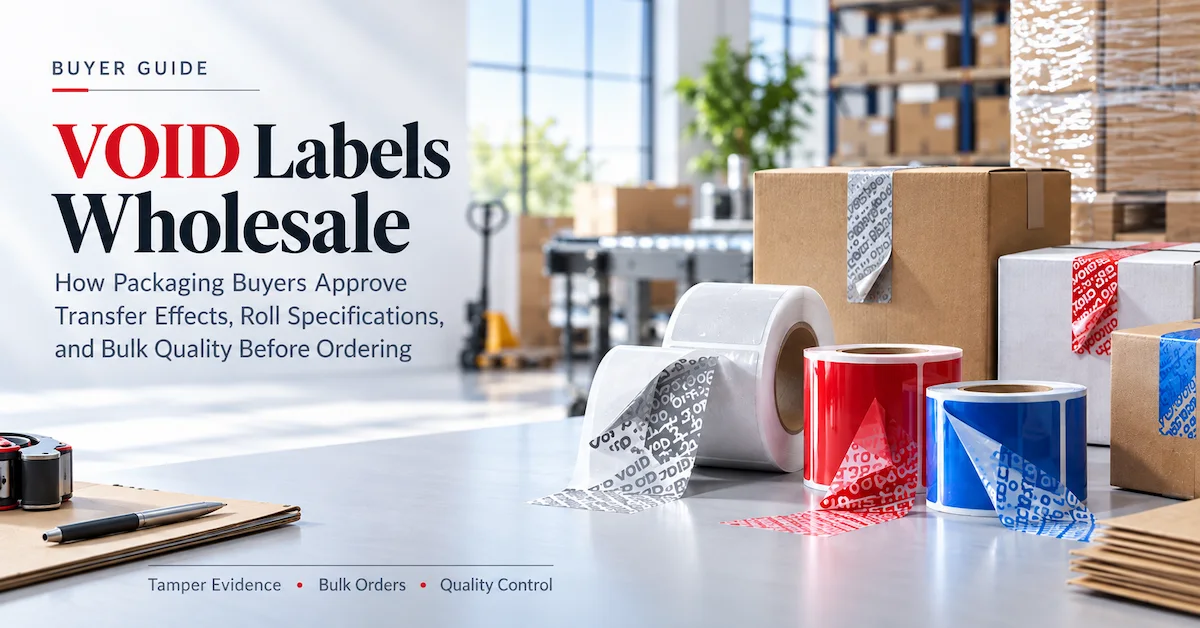
What Does Buying VOID Labels Wholesale Actually Mean?
Wholesale purchasing generally involves obtaining security labels in commercial quantities for manufacturing, packaging, resale, distribution, or long-term production programs.
Compared with a small sample purchase, a wholesale order typically introduces greater requirements for production planning, inventory management, inspection, traceability, and supply consistency.
For example, an electronics manufacturer may need tamper-evident seals for several production lines. A packaging converter may purchase VOID label rolls for multiple brand customers. A distributor may need recurring shipments of customized security seals in a controlled format.
Each customer can have different priorities.
| Buyer type | Main requirement | Most important wholesale consideration |
|---|---|---|
| Electronics manufacturer | Warranty and opening evidence | Stable adhesion and repeatable tamper response |
| Packaging converter | Carton and retail package sealing | Roll compatibility and application efficiency |
| Industrial equipment OEM | Unauthorized access detection | Surface compatibility and service durability |
| Logistics company | Evidence of carton opening | Clear inspection and reliable seal placement |
| Brand owner | Product and packaging protection | Customization and consistent appearance |
| Distributor or wholesaler | Repeat supply for downstream customers | Specification control and dependable fulfillment |
| Private-label company | Customized security packaging | Artwork control, MOQ, and production consistency |
A wholesale buyer should therefore evaluate more than the physical label.
The complete supply arrangement also matters.
Can the supplier reproduce the same construction after several months? Are the materials and security effects controlled? Will the customer receive consistent roll orientation? Can the supplier explain how inspection and rejected production are handled?
These questions become increasingly important as order volumes and the number of protected products increase.
When Are VOID Labels the Right Security Solution?
VOID labels are most suitable when the buyer needs visible evidence that an adhesive seal has been removed, disturbed, or used to access a protected area.
Typical applications include:
-
Electronics warranty seals
-
Retail carton closures
-
Shipping box security
-
Equipment access panels
-
Industrial component protection
-
Product packaging seals
-
Selected bottle and container closures
-
Asset identification and warranty labels
The label's purpose should be defined in operational terms.
For example:
“The receiving inspector must be able to recognize evidence that this carton closure has been opened.”
That is a more useful requirement than:
“We need a high-security sticker.”
The first statement identifies the inspection objective. It can be translated into placement, material, removal behavior, sample testing, and quality-control requirements.
When a VOID Label May Not Be the Best Option
Not every product needs a VOID construction.
If a customer only wants visual authentication, a holographic security label may be more appropriate.
If the primary goal is to prevent a label from being transferred intact, a destructible construction may deserve consideration.
If the requirement is individual product identification, a serialized QR code or barcode may address that function more directly.
And if the application surface cannot support the required VOID response, buyers may need to change the label position, material construction, or security method.
A good wholesale purchasing decision begins by confirming that VOID technology solves the intended problem.
Full-Transfer, Partial-Transfer, and Non-Transfer VOID Labels: Which Should You Buy?
Different VOID constructions can create different visible effects after removal.
This is one of the most important distinctions for buyers purchasing bulk tamper-evident labels.
The terminology can vary between suppliers, so commercial descriptions should always be supported by physical samples and written acceptance criteria.
Full-Transfer VOID Labels
A full-transfer construction is generally designed to leave a substantial visible security message or pattern on the applied surface after the label is removed.
The remaining evidence can help an inspector determine that the original seal has been disturbed.
Common applications include:
-
Carton closure protection
-
Shipping package security
-
Equipment access control
-
Selected warranty applications
The main advantage is that the evidence can remain on the protected surface.
However, the buyer must determine whether the transferred material or message is acceptable.
A visible residue pattern may be useful on a shipping carton but undesirable on a decorative product housing.
The supplier should demonstrate the transfer effect on the actual material.
Partial-Transfer VOID Labels
A partial-transfer construction creates an evidence pattern through a controlled division of material or visual features between the label and the applied surface.
The final appearance depends on the design.
This option may be considered when the buyer wants a balance between tamper visibility and the amount of material remaining on the surface.
Important questions include:
-
Which part of the security pattern transfers?
-
Is the result visible under ordinary inspection lighting?
-
Does the remaining label also show evidence?
-
Can an inspector recognize a failed seal quickly?
-
Is the amount of residue acceptable?
The most suitable response depends on the inspection workflow.
Non-Transfer VOID Labels
Non-transfer constructions are intended to reveal tamper evidence primarily within the removed label rather than leaving a substantial security pattern on the application surface.
They may be useful where the buyer wants the protected surface to remain comparatively clean.
Possible applications include:
-
Finished equipment surfaces
-
Selected electronics housings
-
Premium product packaging
-
Applications sensitive to visible adhesive transfer
However, non-transfer does not automatically mean absolutely residue-free under every condition.
Adhesive behavior can change with substrate chemistry, dwell time, temperature, and removal conditions.
Buyers should also confirm that the evidence remaining in the removed label is sufficiently clear for the intended inspection.
Destructible Labels as an Alternative
Some applications are better served by labels that fragment or break when removed.
These are often called destructible or fragile security labels.
Their primary purpose is to make intact removal and transfer more difficult.
They are not identical to conventional VOID transfer constructions.
For warranty seals or product identification, the buyer should compare both technologies instead of assuming that a VOID message is always the strongest option.
Comparison of Common Tamper-Evident Constructions
| Construction | Typical removal response | Main advantage | Possible limitation | Suitable applications |
|---|---|---|---|---|
| Full-transfer VOID | Visible material or security pattern remains on the surface | Evidence remains at the protected location | Residue may be undesirable | Cartons, packaging seals, equipment |
| Partial-transfer VOID | Part of the security pattern transfers | Balance of visible evidence and transfer behavior | Pattern must be verified on the substrate | Retail packaging, selected warranty uses |
| Non-transfer VOID | Evidence appears primarily in the removed label | Cleaner application surface | Inspectors must recognize the changed label | Finished housings, premium packaging |
| Destructible security label | Label fragments during removal | Discourages intact label transfer | May be difficult to remove cleanly during authorized service | Electronics, warranty, components |
| Holographic VOID combination | Optical authentication plus tamper evidence | Combines two security functions | Greater design and inspection complexity | Branded products requiring layered security |
This table describes general construction options, not a guarantee that every variation is available in every material, size, or adhesive system.
Before approving a wholesale order, ask the supplier to demonstrate the exact result on your own packaging material.
For additional background on manufacturer selection, see the VOID label manufacturer guide.
The Hidden Engineering Problem: Adhesion and Tamper Evidence Are Not the Same Thing
A security seal must generally remain attached during normal use while producing an intended response when someone attempts removal.
That creates a design challenge.
A label with insufficient adhesion may lift cleanly without triggering the intended security effect.
A label with a very aggressive adhesive may bond well but create an unacceptable removal result on a sensitive surface.
The strongest possible adhesive is therefore not automatically the best solution.
VOID performance depends on how the adhesive, face material, security-release structure, and application surface interact.
Three separate results should be considered:
Normal-use stability: Does the label remain in its approved condition during intended handling, storage, and transportation?
Removal response: Does an attempted removal produce the agreed visible evidence?
Post-removal condition: What remains on the label and on the protected surface?
A successful design must balance these requirements.
Why Peel Adhesion Alone Cannot Prove Security Performance
Peel adhesion measures resistance to separation under specified testing conditions.
It can help compare material behavior or monitor production consistency.
However, a peel-force measurement does not by itself establish whether a VOID message appears correctly or whether a label can be reused.
For reference, ASTM International's ASTM D3330/D3330M-04(2025) covers peel-adhesion testing of pressure-sensitive tapes. Its scope includes measurements on specified surfaces and methods that can assist quality assurance.
Similarly, the FINAT Technical Handbook describes test methods such as FTM 1 for 180-degree peel adhesion and FTM 2 for 90-degree peel adhesion.
These methods are useful where appropriate, but they should not replace a functional tamper-evidence test.
A buyer needs both relevant material information and direct confirmation of the intended security response.
How Does the Application Surface Affect Wholesale VOID Label Performance?
A security label should be specified for its actual substrate.
The same material construction may not behave identically on glass, paperboard, plastic, or painted metal.
A supplier that provides a single adhesion recommendation without asking about the application surface leaves an important engineering question unresolved.
Coated Paperboard and Retail Cartons
Retail packaging often uses printed and coated paperboard.
The surface may contain gloss coating, matte varnish, lamination, or other finishing materials.
These treatments can influence adhesion and tamper transfer.
Buyers should test the finished packaging, not only an uncoated paper sample.
Special attention is needed when the label crosses a carton-opening seam.
Corrugated Shipping Cartons
Corrugated cartons may have rough, porous, or inconsistent outer surfaces.
Recycled materials, printing inks, and surface treatments can further change adhesion.
A VOID label that performs well on smooth coated stock may behave differently on rough carton material.
The buyer should confirm that the seal creates visible evidence without lifting during normal warehouse handling.
For carton-specific testing considerations, see the tamper-evident carton seal guide.
PET and Other Plastic Packaging
Plastic substrates vary substantially.
PET, PP, PE, ABS, and other materials do not necessarily require the same adhesive construction.
Some plastics have relatively low surface energy, making bonding more challenging.
Other factors include molded texture, surface contamination, additives, and curvature.
A general statement that a label is “suitable for plastic” is not specific enough for a large commercial purchase.
Glass Surfaces
Glass is common in beverage, cosmetics, and premium packaging applications.
Potential concerns include:
-
Bottle curvature
-
Surface cleanliness
-
Condensation
-
Refrigeration
-
Application location
-
Removal appearance
A label used on a bottle closure may also experience different stresses from one applied to a flat glass panel.
The final package geometry should be included in sample testing.
Painted Metal and Equipment Housings
Industrial and electronic equipment may use painted or powder-coated metal surfaces.
A label's behavior can depend on the coating chemistry, surface texture, and finish.
Buyers should confirm whether transferred material or removal marks are acceptable.
For some applications, a non-transfer or destructible construction may be preferable.
| Application surface | Main compatibility concern | Recommended validation focus |
|---|---|---|
| Coated carton | Coating and adhesive interaction | Tamper message clarity after removal |
| Corrugated carton | Roughness and inconsistent contact | Bond stability and visible opening evidence |
| PET | Surface condition and curvature | Adhesion and removal response |
| PP/PE | Relatively low surface energy | Adequate bonding and security activation |
| Glass | Curvature and condensation | Seal stability under realistic conditions |
| Painted metal | Finish and residue acceptance | Removal marks and surface protection |
| Textured plastic | Reduced contact area | Bonding, edge lifting, and tamper response |
The purpose of this matrix is to identify what needs testing, not to prescribe a universal adhesive.
Dwell Time, Temperature, and Handling: Three Variables Buyers Often Miss
Adhesive performance can change after application.
For pressure-sensitive adhesives, the bond may develop over time depending on the adhesive system and substrate.
This period is commonly described as dwell time.
A VOID label tested immediately after application may behave differently after the agreed bonding period.
Similarly, labels applied in a warm production area may later experience cold storage, humidity, or transportation.
Wholesale buyers should distinguish:
Application conditions: The environment when the label is attached.
Dwell conditions: The time and environment allowed for bonding before inspection or use.
Service conditions: The environment encountered after application.
Removal-test conditions: The temperature, peel method, and other conditions used during security testing.
For example, a logistics customer might need samples evaluated after representative warehouse storage and handling.
An electronics manufacturer might need testing after the label has remained on a device housing for an agreed period.
A beverage company may need to examine performance after refrigeration or condensation exposure.
Avoid assuming that a material's published temperature range guarantees identical security behavior under every condition.
The final approved construction should reflect the real application.
Label Size, Placement, and Package Geometry Matter
A technically suitable VOID construction may still fail to protect the intended opening if the label is placed incorrectly.
For example, a carton seal must cover the opening or access point in a way that produces meaningful evidence when the carton is opened.
A small label placed away from the closure may be visually attractive but may not control the relevant tampering risk.
Buyers should consider:
-
The exact opening or access point
-
The length and width of the bonding area
-
Surface curvature
-
Folded edges
-
Seams and gaps
-
Nearby printed information
-
Manual application tolerances
-
Automatic applicator positioning
-
Whether the label interferes with authorized opening instructions
A label spanning two different surfaces may experience different adhesion and mechanical stresses on each side.
For this reason, label position should be approved on the physical package before bulk production.
Whenever possible, request photographs or physical mock-ups showing the intended placement.
Wholesale VOID Label Roll Specifications for Automatic Labeling
Bulk orders are frequently supplied in rolls, especially when manufacturers use automatic labeling equipment.
The roll itself is part of the technical specification.
A correct label construction supplied in an incompatible roll format can interrupt production.
Roll Winding Direction
The customer must confirm how the labels should unwind and which direction the artwork faces during application.
Winding orientation should match the equipment configuration.
Do not assume that two suppliers use the same default direction.
Core Size and Maximum Roll Diameter
The internal core diameter and outer roll diameter must fit the labeling equipment and its available space.
These requirements are machine-specific.
Label Gap and Pitch
The gap between labels affects dispensing and detection.
Pitch is the distance between corresponding positions on successive labels.
Incorrect gap or pitch can cause feeding problems or inaccurate placement.
Release Liner
The liner supports the adhesive labels until application.
Its material and release characteristics can affect dispensing, especially at higher operating speeds.
Web Width and Edge Margins
The total web width includes the label and any surrounding liner margins.
The equipment may need specific margins for guidance, sensors, or stable feeding.
Roll Identification
For controlled wholesale programs, the buyer may also require each roll or carton to identify:
-
Product or SKU
-
Artwork version
-
Construction reference
-
Production lot
-
Quantity
-
Winding direction
-
Serial-number range, if applicable
Automatic-Labeling RFQ Checklist
| Roll parameter | Information required from buyer |
|---|---|
| Core diameter | Machine-compatible dimension |
| Maximum outer diameter | Equipment limitation |
| Label orientation | Direction of artwork during dispensing |
| Winding direction | Required unwind configuration |
| Web width | Total liner width |
| Label gap/pitch | Machine-specific spacing |
| Liner | Material and dispensing requirements |
| Roll quantity | Target labels per roll |
| Splice policy | Whether splices are permitted |
| Inspection | Application and dispensing acceptance criteria |
FINAT's technical methods include release-force testing relevant to adhesive laminates, such as low-speed and high-speed release methods.
These can support material evaluation, but actual machine trials remain important.
For high-volume packaging operations, roll compatibility should be confirmed before approving the wholesale price and production quantity.
A Practical Three-Gate Testing Plan Before Wholesale Production
One of the most effective ways to manage risk is to separate label approval into three gates.
Each gate answers a different question.
Gate 1: Construction Approval
The first gate confirms that the proposed VOID structure is suitable.
The buyer should evaluate:
-
Face material
-
Adhesive
-
VOID transfer type
-
Artwork
-
Dimensions
-
Application surface
-
Expected tamper response
Physical samples should be applied to the actual packaging material.
The buyer should perform controlled removal tests and document the visible result.
This stage identifies major incompatibilities before larger quantities are produced.
Gate 2: Production-Representative Pilot
The second gate evaluates the label under conditions closer to commercial production.
If the customer uses automatic equipment, this should include a line trial with representative roll material.
Inspectors should evaluate:
-
Application stability
-
Feeding and dispensing
-
Placement accuracy
-
Normal handling
-
Edge lifting
-
Tamper-evidence response
-
Scan readability, where relevant
The pilot should use the intended material construction and converting configuration.
A hand-applied sample alone does not confirm that the same label will perform correctly during automated application.
Gate 3: Bulk Production Acceptance
After construction and pilot approval, the buyer and supplier should agree on the inspection requirements for commercial production.
The acceptance plan may include:
-
Visual inspection
-
Dimensional verification
-
Tamper-response sampling
-
Roll-format checks
-
Variable-data inspection
-
Packaging and quantity verification
-
Lot identification
-
Approved-reference comparison
The objective is to confirm that accepted production conforms to the approved specification.
A useful approval record should also identify the artwork version, material construction, application substrate, and test conditions.
This makes later repeat orders easier to control.
How to Write a Meaningful VOID Tamper-Evidence Acceptance Criterion
A specification stating “VOID effect must be good” is not sufficient for professional procurement.
An effective acceptance criterion describes a result that inspectors can observe.
For example, a carton security-seal specification might require:
After the agreed application and dwell conditions, removal from the approved coated carton must produce the agreed visible VOID evidence, while normal packaging handling must not trigger the security message.
The buyer and supplier would still need to agree on how to test and judge that statement.
Possible details include:
-
Which packaging material is approved?
-
What application pressure or method is used?
-
What dwell period is required?
-
What removal method is used?
-
Where must the message appear?
-
What degree of visibility is acceptable?
-
Is residue allowed?
-
How should borderline results be classified?
These details are essential because a subjective demonstration cannot reliably control a large production order.
Define Critical Failures
A critical failure might include a label that can be removed under the agreed test conditions without showing the required evidence.
Another critical failure could be a missing or incorrect serialized identifier where unique data are required.
Such issues should not be treated as ordinary cosmetic defects.
The acceptance plan should distinguish functional failures from minor printing imperfections.
How Should Bulk VOID Labels Be Inspected?
A bulk inspection system should evaluate both appearance and security function.
Visual quality alone is insufficient.
An attractive label can still provide inconsistent tamper evidence.
Recommended Quality-Control Matrix
| Inspection area | What should be checked | Why it matters |
|---|---|---|
| Label dimensions | Size, shape, die-cut accuracy | Packaging and equipment compatibility |
| Printing | Text, colors, logo, registration | Brand and product consistency |
| Material | Approved construction and appearance | Repeat-order reliability |
| Adhesive | Performance under agreed conditions | Normal-use stability |
| VOID response | Message or transfer behavior | Core security function |
| Release liner | Release and dispensing behavior | Automatic labeling |
| Roll configuration | Direction, width, spacing, quantity | Production compatibility |
| QR/barcode | Readability and data matching | Identification accuracy |
| Packaging | Protection, quantity, identification | Storage and distribution |
AQL Sampling vs. Functional Security Testing
Attribute-based acceptance sampling can help buyers evaluate production lots.
For reference, ISO 2859-1:2026 provides acceptance sampling schemes indexed by acceptance quality limit for lot-by-lot inspection.
However, an AQL-based plan should not automatically be treated as proof that every label performs correctly.
Security-critical functions may need specific controls, additional testing, or stricter acceptance requirements.
For example, a buyer may distinguish:
Critical defects: Failure to provide the specified tamper evidence or incorrect security data.
Major defects: Defects that significantly affect application, readability, or intended use.
Minor defects: Limited cosmetic deviations that do not impair the agreed function.
The classification, sample sizes, acceptance numbers, and test methods must be agreed upon for the project.
A procurement team should not copy an arbitrary AQL value from an unrelated industry and assume it is sufficient for tamper-evident security labels.
How to Reduce Variation Between Production Rolls and Batches
The first approved sample should not become a one-time reference that is forgotten after the first purchase order.
For ongoing wholesale programs, the supplier should maintain an agreed product specification.
Important controlled elements include:
-
Approved artwork
-
VOID message or pattern
-
Face material
-
Adhesive construction
-
Die-cut dimensions
-
Liner
-
Printing requirements
-
Roll presentation
-
Variable-data format
-
Quality acceptance criteria
If a material change becomes necessary, the buyer should determine whether the change affects the required security behavior.
A replacement adhesive or film should not be assumed equivalent because it has a similar appearance.
Likewise, changing the printing or converting process may require new verification.
Why Repeat Orders Need Version Control
Imagine a packaging company orders the same VOID carton seal for six consecutive production periods.
If each order references only the original purchase-order description, the buyer may struggle to identify whether the material or artwork has changed.
A better record identifies:
Approved Construction Version
Artwork Revision
Security Pattern
Packaging Format
Applicable Product/SKU
Inspection Requirements
Production Lot
This creates a clearer connection between initial approval and repeat manufacturing.
For a broader discussion of high-volume supplier evaluation, see the bulk security labels supplier guide.
What Determines VOID Labels Wholesale Pricing?
Price is important, especially when labels are applied to every unit in a large production program.
However, comparing quotations only by the price per thousand labels can create misleading conclusions.
Two suppliers may quote the same size label while using different materials, adhesives, security structures, liner specifications, and inspection procedures.
The Main Wholesale Cost Drivers
1. Material and adhesive construction
Different VOID materials may carry different preparation and sourcing requirements.
2. Transfer structure
The required tamper response can influence material selection and production complexity.
3. Label size and geometry
Larger or more complex shapes may affect material usage and die-cutting.
4. Printing and customization
Artwork, colors, logos, custom security messages, and finishing can influence cost.
5. Variable data
Unique QR codes, serial numbers, and barcodes introduce data preparation and checking requirements.
6. Production quantity
Larger quantities may distribute setup costs across more labels, subject to the production method and specification.
7. Converting format
Roll width, liner, core size, quantity per roll, and application requirements can affect production.
8. Inspection
Specialized functional testing or data verification may add work.
9. Packaging and logistics
Protective packaging, lot identification, and shipping arrangements also affect total cost.
Compare Cost per Usable Label
For production buyers, cost per usable label can be more informative than the quoted unit price.
A practical calculation is:
Cost per Accepted Usable Label = Total Relevant Procurement Cost ÷ Accepted Usable Label Quantity
Total relevant cost may include the invoice amount, setup charges, freight, inspection, and actual or reasonably estimated scrap and rework costs.
Suppose a low-priced label generates substantial dispensing waste or packaging rework.
Its actual cost to the production operation may exceed that of a better-performing construction.
This does not mean buyers should always choose the highest-priced supplier.
It means the cost comparison should use equivalent security specifications and realistic operating conditions.
For additional pricing considerations, see the custom security label cost guide.
MOQ: Should You Order the Largest Quantity to Get a Better Price?
Wholesale purchasers often ask whether a larger order will reduce the unit price.
In many customized printing projects, increasing order volume can reduce the average effect of setup expenses.
However, security-label procurement introduces a different risk.
If the construction has not been properly tested, buying a larger quantity increases the amount of potentially unsuitable inventory.
A lower quoted price is not helpful if the labels cannot be used.
MOQ Depends on the Actual Construction
The minimum order quantity may be influenced by:
-
Standard versus custom VOID material
-
Label dimensions
-
Special adhesive requirements
-
Printing complexity
-
Custom artwork
-
Die cutting
-
Variable data
-
Roll specification
-
Production preparation
There is no reliable universal MOQ that applies to every wholesale VOID label project.
The supplier should provide a project-specific minimum quantity after understanding the construction.
Use a Phased Purchasing Plan
For a new application, consider:
Stage 1: Sample quantity
Evaluate appearance, adhesion, and security behavior.
Stage 2: Pilot quantity
Validate the construction under actual packaging or production-line conditions.
Stage 3: Commercial order
Purchase the approved design for regular production.
Stage 4: Repeat supply
Maintain the approved specification while managing demand and inventory.
For more information about order planning, see the security label MOQ guide.
How to Plan Lead Time for Wholesale VOID Labels
A wholesale purchase schedule should include more than the time required for printing.
For a new custom project, the process may involve:
-
Requirement confirmation
-
Construction selection
-
Artwork preparation
-
Material sourcing or preparation
-
Proofing and sampling
-
Customer testing
-
Sample approval
-
Bulk production
-
Quality inspection
-
Packaging and dispatch
-
Transportation
A repeat order may follow a shorter approval path when the existing construction and specifications remain unchanged.
However, lead time still depends on material availability, production scheduling, order quantity, and converting requirements.
Buyers should ask three important questions:
When does the quoted lead time begin?
Does the supplier count from inquiry, purchase-order confirmation, artwork approval, or sample approval?
What is included in the production schedule?
Does the quotation cover inspection and packaging, or only manufacturing?
What happens if a sample requires revision?
New construction testing can affect the overall project timeline.
For export programs, also distinguish the manufacturer's dispatch date from the date the goods are expected to arrive.
Clear milestone planning helps avoid conflicts between security-label approval and the customer's packaging production schedule.
Customization Options for OEM and Private-Label Buyers
Wholesale projects often require labels to fit existing product identities and packaging designs.
Possible customization elements include:
-
Brand logo
-
Custom VOID message
-
Color
-
Shape
-
Size
-
Printed instructions
-
Product identification
-
Batch information
-
Serial numbers
-
QR codes
-
Holographic elements
-
Controlled design variations
Not every feature will be compatible with every label construction.
For example, an additional printed layer or special finishing process may affect visibility, flexibility, or inspection.
The supplier should confirm feasibility through the appropriate design and sample process.
Artwork and Security Information Control
Custom VOID labels may contain sensitive branding or security information.
The buyer should clarify:
-
Who supplies the artwork?
-
Who owns the approved design?
-
How are revisions authorized?
-
Who may access security files?
-
How are obsolete versions handled?
-
How are unused or rejected security labels controlled?
For serialized products, code generation, reprints, duplicate prevention, and unused-code handling should also be defined.
A QR code may support identification or verification, but it does not automatically make a physical label impossible to copy.
When digital identification is included, the buyer should determine whether the project covers code printing only or additional authentication services.
Wholesale VOID Labels for Different Industries
Electronics and Warranty Protection
Electronics manufacturers commonly need security labels at enclosure seams, screws, access panels, or warranty-sensitive locations.
The main concern is often unauthorized opening or transfer of the original seal.
A wholesale specification may need to address:
-
Small label dimensions
-
ABS, PC, or painted housing surfaces
-
Residue acceptance
-
Removal behavior
-
Serial-number identification
-
Consistency across production lots
In this application, a non-transfer or destructible construction may deserve consideration when the product finish must be protected.
The buyer should validate the selected solution on the actual housing.
Retail Cartons and E-Commerce Packaging
Retail and e-commerce businesses may use VOID labels to create visible evidence of package opening.
Important factors include carton coating, opening location, label placement, normal transport, and inspection procedures.
A full-transfer construction can be useful where visible evidence should remain on the carton.
However, sample testing is still necessary because different packaging finishes may change the result.
Industrial Equipment and Machinery
Industrial products may experience challenging surfaces and environments.
Possible concerns include:
-
Painted metal
-
Textured housings
-
Long-term storage
-
Abrasion
-
Equipment vibration
-
Maintenance access
-
Warranty inspection
The label should remain stable during intended operation while providing the required evidence of unauthorized access.
For industrial applications, the industrial security label guide provides additional selection considerations.
Logistics and Export Cartons
Logistics seals often need to communicate one practical fact: whether a protected package closure has been disturbed.
The receiving or inspection team should be able to recognize the evidence.
Wholesale buyers should test the label on the actual shipping carton, considering coating, roughness, storage, and handling.
Roll format and application speed may also become important for distribution centers and high-volume packaging operations.
Cosmetics and Premium Packaging
Cosmetics and premium product brands may want tamper evidence without compromising packaging appearance.
In these applications, customization, label size, color, and visible residue can influence the choice.
A non-transfer construction or a combined holographic and tamper-evident solution may be evaluated.
Food, Pharmaceutical, and Regulated Applications
Security labels may support packaging integrity and identification in these sectors.
However, a general VOID label does not automatically meet regulatory requirements for every destination market or product.
Where specific regulations apply, the buyer should identify the required standards, materials, validation, and documentation before purchasing.
Security-label functionality and regulatory compliance must be evaluated separately.
How to Evaluate a Wholesale VOID Label Supplier
A qualified supplier should be able to explain its recommendations and provide evidence appropriate to the project.
The following questions can help procurement teams compare potential partners.
Does the Supplier Understand the Required Tamper Result?
The supplier should ask what evidence the buyer needs and where it should appear.
Can the Supplier Recommend Different Constructions?
A supplier should explain the differences between relevant options instead of assuming that one material fits every application.
Are Physical Samples Available for Evaluation?
Representative samples are essential for confirming surface compatibility and removal behavior.
Can the Supplier Explain Production and Inspection Controls?
Buyers should understand how approved specifications are reproduced and how quality is checked.
Can It Supply the Required Roll Format?
For automated lines, winding direction, core, liner, and label spacing must match the customer's equipment.
Are MOQ and Lead Time Clearly Defined?
Commercial terms should reflect the actual construction and approval process.
How Are Repeat Orders Managed?
An approved construction should be identified clearly enough to support consistent future production.
Are Custom Artwork and Security Data Controlled?
The buyer should confirm responsibility for sensitive files, product identities, and revisions.
These questions provide a stronger foundation for supplier selection than claims such as “best quality” or “lowest price.”
A Wholesale VOID Label RFQ Template You Can Send to Suppliers
A detailed request for quotation helps suppliers respond with comparable and technically relevant proposals.
| RFQ field | Information to provide |
|---|---|
| Product application | Electronics, carton, equipment, bottle, logistics |
| Security purpose | Opening evidence, warranty, anti-transfer |
| Preferred VOID type | Full-transfer, partial-transfer, non-transfer, or supplier recommendation |
| Surface | Actual material and coating |
| Size and shape | Finished dimensions and artwork |
| Label position | Closure, seam, housing, cap, panel |
| Expected tamper result | Visible pattern, message, fragmentation, residue requirement |
| Application method | Manual or automatic |
| Roll specifications | Core, winding, gap, liner, web width |
| Quantity | Sample, pilot, bulk, annual forecast |
| Environment | Temperature, humidity, storage, handling |
| Customization | Logo, VOID message, colors, serial, QR |
| Inspection requirements | Visual, functional, data, roll-format acceptance |
| Target market | Country or region |
| Delivery plan | Sample deadline, bulk requirement, shipping terms |
You can also send the supplier photographs of the actual packaging and, where practical, physical material samples.
For a new application, identify unresolved requirements instead of guessing the final construction.
This enables the supplier to propose a technically appropriate solution and prepares both parties for more effective sampling.
How HX Security Label Supports Custom VOID Label Projects
HX Security Label is the brand of Shenzhen Huaxin Anti-Counterfeiting Technology Co., Ltd., a Shenzhen-based business specializing in anti-counterfeiting technology development, production, and customized security-label solutions.
According to the company's published About Us information, Huaxin was established in February 2008 and reports 40 anti-counterfeiting patents, including four invention patents, together with more than 60 anti-counterfeiting technologies.
Its product portfolio includes holographic labels, VOID Open Labels, latent-image labels, and other security-label applications.
For wholesale buyers, the company's published service process provides a useful starting point:
Requirements Confirmation
Identify the customer's application and technical needs.
Design Draft
Prepare the customized security design.
Product Proof
Produce a physical proof for review.
Material Selection
Evaluate materials for the intended application.
Sample Confirmation
Obtain approval of the sample and security features.
Logistics & Packaging
Arrange packaging and delivery.
The specific VOID construction, availability of transfer types, MOQ, sample requirements, roll specifications, quality acceptance criteria, and delivery schedule should be confirmed for each project.
Buyers can review HX VOID Open Labels and discuss their actual requirements before requesting a commercial quotation.
Frequently Asked Questions About VOID Labels Wholesale
1. What Are Wholesale VOID Labels?
Wholesale VOID labels are tamper-evident adhesive labels supplied in commercial quantities for manufacturers, packaging companies, distributors, and brand owners. They are designed to create visible evidence when removal or interference occurs.
The exact response depends on the label construction. Different applications may require transferred patterns, non-transfer evidence, customized VOID messages, or additional security features.
For large-volume orders, buyers should approve both the security function and the delivery format before production.
2. What Is the Difference Between Full-Transfer and Non-Transfer VOID Labels?
Full-transfer constructions generally leave visible security evidence on the applied surface when removed.
Non-transfer constructions are intended to reveal the main tamper evidence in the label itself, leaving the application surface comparatively cleaner.
The choice depends on the required inspection method, substrate, and residue acceptance.
Neither should be approved solely from a product photograph. The supplier should provide samples for the intended surface and testing conditions.
3. Can VOID Labels Be Purchased in Bulk With a Custom Logo?
Custom artwork may be possible, including brand logos, text, colors, dimensions, and security messages.
However, customization depends on the selected material and production process.
The buyer should confirm whether the artwork affects security visibility, printing feasibility, or label performance.
Physical proofs are recommended before commercial production so the brand appearance and tamper response can be approved together.
4. What Is the MOQ for Wholesale VOID Labels?
There is no universal MOQ for all customized VOID labels.
Minimum quantities can vary with available materials, adhesive construction, printing, size, tooling, variable data, and converting requirements.
A standard construction may have different commercial terms from a fully customized security project.
Buyers should provide the specification and anticipated quantities, then request project-specific MOQ and sample options.
5. How Much Do Wholesale VOID Labels Cost?
Pricing depends on material, adhesive, transfer structure, label dimensions, customization, order volume, converting format, inspection, and delivery.
Comparing quotes without identical specifications can be misleading.
Procurement teams should compare the cost of labels that deliver the same approved tamper performance and application compatibility.
A low unit price may not represent a lower total cost if the labels create production waste or packaging rework.
6. Do VOID Labels Work on Plastic Packaging?
VOID labels may be used on plastic packaging, but performance varies with the exact material and surface condition.
PET, PP, PE, ABS, and other plastics have different bonding characteristics.
Coatings, texture, contamination, and curvature can also influence the result.
For wholesale production, samples should be tested on the actual plastic packaging to confirm adhesion, normal-use stability, and the intended tamper response.
7. Are VOID Labels Suitable for Electronics Warranty Seals?
VOID labels are often considered for electronics warranty and access-point protection.
The main requirement is usually visible evidence of unauthorized opening.
The best construction depends on the housing material, available label area, residue requirements, application method, and operating conditions.
Where intact label transfer is the primary threat, a destructible structure may also be evaluated.
The label should be tested on the final enclosure.
8. Can Wholesale VOID Labels Be Supplied in Rolls?
Roll supply may be suitable for both manual dispensing and automatic labeling operations.
For automatic application, buyers should confirm core diameter, maximum roll diameter, winding direction, label orientation, liner, web width, label spacing, and quantity per roll.
A roll that does not match the customer's equipment can create dispensing problems even if the label construction is otherwise correct.
Machine-compatible samples or pilot trials are recommended.
9. How Can Buyers Check VOID Label Quality Before Bulk Production?
Apply representative samples to the actual product surface.
Check appearance, dimensions, adhesive bonding, normal handling, and the intended removal response.
For automated applications, verify roll and dispensing compatibility.
The buyer and supplier should document the approved construction and agree on inspection criteria for commercial production.
Visual inspection alone should not be treated as proof that the tamper-evident function is reliable.
10. Can VOID Labels Include QR Codes or Serial Numbers?
Yes, some customized security-label constructions can combine tamper evidence with QR codes, barcodes, or serial numbers.
The physical VOID function and the data function should be specified separately.
For serialized orders, buyers should define code generation, uniqueness, data matching, reprint handling, and repeat-order rules.
Printing a QR code is not automatically equivalent to providing a complete digital authentication system.
11. What Causes Inconsistent VOID Effects Between Production Batches?
Possible factors include material variation, adhesive changes, substrate differences, application conditions, storage, dwell time, and changes to the security construction.
Even a small change to a material or production process may affect the result.
Wholesale buyers should retain an approved specification and ensure that important construction changes are reviewed before implementation.
Repeat-order inspection should include the functional tamper response, not only appearance.
12. How Long Does a Wholesale VOID Label Order Take?
Lead time varies according to whether the order uses an existing approved construction or requires new design, material selection, sampling, testing, and production preparation.
The buyer should request a timeline covering sample development, approval, bulk manufacturing, inspection, dispatch, and transportation.
A supplier's production lead time may begin only after artwork, sample, or commercial approval.
Always confirm the start point and scope of the quoted schedule.
13. Are VOID Labels Completely Tamper-Proof?
No security label should be described as completely tamper-proof without a very specific and supportable definition.
VOID labels are designed to provide evidence of interference.
They do not physically prevent every possible attempt to open, damage, or replace a package, and they do not independently prove that the contents are genuine.
Their value comes from an appropriate construction, clear inspection procedures, and reliable performance on the intended surface.
14. Should Buyers Choose Full-Transfer or Partial-Transfer VOID Labels for Cartons?
The better construction depends on the carton material, coating, desired evidence, and residue requirements.
A full-transfer effect may be useful where the buyer wants obvious evidence on the carton surface.
A partial-transfer construction may provide a different balance of visual evidence and residue.
Both should be tested on the actual finished carton before wholesale approval.
15. How Can I Request Wholesale VOID Label Samples and a Quote From HX?
Prepare details about the product, application surface, label position, size, security objective, preferred removal effect, artwork, quantity, roll or sheet requirements, environment, and expected delivery schedule.
Packaging photographs or actual substrate samples can make technical evaluation more accurate.
Review the HX VOID label product range, then contact HX Security Label with your project requirements to discuss suitable constructions, sampling, and quotation.
Conclusion
Successful VOID labels wholesale purchasing depends on three essentials: the correct tamper-evident construction, verified performance on the actual packaging surface, and consistent quality across bulk and repeat orders. Buyers should approve removal behavior, adhesive compatibility, roll specifications, inspection criteria, and commercial terms before scaling production.
For a project-specific solution, explore HX VOID Open Labels and contact HX Security Label with your packaging material, preferred VOID effect, artwork, order quantity, and application requirements to discuss sampling and a wholesale quotation.