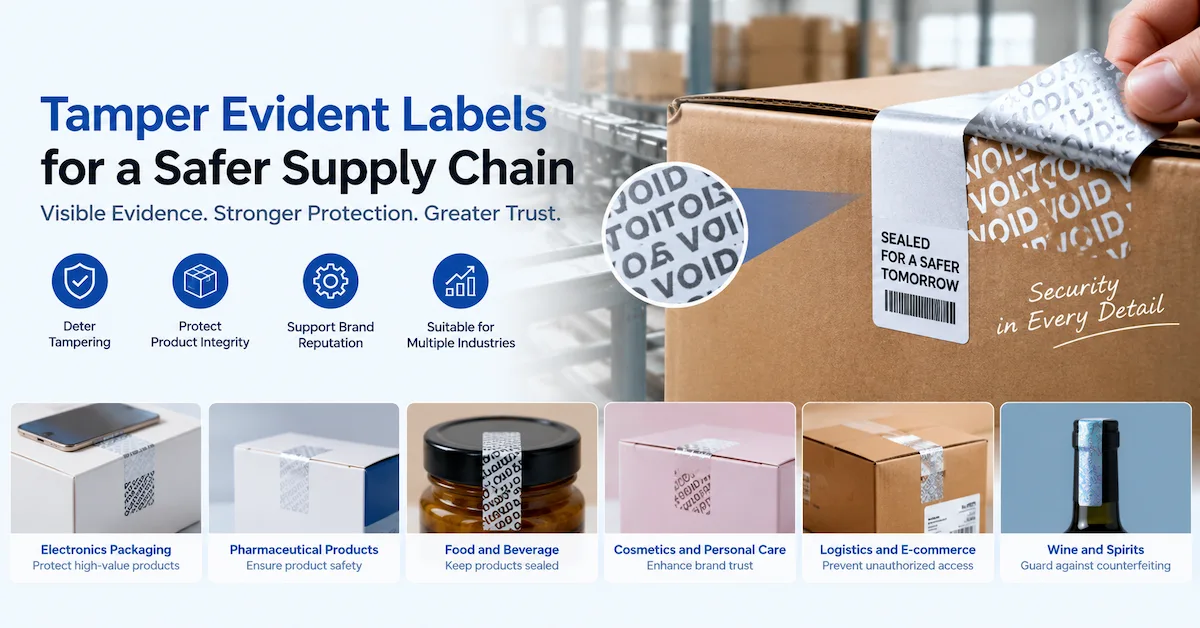

What Should a Void Security Labels Supplier Actually Help You Do?
A professional void security labels supplier should help you define, test, and reproduce visible tamper evidence, not simply sell a sticker that reveals a word after peeling. For most B2B buyers, the real purchasing question is whether the label can show unauthorized opening, removal, or transfer in a way that is clear to the intended inspector and stable during normal handling. That means the supplier should understand the product, the package, the surface material, the label location, the application method, and the inspection process before recommending a construction. If the label is only attractive but cannot perform consistently on the actual packaging, it does not create reliable security value. Buyers can start by reviewing the Void Open Label category and the broader products page, but the final decision should always be based on the application rather than appearance alone.
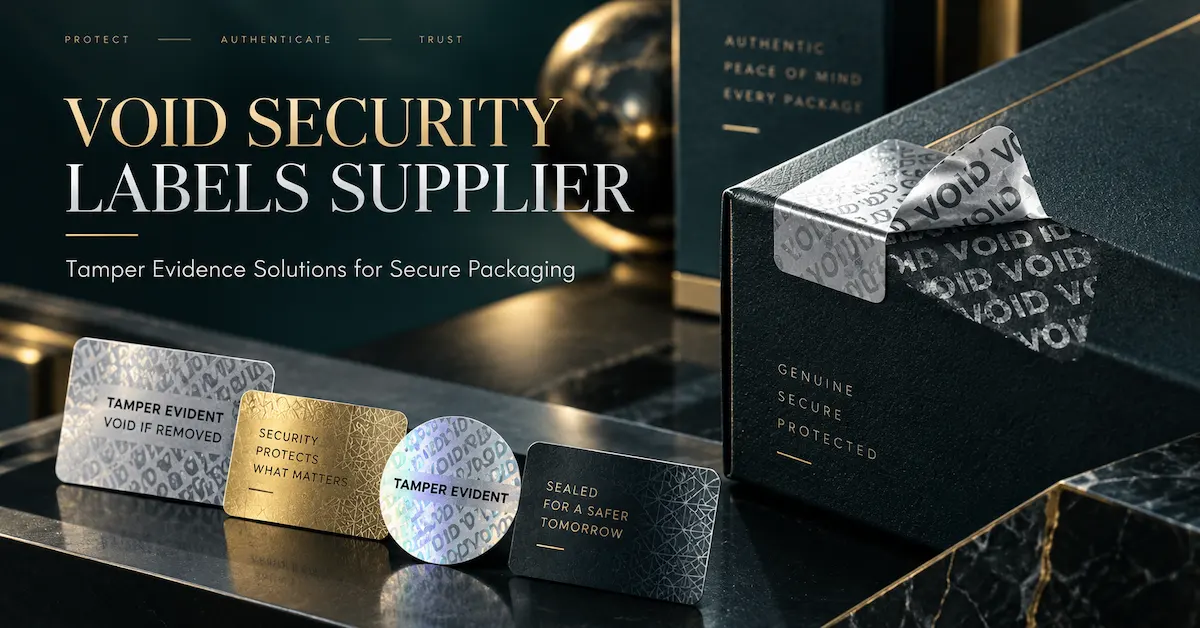
Who Usually Needs VOID Security Labels?
VOID labels are most relevant to buyers that need visible evidence of interference. Electronics brands may use them on housings, accessories, or retail cartons to help indicate whether a product has been opened. Packaging buyers may use them on shipping cartons, gift boxes, or retail packaging closures. Cosmetics and personal care brands may use them on boxes where opening evidence matters but appearance still needs to support brand presentation. Wine, spirits, and other premium packaged products may use sealing labels around openings or closures where unauthorized access is a concern. Industrial equipment suppliers may use them on access points, control panels, or service-related areas. Distributors and importers may use them to improve package inspection during storage or delivery. By contrast, a buyer who only needs a decorative sticker or ordinary information label usually does not need a specialized security construction. A capable void security labels supplier should help separate true security projects from standard labeling jobs.
What Problems Do VOID Security Labels Solve?
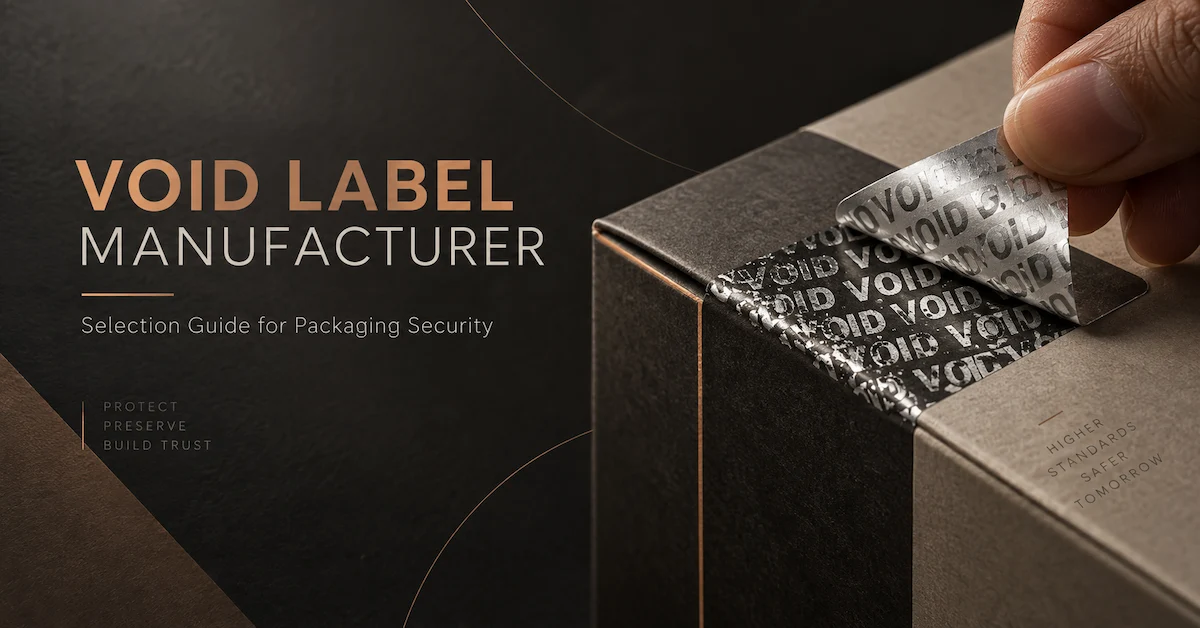
The main purpose of a VOID label is to create evidence that a sealed area has been disturbed. In many cases, the label reveals a hidden message, transfers a pattern, breaks apart, or otherwise changes after removal. This makes the label useful where the buyer wants to know whether packaging, an enclosure, or a protected area has been opened or manipulated. It can also reduce the risk that a label is removed from one product and reused on another. At the same time, buyers should understand the boundary of this technology. VOID labels usually provide tamper evidence; they do not automatically provide full anti-counterfeit protection, consumer authentication, or digital traceability unless other features are added. If a brand also needs visual authentication or product-specific identity, the VOID construction may need to be combined with holographic, latent image, QR code, or serial-number elements. HX’s security label product directions are useful for exploring those broader combinations.
How Do Different VOID Security Label Structures Differ?
VOID message labels
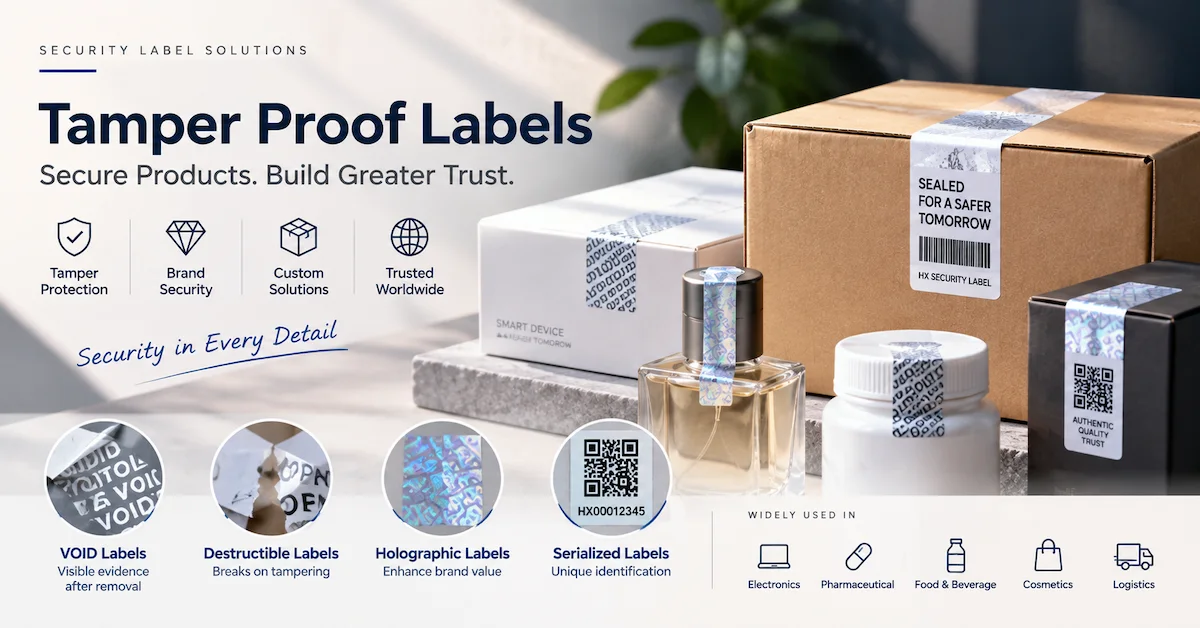
Some VOID labels are designed so that a hidden message appears after removal. The message may remain on the label, on the applied surface, or partly on both, depending on the construction. These are often chosen where buyers want quick visual confirmation during inspection. The most important buying questions are whether the message is visible enough, whether it appears consistently, and whether the result remains easy to interpret under actual working conditions.
Transfer-type VOID labels
Transfer constructions leave a visible pattern or message on the surface after peeling. They can be useful when the buyer wants evidence to remain directly on the package or protected surface. However, buyers should confirm whether that transferred result is acceptable on the product or package, especially for consumer-facing goods where residue or marks may affect presentation.
Non-transfer VOID labels
Some constructions are designed so the main tamper evidence stays on the label itself, leaving the application surface comparatively cleaner. These can be useful where surface cleanliness matters, but buyers must still confirm that the tamper result is obvious and not easily misinterpreted by inspectors.
Destructible or VOID-style destructible labels
Some security labels combine VOID-style evidence with a fragile structure that breaks during removal. These can help reduce intact transfer, especially for warranty or equipment-related uses. However, they also need careful testing to confirm that normal handling does not cause accidental damage before the product reaches the end user.
How Should Buyers Compare VOID Label Options?
The table below helps structure supplier discussions. It is not a fixed HX product specification, but a practical comparison framework for buyers.
| Label Type | Main Function | Typical Use | What Buyers Should Verify |
|---|---|---|---|
| VOID message label | Shows tamper evidence after removal | Cartons, packaging closures, electronics | Visibility of the message and consistency of the result |
| Transfer VOID label | Leaves evidence on the surface | Product protection and package seals | Whether transferred marks are acceptable and readable |
| Non-transfer VOID label | Shows evidence mainly on the label | Packaging where a cleaner surface is preferred | Clarity of tamper evidence after peeling |
| Destructible security label | Breaks during removal | Warranty areas, equipment, anti-transfer uses | Fragmentation behavior and resistance during normal handling |
| Serialized VOID label | Combines tamper evidence with identity | Logistics, electronics, controlled channels | Code readability, data management, and repeat-order control |
Why Surface Compatibility Matters So Much
A VOID construction that performs well on one substrate may behave differently on another. Coated cartons, corrugated materials, plastic housings, painted metal, glass, flexible film, and textured surfaces can all affect adhesion, peel behavior, and the appearance of the tamper result. Surface coatings, varnishes, roughness, curvature, contamination, and storage conditions can also influence performance. That is why a void security labels supplier should not recommend a construction only from a description such as “it will be used on boxes.” Buyers should provide actual packaging samples or at least clear surface information. The supplier should know where the label will sit, how large the bonding area is, whether the product is manually or automatically labeled, and what environmental conditions matter. HX discusses application-based selection considerations in its industrial security label guide, which can help buyers prepare better inquiries.
What Information Should Be Included in an RFQ?
One of the most common reasons for confusing quotations is incomplete buyer information. If one supplier quotes a simple stock-style VOID label and another quotes a customized security construction with variable data and line-compatible roll format, the prices will not be comparable. A good request for quotation should define the security objective and the application conditions clearly.
| RFQ Item | Information to Provide |
|---|---|
| Product/application | Electronics, retail carton, equipment, bottle, logistics package, etc. |
| Security purpose | Opening detection, anti-transfer, warranty control, closure sealing |
| Surface material | Paperboard, coated carton, plastic, glass, metal, film |
| Label position | Closure, seam, housing point, cap area, product body |
| Size and shape | Width, length, die-cut shape, usable bonding area |
| VOID effect | Message, transfer pattern, non-transfer result, destructible behavior |
| Artwork | Logo, text, color, design files, language requirements |
| Variable data | QR codes, barcodes, serial numbers, batch numbers if needed |
| Application method | Manual or automatic |
| Supply format | Sheet or roll, and roll details if line use is required |
| Environment | Transport, storage, humidity, temperature, handling conditions |
| Order quantity | Sample needs, initial order volume, repeat-order expectation |
A detailed RFQ makes it easier for the supplier to recommend the right structure and for the buyer to compare quotations on a fair basis.
How Should Samples Be Tested Before Bulk Production?
A digital proof can confirm artwork and dimensions, but it cannot prove security performance. Physical sample testing should be carried out on the real packaging or a representative surface.
Application test
Apply the sample to the intended packaging. Check whether adhesion is stable, whether the label sits correctly, whether edges lift, and whether the appearance remains acceptable after application. This step helps confirm that the label works in normal use rather than only in a display condition.
Tamper test
Use separate samples for controlled removal. Observe what message, transfer effect, break pattern, or visible change appears after peeling. Compare the result with the expected outcome agreed with the supplier. If multiple people will inspect the label, check whether they all interpret the result consistently.
Handling and environment test
If the project involves shipping, storage, humidity, temperature changes, or friction, repeat the inspection after those exposures. A label that gives a clear response on day one in a clean room may behave differently after time and transport. Buyers should therefore validate the relevant use conditions rather than assuming that one quick peel test is sufficient.
HX presents physical proofing and sample confirmation as part of its process on the About Us page, which aligns with this application-based selection logic.
Can VOID Labels Be Combined With Other Security Features?
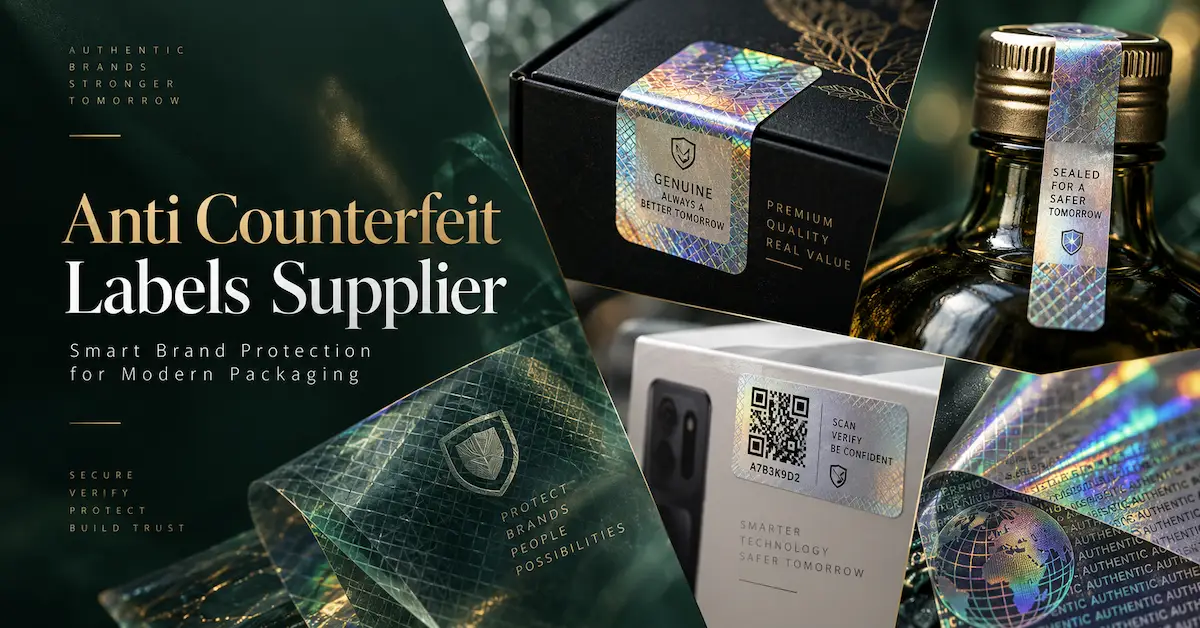
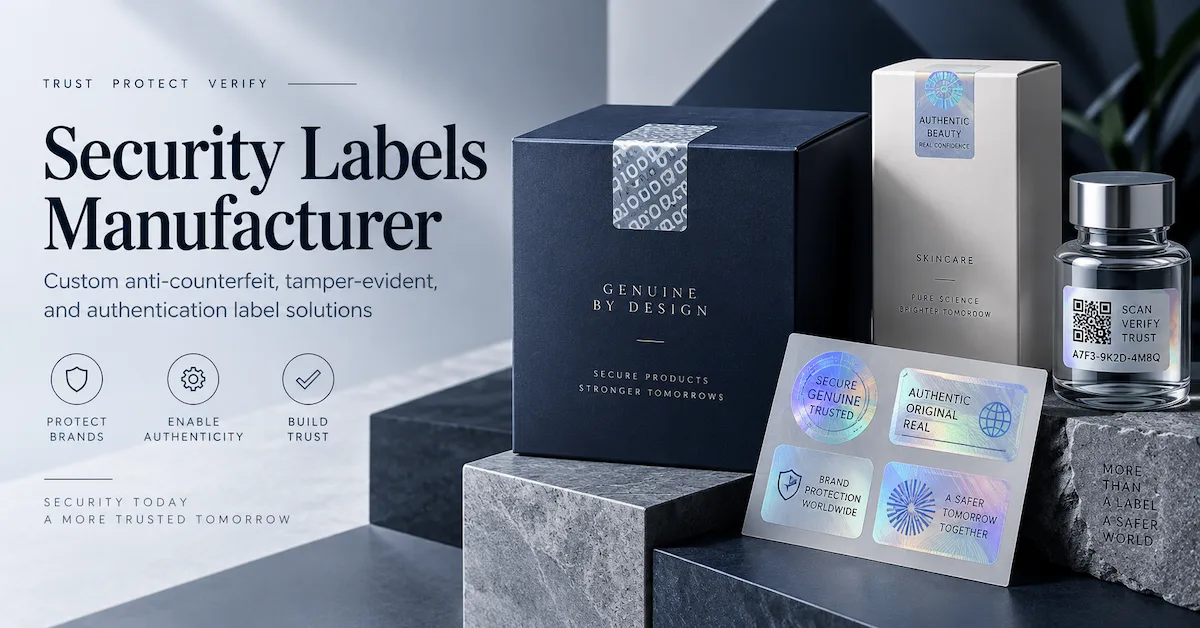
Yes, and in many projects they should be. Some buyers need visible tamper evidence and also want authentication or product identity. In those cases, VOID labels may be combined with holographic elements, hidden verification features, QR codes, barcodes, or serial numbers. The important point is to separate the functions clearly. A VOID structure shows whether a label has been removed or disturbed. A QR code or serial number helps identify the item, batch, or record. A holographic effect helps provide visible recognition. If a project combines these elements, each one should have its own approval criteria. Buyers should not assume, for example, that the presence of a QR code automatically creates a full digital verification system. Where QR or serial data are needed, clarify who generates the data, how duplicates are controlled, how rejected labels are handled, and what information is delivered with the finished goods. Buyers can explore broader combinations through the HX security label range.
What Quality Controls Should Buyers Ask About?
A reliable void security labels supplier should be able to explain how the approved specification will be controlled in production. “Strict quality control” is too general unless it is linked to specific project requirements. Buyers may want to confirm checks on dimensions, artwork revision, print accuracy, die-cut alignment, VOID effect consistency, serial-number sequence, barcode or QR readability, roll presentation, finished quantity, and packaging. For automatic application, roll direction, gap, and core-related requirements can also be important. What matters most is not whether the supplier mentions many inspection items, but whether the inspection plan matches the actual application risk and approved sample.
How Do OEM and Custom VOID Label Projects Work?
Many VOID-label projects are customized rather than off-the-shelf. Customization may include size, shape, artwork, colors, hidden message style, serial numbers, QR codes, or combined security features. In an OEM project, buyers should clarify who provides the artwork, who approves samples, how revisions are managed, how customer data are protected, and how repeat orders are controlled. If the project involves multiple SKUs or multiple packaging surfaces, that should be discussed at the beginning so that the supplier can plan suitable sampling and version management. A useful starting point is to review the HX products page and then submit a project-specific brief through the contact page.
What Drives the Cost of VOID Security Labels?
Price is influenced by more than size and quantity. Material construction, adhesive system, security effect, customization level, printing requirements, variable data, die-cut complexity, sample development, order volume, roll format, inspection, and packaging can all affect cost. Buyers should also consider the cost of failure. A cheaper label that lifts, produces unclear tamper evidence, or cannot run on the intended line may cost more in rework, rejected inventory, or customer claims than a slightly more expensive but stable solution. That is why cost should be compared together with performance, repeatability, communication quality, and delivery reliability. HX discusses pricing logic in its custom security label cost guide, which can help buyers prepare better cost discussions.
What About MOQ, Lead Time, and Repeat Orders?
MOQ and lead time should be confirmed only after the construction and customization level are understood. A standard repeat order may move differently from a first-time project that needs new artwork, sampling, material evaluation, or data setup. Buyers should ask what stages are included in the timeline, such as design review, sample preparation, approval, production, inspection, and dispatch. Repeat orders should also be treated carefully. If artwork, materials, data ranges, or die-cut versions are not controlled, later batches may not match the originally approved label. Supplier reliability therefore includes not only the first order, but also how clearly revisions and repeat production are managed.
Frequently Asked Questions
What is a void security label?
A void security label is a label designed to show visible evidence after removal, disturbance, or opening. The exact result depends on the construction and application conditions.
What does a void security labels supplier provide?
A void security labels supplier provides labels intended to reveal tampering and may also support customization, sample testing, and supply-format requirements depending on the project.
Are VOID labels the same as anti-counterfeit labels?
Not exactly. VOID labels mainly provide tamper evidence. Anti-counterfeit projects may also involve holographic, hidden, or digital authentication features.
Can VOID labels be customized with logos and serial numbers?
Yes. Depending on the project, customization may include logo, text, size, shape, serial numbers, QR codes, and other security elements.
Do VOID labels work on every surface?
No. Performance depends on the substrate, surface treatment, environment, and application method. Real-surface testing is strongly recommended.
How should I test a VOID label before placing a bulk order?
Apply it to the actual package, evaluate normal handling, perform controlled tamper or peel tests, and compare the results with the approved sample standard.
Can VOID labels be used for electronics and warranty control?
Yes. They are commonly considered for electronics housings, accessories, packaging, and warranty-related applications where opening evidence matters.
Can QR codes be added to VOID labels?
Yes. QR codes or serial numbers can be combined with VOID structures, but their data management and verification functions should be defined separately.
What affects the price of VOID labels?
Material, adhesive, size, shape, customization, data requirements, quantity, supply format, and testing needs all affect price.
How do I request samples from HX?
Prepare your application details, packaging information, size, expected tamper result, and artwork or data requirements, then contact HX through the Contact Us page.
Conclusion
A good void security labels supplier helps buyers build a solution that performs on the real package, not only in a quotation or sample photo. The best purchasing result usually comes from defining the security purpose clearly, testing the label on the actual surface, comparing different VOID constructions by function, and linking bulk production to an approved specification. For electronics, cartons, logistics packaging, industrial products, and other applications that need visible tamper evidence, review the Void Open Label solutions and the broader HX product range, then contact HX with your packaging details and project requirements to discuss a suitable custom solution.